


Why Lining Matters More Than Fabric in Summer
There was an August wedding in Dubai where everything looked perfect until the ballroom lights came on. The couple was lovely. The room was beautiful. The music started. And my dress, which seemed completely fine in my mirror at home, started to read a little too sheer once the evening got going.
That’s when I learned something I wish someone had told me earlier. In summer occasionwear, lining can matter more than the outer fabric.
A Dubai Summer Reality Check
Dubai doesn’t do gentle weather half the year. You step out into heat, then step into a restaurant and it’s winter, instantly. You do that again at the valet. Again at the next place. Again when someone suggests “just a quick coffee” in DIFC and it turns into dinner.
Last July, I watched a friend’s silk dress lose its composure halfway through brunch. Not in a dramatic way. Just in that quiet, expensive way where the fabric stops behaving like you thought it would. She’d paid a lot for it. The issue wasn’t silk. It was the absence of a proper lining.
After my own experience, I started noticing the women who looked calm all night at Atlantis events, Business Bay dinners, rooftop evenings in DIFC, beachside plans at Nikki Beach. Their dresses didn’t need constant checking. They moved easily. They looked the same in every light.
Almost always, they were lined well.
What Lining Really Does
Most people think lining is about coverage. That’s part of it, but it’s not the full story.
A good lining creates a barrier between you and the outer fabric, which changes everything. It helps the piece sit cleanly against the body. It keeps the outer fabric from clinging when the air gets humid. It also stops delicate materials from taking on marks too quickly, especially around areas that see fragrance, deodorant, or daily wear.
It also changes movement. The right lining lets a dress glide, not grab. It keeps a skirt from twisting when you walk. It helps a gown fall the way it was meant to in the first place.
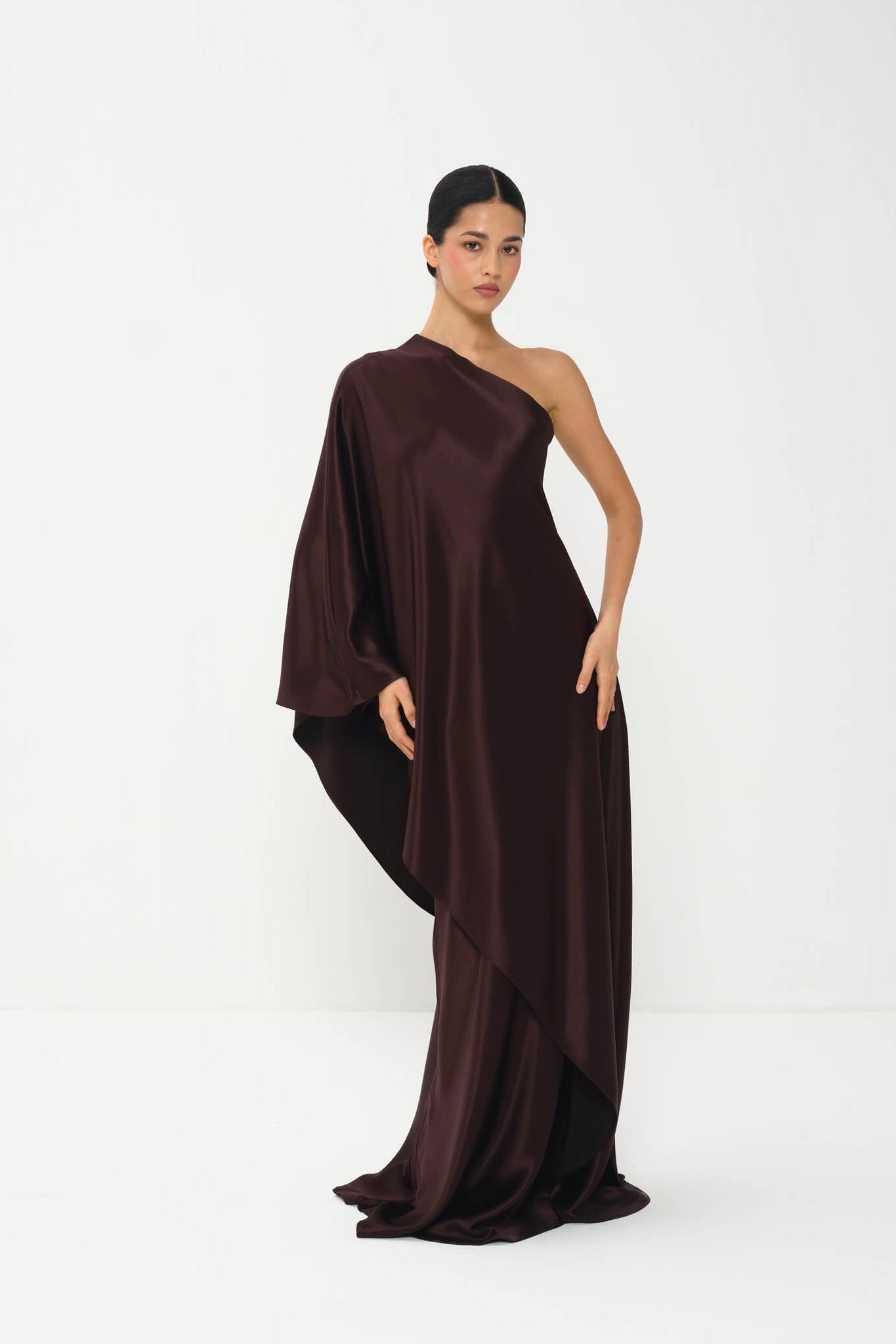
That’s why pieces like the Estelle Cape Gown work. The cape keeps its shape and still feels light, because the inside construction does the quiet work. It’s not extra fabric. It’s control. (The kind you feel without thinking about it.)

Dubai Is About Temperature Swings, Not Just Heat
The challenge isn’t only the temperature outside. It’s the contrast.
Walk into Zuma on a July evening and you feel it right away. Your skin needs a minute to adjust. A dress with poor lining makes those shifts more uncomfortable because the fabric doesn’t cooperate. It traps warmth when you want air. It feels thin when the room turns cold.
The right lining helps balance that. Bamboo jersey and TENCEL lyocell linings tend to feel calmer against the skin, especially across long hours. That’s also why the Ayara Long Sleeve Gown makes sense in summer. Long sleeves can work when the fabric and construction do the right thing. You stay comfortable outside, and you don’t regret your choices the moment you sit down indoors.
Cotton linings can feel heavy in humidity. Cheap acetate can feel slippery in the wrong way. Polyester linings can feel a little too closed off. But well-chosen bamboo, TENCEL, and quality viscose linings usually read more breathable and more refined.

Outer Fabric Makes the Statement. Lining Makes It Wearable.
Your outer fabric is what people see. It’s the mood, the color, the way the light hits.
Your lining is what makes you actually want to wear the piece again.
Satin is the easiest example. It photographs beautifully and it can feel unforgiving when it’s unlined. It shows every outline, it catches in odd places, it can feel clingy in humidity. Add a proper lining and the same satin suddenly drapes with more polish.
That’s why sets like the Aria Off Shoulder Dress read elevated. Naia satin already has a beautiful finish, but the lining and structure give it that clean, confident fall. The look looks intentional because the inside is treated with the same care as the outside.
The Transparency Test
Every woman here has had the phone-flash moment. You think you’re fine until a photo says otherwise.
Dark colors can be deceptive. They look opaque at home, then a bright light hits and you’re suddenly very aware of what’s underneath. Light colors have their own challenges, especially in daytime.
A proper lining removes the guesswork. And it does more than solve modesty. It changes confidence. When you trust your dress in every kind of lighting, you stop adjusting. You stand differently. You enjoy yourself.
I noticed this at a DIFC gala once. Some women spent the night holding their clutches in front of their dresses without even realizing it. Others moved freely, posed easily, stayed present. The difference wasn’t styling. It was construction.
So What Material Is “Best” for Summer?
Dubai doesn’t follow the usual “summer fabric” rules.
Linen creases quickly. Silk needs support. Cotton can show humidity fast. Synthetics can feel too sealed off. But with the right lining, many of those fabrics become far more wearable.
The magic is between the layers.
A viscose knit piece with the right lining can feel fresh for a long evening. Satin with a TENCEL lining can keep its shape through a night on a yacht. A dress that would usually feel fussy can feel easy when the inside is built properly.
That’s why I always flip a piece inside out before I commit. It tells you more than the outer fabric ever will.
The Benefits Nobody Talks About
A good lining also protects your wardrobe over time. It helps outer fabrics keep their finish longer. It reduces friction that causes pilling or wear. It can even make cleaning simpler because the lining takes on more of the contact with the body.
It also makes a piece more versatile. A well-lined set can work in August and still feel right at a December brunch. It adapts because it was built with real life in mind, not just a photo.
And if you tailor your clothes, lined pieces usually alter more cleanly. Hemming looks neater. Structure stays intact.
How to Spot Quality Lining in Seconds
Touch tells you everything. The lining should feel smooth and cool, substantial without feeling heavy.
Look at the seams. Clean finishes matter because they sit against the skin. If the inside scratches or pulls, you’ll feel it after an hour.
Watch how it moves. A well-made piece moves as one. The lining shouldn’t bunch, twist, or shift independently.
Color matters too. Lining should support the outer fabric, not fight it. Nude under light shades. Tonal under darker ones. White only when the piece is truly white.
A Quiet Rule I Follow Now
When I shop for summer occasionwear, I admire the fabric, then I check the lining. Every time.
Dubai’s social calendar asks a lot from what you wear. Weddings, dinners, gallery openings in Al Quoz, last-minute plans that turn into long nights. You need pieces that stay consistent through heat, cold interiors, and every kind of light.
So yes, fabric matters. Of course it does.
But in summer, lining is often the difference between a dress you wear once, and a dress you keep reaching for.