The Best Fabrics for Women Who Hate That “Stuck to Your Skin” Feeling
There’s a point in a Dubai evening when you realise your outfit has stopped cooperating. It’s usually somewhere between the first hello and the second round of sparkling water, when the air shifts, the terrace fills up, and suddenly you’re aware of every inch of fabric.
Mine happened at a rooftop in DIFC last month. I’d worn a polyester dress. It looked fine at 7. It felt like a poor decision by 9. The kind that makes you keep adjusting your hem and pretending it’s for style.
Sara walked past in something that moved like it had its own pace. Calm. Unbothered. “Cotton Jersey,” she said when I asked. “Changes everything.” (She was right.)
Some fabrics breathe with you. Others keep every bit of moisture exactly where you don’t want it.
After enough summers here, I’ve learned which materials stay polished without turning clingy, and which ones never make it past the first warm night.
What fabric doesn’t stick to your skin?
The answer is simple, then it gets specific. Natural and semi-synthetic fibres that handle moisture well tend to keep their distance from your skin.
Here’s what holds up.
Bamboo jersey
Bamboo jersey is the first fabric I reach for when the forecast looks optimistic and reality doesn’t. It feels cool when you put it on, and it stays that way. It drapes, it skims, it doesn’t grip.
I wore a bamboo jersey dress to Friday brunch at Coya and didn’t think about it once. That’s the real test.
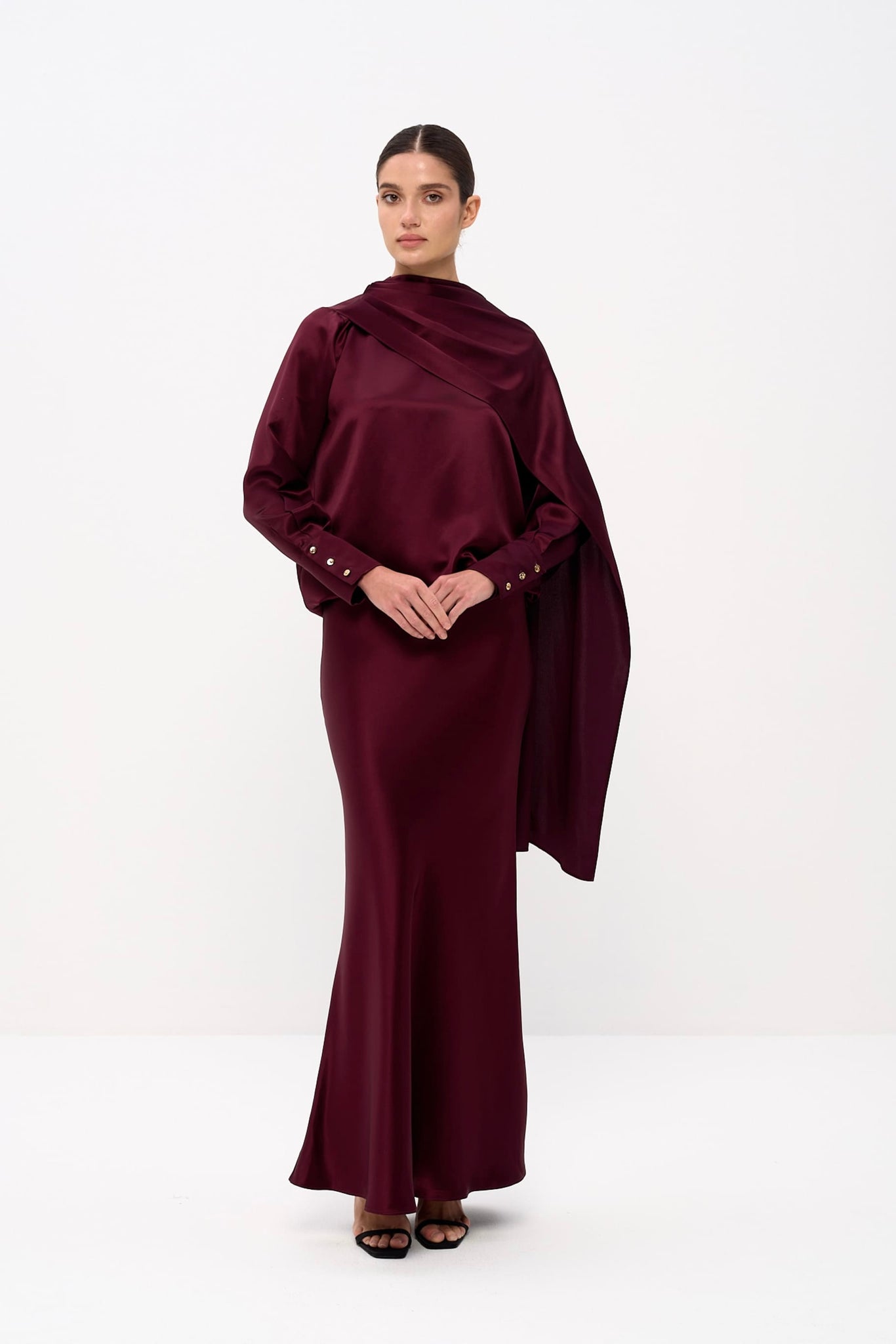
If you want proof you can keep the elegance and still feel comfortable, NÓRA’s Ayara Long Sleeve Gown in bamboo jersey does it beautifully. It reads refined, even in August.

Naia satin
Naia satin has the shine people want from satin, without the cling people expect. It’s made from eucalyptus pulp, which sounds like something you’d read on a label and forget. Until you wear it.
It stays smooth against skin. It doesn’t get that sticky friction that some satins do when the night runs long.
TENCEL lyocell
TENCEL lyocell is the quiet overachiever. It manages moisture better than cotton, and it feels clean and light even when the humidity has opinions.
It’s the fabric equivalent of walking into an air-conditioned lobby and instantly relaxing.
Viscose knit
Viscose knit surprised me. I used to think viscose was unpredictable. A good viscose knit isn’t.
It stretches without compressing. It breathes without looking casual. It’s ideal on days when you want polish, but you also want to be able to move through DIFC, the car, and a restaurant terrace without thinking about your clothes.
Why certain fabrics cling, and others don’t
Most of the time, cling is a moisture problem.
Synthetics like polyester and nylon don’t absorb water. Sweat sits between your skin and the fabric, and the fabric stays close because it can’t do anything else. That’s where that sticky, tacky feeling comes from.
Natural and semi-synthetic fibres behave differently. They take in moisture, then let it release. Your skin stays drier. The fabric keeps its shape.
Weave matters, too. A tight weave can feel “neat” on a hanger, but it can trap heat and moisture once you’re wearing it. Looser construction usually feels calmer against skin.
Cut matters as much as fibre. Even the best fabric can feel clingy if it’s cut too close. Pieces that skim, drape, or create a little space tend to feel better all night.
What Clothing Doesn’t Cling to the Skin?
Certain silhouettes naturally keep air moving.
- Bias-cut pieces fall away from the body and move beautifully.
- A-line shapes create space and feel light without trying.
- Pleats and drape add motion, so fabric doesn’t settle and stay put.
NÓRA’s Rosalia Maxi Dress gets this exactly right. The viscose falls away from the body, and the cut keeps things comfortable even when the evening turns warm.
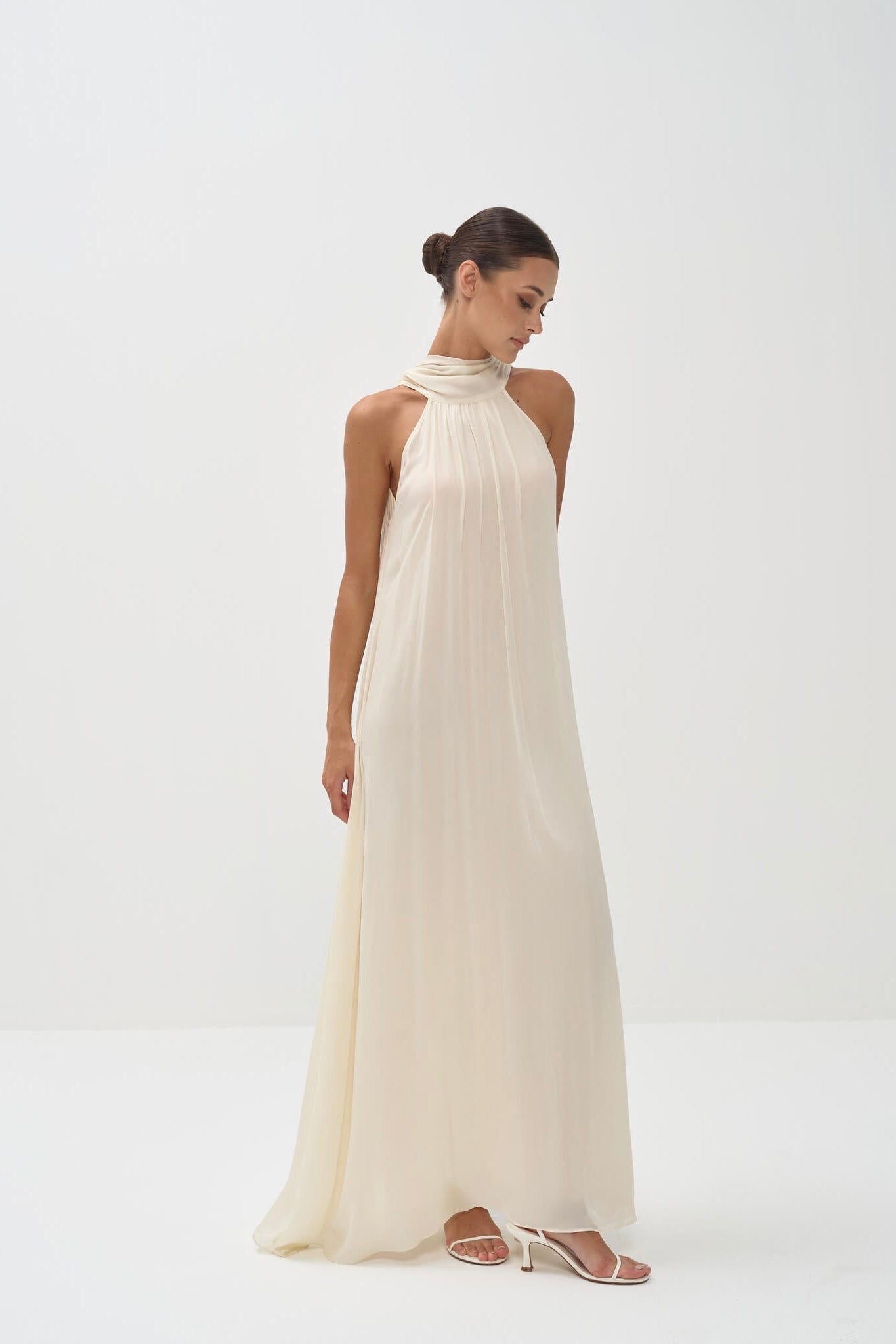
Satin sets are also underrated for summer in Dubai. They look put-together, but they don’t feel restrictive. I’ve worn satin sets to client meetings when I needed to look considered, but I didn’t want to spend the day adjusting my outfit.
Details help. Capes, one-shoulder necklines, an asymmetric cut, a high-low hem. They aren’t just design decisions. They change how air moves around you.
The Worst Offenders, and How to Spot Them
Cheap polyester is usually obvious. It has that slight shine that doesn’t feel intentional. It can look a little stiff on the hanger. Touch it and it feels slick, not soft.
Blends can be tricky, especially cotton-poly mixes. They can hold moisture like cotton, then refuse to release it like polyester. The result is rarely comfortable.
Acrylic often pretends to be wool. It isn’t. It tends to feel warm fast, and it doesn’t breathe well.
Even some natural fabrics can be difficult. Silk can cling when it gets damp. Heavy cotton can hold moisture. Linen is usually a good idea, but lower-quality linen can feel rough once it’s humid.
Shopping strategies that actually work
Touch everything. Does it feel cool? Does it feel light?
Check the care instructions. Fabrics that handle regular washing usually handle real life better. Machine-washable usually means the fabric can handle moisture properly.
Consider the color. Dark colors absorb more heat, making any cling worse. Light colors reflect heat and hide any moisture marks better. That said, quality fabric in any color beats cheap fabric in white.
Test the stretch. Gently pull the fabric. Good stretch with quick recovery means comfort without cling. Fabric that stays stretched out will end up stuck to you by noon.
Real-world testing, Dubai edition
One July, I tested this the only way that counts. Same routine. Same mix of Tom and Serg mornings, DIFC meetings, dinners in places where the air conditioning is either perfect or unpredictable.
Polyester on day one: I wanted to change before lunch.
Cotton on day two: Better, but it held onto moisture longer than I liked.
Viscose knit on day three: It stayed polished through dinner at Zuma, and someone asked if I’d changed before meeting them.
Bamboo jersey on day four: I forgot about my outfit entirely, which is the highest compliment.
Naia satin on day five: For a gallery opening in Alserkal. I expected to regret satin in July. I didn’t.
Even the security guard at Emirates Towers gave me a look on the polyester day. Not judgment. More like sympathy.
What Fabric is Good for Irritated Skin?
If skin irritation is part of the issue, friction is usually the problem, and cling makes it worse.
Bamboo jersey is a strong option here. It’s smooth, and it tends to feel gentle even after a long day.
TENCEL lyocell is another. It stays soft against skin, even when there’s humidity in the air.
Modal can work beautifully, too. It feels almost like silk, but it wears more like a breathable knit.
If irritation is a recurring issue, I avoid heavy reliance on synthetic stretch fibers where I can. They can trap heat and moisture close to skin, which rarely helps.
The Climate Question
Living in Dubai taught me that the best fabrics for avoiding cling work everywhere. New York humidity, Singapore's eternal summer, even artificially heated London offices - the same principles apply.
Air conditioning creates its own challenges. You go from blazing heat to arctic offices. Fabrics need to adapt quickly. Natural fibers regulate temperature better than synthetics. They keep you cool outside, warm inside, without that clammy transition period.
Layering becomes strategic. A bamboo jersey base layer under a structured blazer. A viscose knit camisole under silk. The breathable layer against your skin makes everything else work better.
Beyond fabric
Fit matters. Undergarments matter. Laundry habits matter.
Fabric softener can coat fibers and make them feel less breathable. Very warm washes can change the way natural fibers sit on the body. I keep it gentle, and I let pieces dry naturally when I can.
And then there’s the part no one really admits. Cling takes attention. You spend the night thinking about your outfit instead of your evening.
The right fabric gives you your focus back.
I noticed it at a rooftop at Address Sky View. Good fabric, good cut, nothing to adjust. I stayed. I laughed. I didn’t once think about what was happening at my waistline. (That’s the goal.)
If you want to start small, start with one piece in a fabric that behaves well, Bamboo jersey, viscose knit, Naia satin, TENCEL lyocell. Wear it on a real day. Let that be the deciding factor.
And if you’re looking for pieces designed around this exact idea, NÓRA’s latest arrivals are a good place to begin. Beautiful, considered, and genuinely comfortable to wear.