


The Truth About Bamboo Viscose
There’s a moment when someone brushes their fingers over a fabric and you can watch their opinion change. It happened with my friend Sarah, who’d decided bamboo was a no-go after one late-night spiral through articles that all sounded a little too certain.
Then she touched my NÓRA dress.
“This can’t be the same thing,” she said, hand still on the sleeve of the Ayara gown in bamboo jersey. We were on the kind of Dubai evening that makes you stay out longer than planned, around 24 degrees, a small breeze, the city finally soft. I’d worn that dress three times in one week. Each time, someone asked what it was made of. Quietly, like they wanted the answer for themselves.
The truth about bamboo viscose sits in the middle. It isn’t saintly. It isn’t a villain either. It’s a fabric that can be done well, or done carelessly. And that’s the part worth paying attention to.

What Bamboo Viscose Actually Feels Like
If you’ve never worn bamboo viscose, the obsession might sound dramatic. Then you put it on and understand why people talk about it in that slightly reverent way.
I tested bamboo viscose against cotton, linen, polyester, and a crisp poplin during an August in Dubai that felt like a long dare. The kind of month where you start planning outfits the way you plan routes, with air conditioning in mind.
Bamboo viscose held up. It stayed light without turning flimsy, and it draped in a way that looked intentional, even when I didn’t have time to be. It also handled humidity better than you’d expect from something that feels this smooth. The fabric has a gentle weight to it. Enough to fall cleanly. Light enough to forget about once you’re out the door.
Linen is charming, but it creases the second you sit down. Cotton can feel dense when the air gets heavy. Polyester can look polished, but it rarely feels kind after a few hours. Bamboo viscose lands in that sweet spot where the fabric feels natural on the skin, but behaves with a little more restraint.
I wore the Melissa draped gown to an eventful dinner at Nikki Beach. Hours of sitting, standing, moving through the crowd, then back to the table. The dress moved with me and stayed elegant without constant readjusting. That’s usually the deciding factor for me. Not the label. The experience.

Is Bamboo Viscose Actually Sustainable?
This is where the conversation gets louder than it needs to be.
Yes, bamboo grows quickly and usually needs less water than many conventional crops. The part that gets complicated is the viscose process itself. Turning plant pulp into that soft, fluid fiber often involves chemicals. That’s true for bamboo viscose and also for viscose made from wood.
So the better question isn’t “Is bamboo viscose good or bad?” It’s more specific.
Where did the bamboo come from?
How does the mill handle the chemistry?
Do they treat wastewater properly?
Do they work with recognized standards and audits?
The mills that do this well use systems that recapture chemicals instead of letting them escape into the environment. They source responsibly instead of stripping wild growth. They treat what goes out, not just what comes in. NÓRA’s bamboo jersey comes from mills selected with those realities in mind.
Is it perfect? No. But fabric choices rarely are. And if you live in a city like Dubai, you know your wardrobe needs to function, not just sound good on paper.
The Downsides, Honestly
Bamboo viscose isn’t indestructible. It asks for a little care, and it rewards it.
Lower-quality bamboo viscose can pill, especially when the fibers are short or the finish is rushed. That’s usually what people mean when they say it “doesn’t last.” It’s not the idea of bamboo. It’s the execution.
Heat can also cause shrinkage. If you wash it hot, you’ll feel that regret the next time you put it on. And it isn’t at its strongest when soaking wet, so it’s not the fabric for aggressive wringing or twisting.
Good bamboo viscose costs more than synthetics, and you feel that difference in both the hand-feel and the lifespan. With NÓRA, you’re paying for the fabric and the cut, not a trendy word on the tag.
Is Bamboo Viscose Good for Sensitive Skin?
If your skin gets irritated easily, bamboo viscose can feel like a relief. The fiber is smooth, so it creates less friction than rougher weaves. It also tends to stay fresher longer than many synthetics, which matters when you wear something all day, then keep going into the evening.
I’ve worn NÓRA’s bamboo jersey sets through full workdays in DIFC, then straight into dinner, and the fabric still felt comfortable against the skin. That’s the point. It doesn’t distract you. (The best fabrics rarely do.)
How I Care for Bamboo Viscose
I treat bamboo viscose the way I treat anything I want to keep.
- Wash cold.
- Turn it inside out.
- Skip fabric softener. The fabric already feels soft, and softener can coat fibers.
- Air dry when you can. If you use the dryer, keep it low heat.
- Hang dresses and tops. Fold knits, especially heavier ones.
Wrinkles usually fall out with steam. I’ve also had luck hanging a piece in the bathroom while the shower runs. Easy. Very Dubai.
“100% Bamboo” and Other Label Games
If a label says “100% bamboo,” it usually means the original plant source is bamboo, but the fiber is bamboo viscose. That’s common.
There is also mechanically processed bamboo (sometimes called bamboo linen), but it’s rarer and has a coarser feel. More textured, less fluid.
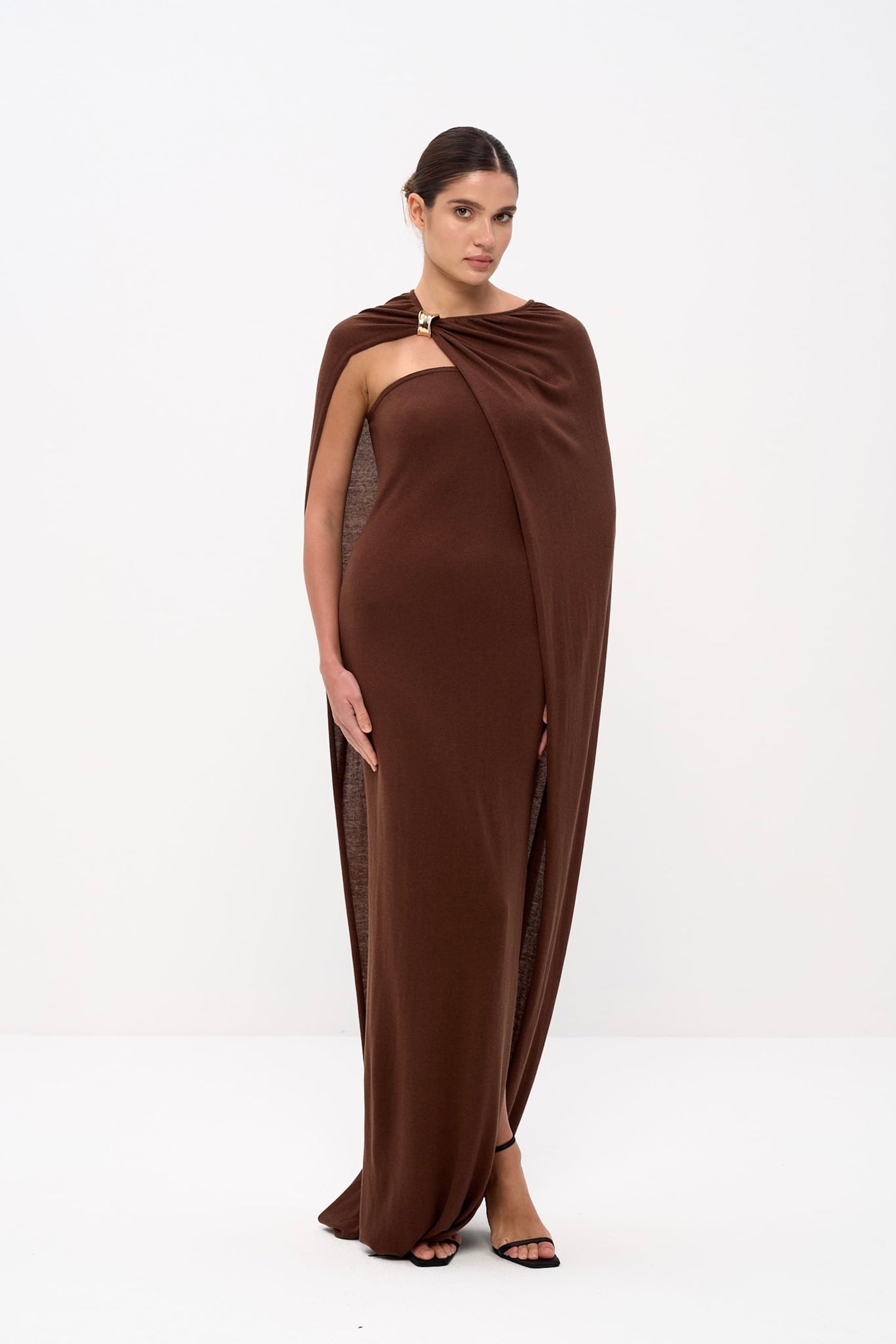
Then there’s bamboo lyocell, which uses a different solvent process and is often positioned as a cleaner option. It can be beautiful, but it tends to cost more. If you know TENCEL lyocell, you already understand the category. (NÓRA uses TENCEL lyocell in pieces like the Thalia Cape Gown, and it’s one of those fabrics that feels calm the second you put it on.)
Most bamboo clothing in the market is bamboo viscose. That doesn’t make it a trick. It makes it a technique. The quality depends on who made it and how.
Bamboo Viscose in Dubai, Specifically
Dubai changes your standards.
Your outfit needs to work in the heat, then in a restaurant where the air conditioning feels like a different season. It needs to travel well, photograph softly, and stay comfortable when the night runs long.
Bamboo viscose does that more reliably than many fabrics. It reads refined without stiffness. It packs easily. It comes out of a suitcase without drama. I took the Cyria Gown to a wedding in Beirut and wore it more than once on the trip. It still looked fresh each time, even after a sink wash.
Dubai winter is also quietly perfect for bamboo viscose. Warm afternoons, breezy evenings, last-minute plans that turn into full nights. The fabric keeps up.
So, What’s the Truth?
Bamboo viscose is a good fabric that gets described in extremes. Some people sell it like it’s a cure-all. Others write about it like it’s automatically harmful. Real life sits between those takes.
If you want a fabric that feels soft, drapes well, and stays comfortable in warm weather, bamboo viscose makes sense. If you care about sustainability, the answer is in the sourcing and the mill standards, not the word “bamboo” alone.
I wouldn’t buy it to feel morally perfect. I’d buy it because it works for my life. And in Dubai, where clothes have to be effortless but still polished, bamboo viscose earns its place in the wardrobe.
That’s the only truth I really trust.