


The Silk Pillowcase Test
There’s a certain kind of afternoon at Comptoir 102 where time slows down a little. You order something sweet, you tell yourself you’ll stay for twenty minutes, and then you look up and it’s an hour later.
Last week, my grandmother wore her Hermès scarf there, knotted neatly at her neck, the way she always does when she’s in a good mood. We split tahini brownies and talked about care, longevity, and that hard-to-define premium feel that some clothes have, even after years.
She’s had that scarf for forty-three years. It still looks like itself.
She also has a rule. Every piece gets the silk pillowcase test.
If a fabric pills, snags, or catches on silk after one night, it won’t hold up after ten wears. She said it like it was obvious. She was right.
“Good clothes get better with age,” she told me, running her fingers along the rolled edge of the scarf. “The others just get older.”
I’ve been thinking about it since, while sorting my closet. The pieces I reach for on repeat all have a few things in common. They drape well even after a lot of washes. They travel without turning into a project. They adapt to Dubai life, where it’s hot outside, cold inside, then hot again before you’ve even finished your coffee.
What Makes Clothes Last, Really Last
I was at Fashion Forward Dubai last season, listening to a panel on sustainability, and the conversation shifted into something more practical. A local designer said, very calmly, that sustainability isn’t only about the fiber content. It’s about making clothes people keep.
She’s right.
The most sustainable dress is the one you wear for years, the one you don’t get tired of, the one that still reads well after a full season of dinners, flights, and last-minute plans.
Fabric is the first filter. Not because labels matter more than life, but because your day will expose the truth quickly.
Bamboo jersey that breathes. Viscose knit that keeps its shape. Naia satin that has the romance of silk, but handles real wear. These fabrics make sense here. They feel good in the heat, and they don’t lose their composure when the air conditioning turns uncompromising.
I learned this after one summer spent trying to make a synthetic dress work. It looked fine on the hanger. It felt less refined after a few wears. It held onto scent, and it didn’t recover its shape the way better fabric does. I stopped reaching for it, which is always the real verdict.
Construction matters just as much as fabric. Sometimes more.
Turn a piece inside out. Look at the seams. Look at the finishing. Look at the places that take pressure, shoulders, waist, underarms, neckline. Good design anticipates stress before you feel it.
The Siora Cape Gown is a good example of this kind of thinking. It has internal structure that helps it fit the same way every time. You don’t spend the night adjusting it. It stays intentional.

The Cost Per Wear Conversation
I did the math once, mostly to prove a point to myself.
A 200 dirham dress worn twice works out to 100 dirhams per wear. A 1,000 dirham dress worn fifty times is 20 dirhams per wear. My friend Maha calls this girl math, with a smile, but she’s also still wearing viscose knit sets she bought years ago, and they look fresh. So maybe it’s just math.
Dubai has its own wear-and-tear realities, and they show up fast.
Air conditioning is one of them. The constant shift between heat and cold is where lower-grade knits start to lose their structure. Better knits keep their line through those hot-cold days without turning limp.
Over-cleaning is another. Dry cleaning has a place, but it’s not a weekly habit for everything. Chemicals are hard on fabric over time. A lot of pieces do better with air, a quick spot clean, and a rest day.
Storage matters more than people think, especially here. Closets deal with humidity in summer, even indoors. Clothes need room. Cedar helps. So does not packing things so tightly that shoulder lines lose their shape before you even wear the piece again.
Washing habits matter too. I wash on cold, inside out, and I skip the dryer for anything I want to keep for years. I hang pieces to dry in my spare bathroom with the AC on low. It’s simple. It works.
How to Make a Piece Feel More Premium
Premium feel isn’t only about price. It’s also about fit, care, and the small details you notice when you slow down.
Fit is the first one. A beautiful dress looks less refined if it doesn’t sit properly. A more accessible piece can look polished if it skims the body the way it should.
I budget for tailoring now, and I treat it like part of the purchase. Hem length, waist shaping, shoulder adjustment. A quick visit to a tailor in Satwa can change how a piece reads, and how often you reach for it.
Then there’s care. Steaming instead of ironing. Good hangers. Proper storage for special pieces. Shoes that look looked-after. These aren’t dramatic changes, but they add up.
The Celeste Knit Gown is one of those pieces that proves the point. Viscose knit can lean casual, depending on how it’s done. This one has weight, a clean cut, and finishing that feels considered. I wore mine to a wedding dinner at Bvlgari Resort and someone asked what designer it was. It wasn’t a loud moment. It was just a quiet confirmation that details matter.

Four Things That Keep Clothes in Your Life Longer
I think of longevity as a mix of four things. Not rules, just a way to sort what’s worth keeping.
- Materials that age well
Natural fibers usually do better than synthetics. Thoughtful blends work too, especially when they help the fabric recover its shape. - Construction that respects stress points
Good seams, finished edges, reinforcement where it counts. - Design you won’t outgrow
Not “basic.” Just not tied to a micro-trend that feels dated by next season. - Care that preserves
Gentle washing, smart storage, and small fixes done early.
What Longevity Means in Dubai
Longevity looks different depending on where you live.
For my mother, it’s abayas that stay pristine with frequent wear. For my sister in London, it’s outerwear that holds up to real weather. For me, it’s pieces that handle Dubai life without complaint, beach club afternoons, DIFC dinners, last-minute trips, and the constant indoor chill that makes you grateful you packed a light layer.
But really, longevity is love. You take care of what you love. You wear what you love. You keep what you love.
And the pieces that last become part of your memory. The dress you wore to a friend’s wedding at Jumeirah Al Naseem. The set you packed for a work trip to Riyadh. The gown you wore to a birthday dinner at Gaia. Clothes hold moments when they stay with you long enough.
The Dubai Test
Dubai is hard on clothes. Heat, events, travel, and air conditioning that doesn’t negotiate.
If a piece holds up here, it holds up anywhere.
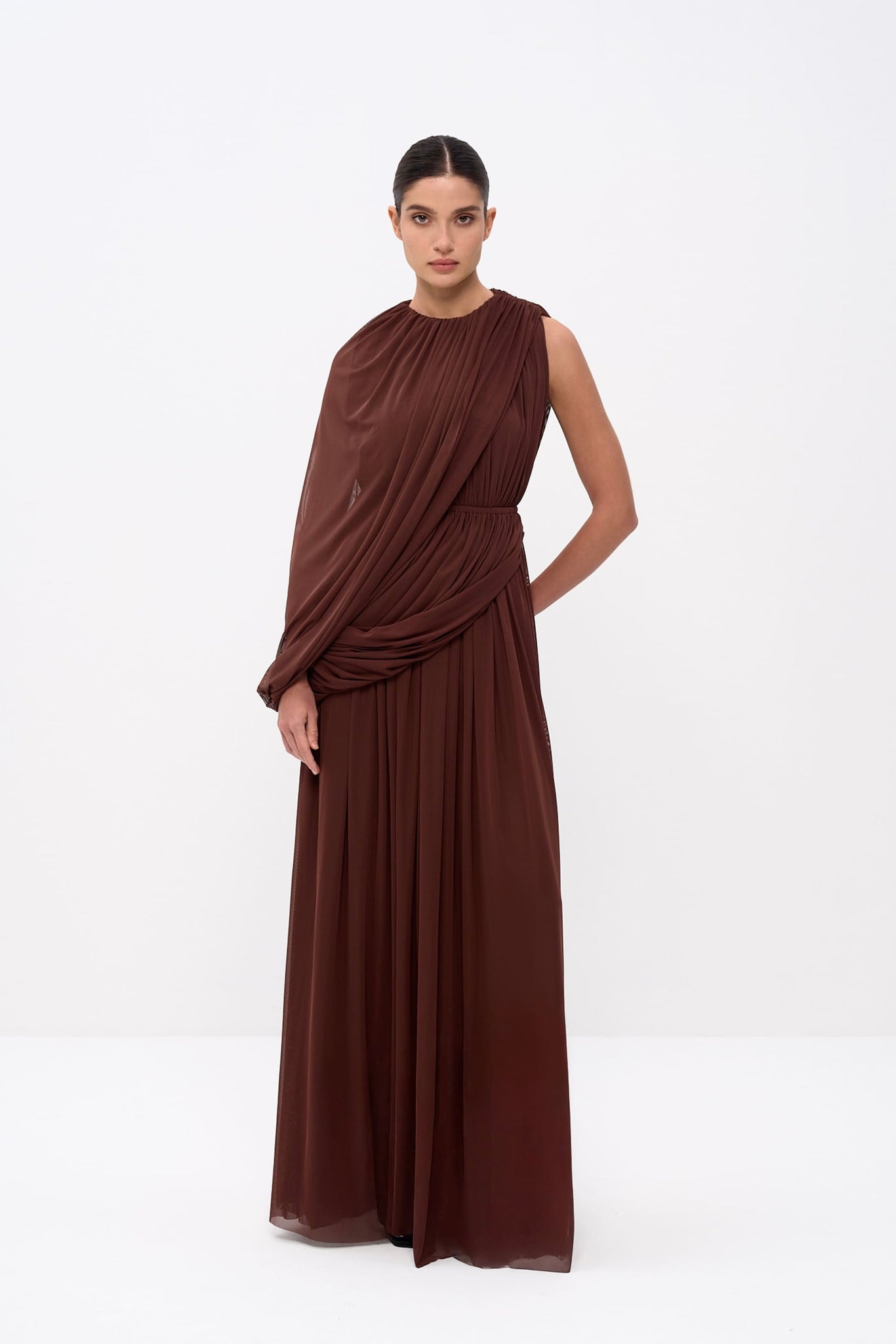
That’s part of why I buy less now, but better. Instead of five dresses I’ll wear twice, I’d rather have one I’ll wear twenty times and feel good in every time. The Elora Drapped Gown has become my go-to for client dinners. It looks polished, it feels comfortable, and it photographs well under Zuma’s lighting, which is its own kind of test.
Five Things That Shorten a Garment’s Life
I look for these when I’m shopping, and I notice them even more once a piece is in my closet.
- Polyester that doesn’t breathe, it pills quickly and holds onto scent
- Unfinished seams and weak construction
- Prints that feel tied to a very specific moment
- Hardware that feels flimsy, buttons and zips matter
- Buying purely on price, without thinking about how often you’ll wear it
None of this is about judgement. It’s about choosing what earns space in your wardrobe.
Making Premium Feel More Accessible
Not everyone wants to spend a lot on a dress, and not everyone needs to. What matters is making intentional choices.
End-of-season sales help. Sample sales in Al Quoz help too, if you go with a clear idea of what you’re looking for. It also helps to know what’s worth investing in, pieces you wear often, and what can stay simple, basics and smaller trend moments.
Care does a lot of the work. My tailor once showed me how to reinforce a button before it loosens. I learned to de-pill knits properly. My dry cleaner taught me which stains are easiest if you act quickly, and which ones are better avoided.
That’s the unglamorous part of premium feel. It’s also the part that makes it real.
Seven Habits That Keep Clothes Looking New
These are the habits that have made the biggest difference for me in Dubai.
- Choose natural fibers or high-quality modern fabrics that breathe
- Check finishing before you buy, turn it inside out
- Buy pieces you can picture wearing at least thirty times
- Build small care rituals, steaming, shoe care, closet resets
- Store properly, good hangers, breathable garment bags, cedar
- Fix small issues quickly, loose buttons, tiny snags, small holes
- Keep what you love, you take better care of it without forcing it