


Why Smaller Runs Feel More Luxurious
The difference between limited-edition and overproduction isn't just about numbers. It's about how a piece feels when you put it on, and whether anyone else is wearing it at the same dinner.
I've been thinking about this lately because the conversation around fashion production has shifted. Five years ago, people talked about sustainability as a moral position. Now it's become something else entirely, something closer to taste.
The woman who buys fewer, better things isn't making a statement. She's just paying attention. And the question of limited-edition vs overproduction, why smaller runs can feel more luxurious, has a lot less to do with marketing psychology than most articles will tell you.
It has to do with fabric. With fit. With the quiet confidence of wearing something that wasn't made for everyone.
The Real Problem with Overproduction
Here's what happens when a brand produces 50,000 units of a single dress. The fabric sourcing changes. You can't get 50,000 meters of high-quality Naia satin or bamboo jersey without compromise, so the spec sheet gets adjusted. The thread count drops. The drape shifts. The piece that looked extraordinary on a mood board becomes something ordinary on a hanger.
This isn't a secret. Anyone who works in production will tell you. Volume and quality are in constant tension, and volume usually wins because the math demands it.
A brand producing at scale needs to sell through enormous quantities, which means pricing has to stay accessible, and margins get protected at the fabric level. The customer pays less per unit and gets less per unit. That's the exchange.
The other thing that happens at scale is sameness. When a silhouette sells well, it gets reproduced across dozens of colorways and slight variations.
You see it at brunch in Marina. You see it at a birthday dinner in Downtown. You see it on a stranger at Scalini and you both look away. The dress hasn't changed, but your relationship to it has.
What Changes When the Run is Small
A smaller production run, say 200 to 500 pieces, operates under completely different rules. The fabric can be better because you're sourcing less of it. The cut can be more considered because there's time to adjust the pattern between samples. The finishing can be done with actual care because the production line isn't moving at the speed of a quarterly earnings target.
I noticed this with the Enza Pleated Gown in soft Jersey. The pleating on that dress holds up in a way that mass-produced pleats simply don't. There's a precision to it that you feel when you move, when you sit down, when you stand up and the fabric falls back into place. That kind of detail costs time, and time is exactly what smaller runs give you.
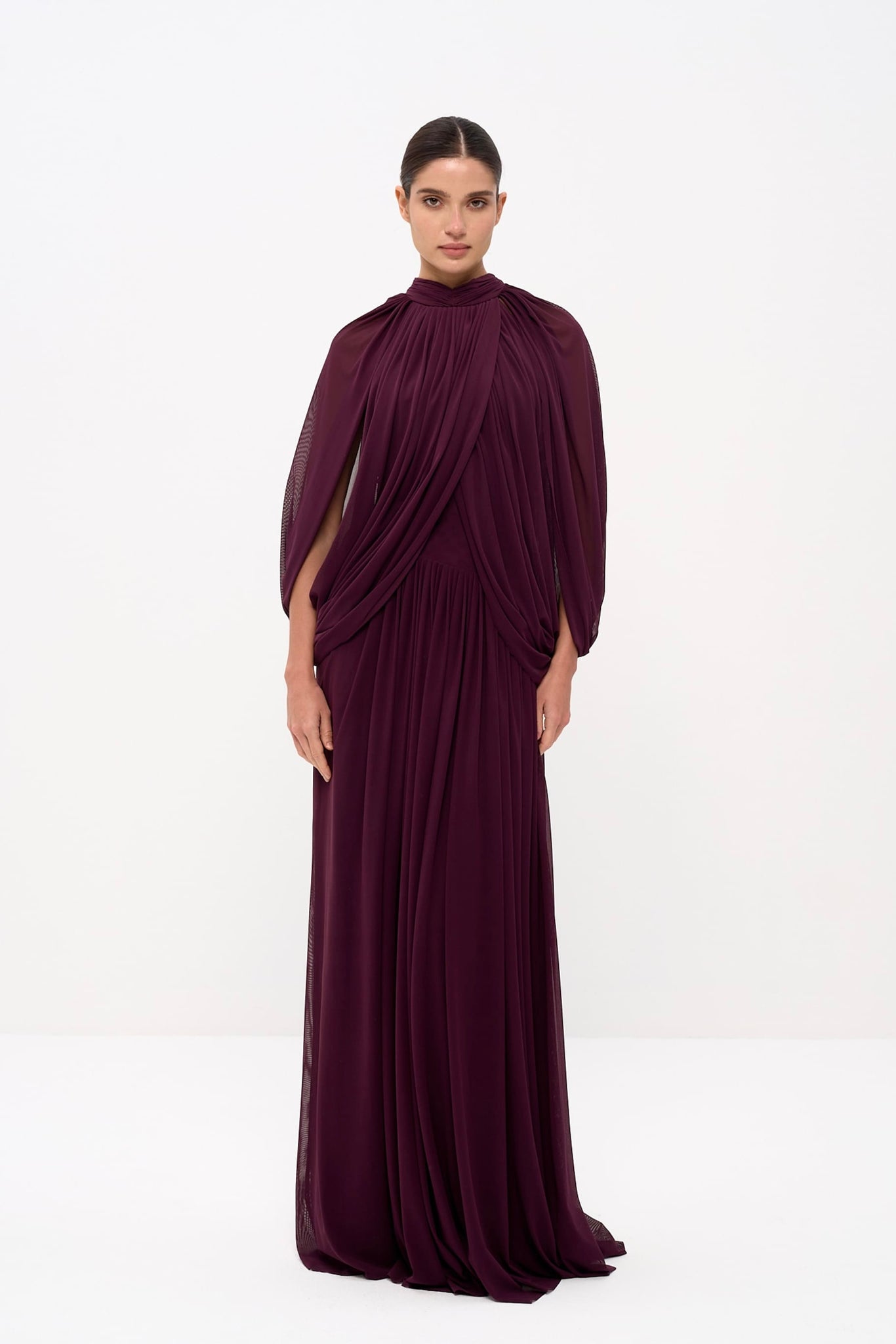
There's also something less tangible. When you know a piece was made in limited quantity, you wear it differently. You don't treat it as disposable. You don't shove it to the back of the closet after one season. It becomes part of your rotation in a way that feels personal rather than temporary.
Does Exclusivity Actually Matter?
Most of what's written about limited editions focuses on scarcity as a psychological trigger. The idea that people want what they can't have. And sure, that's real. But I think it misses the more interesting point.
Exclusivity, in the way that actually matters to well-dressed women, isn't about owning something rare for the sake of rarity. It's about owning something that reflects a specific point of view. When a brand produces in smaller quantities, every piece in the collection has to earn its place. There's no room for filler. No "let's make this in eight colors and see what sticks." Each piece is there because the designer believed in it enough to commit limited resources to it.
That intentionality shows. You can feel it when you browse a tightly edited collection. There's a coherence to it. The pieces talk to each other. A knit set in viscose works with a satin skirt from the same drop because someone thought about how the textures would sit together.
That doesn't happen when you're designing 400 SKUs per season.
What Dubai Taught Me About Less
Dubai has a particular relationship with abundance. The city is generous by nature. Big tables, late nights, wardrobes built for a social calendar that doesn't slow down. And for a long time, the prevailing logic was more. More options, more outfits, more of everything.
But something shifted. The women I know here, the ones who consistently look put-together without looking overdone, have gotten quieter about their wardrobes. Not smaller, necessarily, but more purposeful. They're not buying twelve dresses for a wedding season. They're buying four. Maybe five. And each one works for multiple contexts because the fabric, the silhouette, the construction were all chosen with enough care to make the piece versatile.
I wore the Avery Top & Skirt Set to a Friday lunch at Zuma, then to a gallery opening in Alserkal a week later. Different shoes, different bag. Same set. Both times it felt right, and both times it felt like mine. That's what good design in limited quantities gives you: ownership of the look, not just possession of the garment.
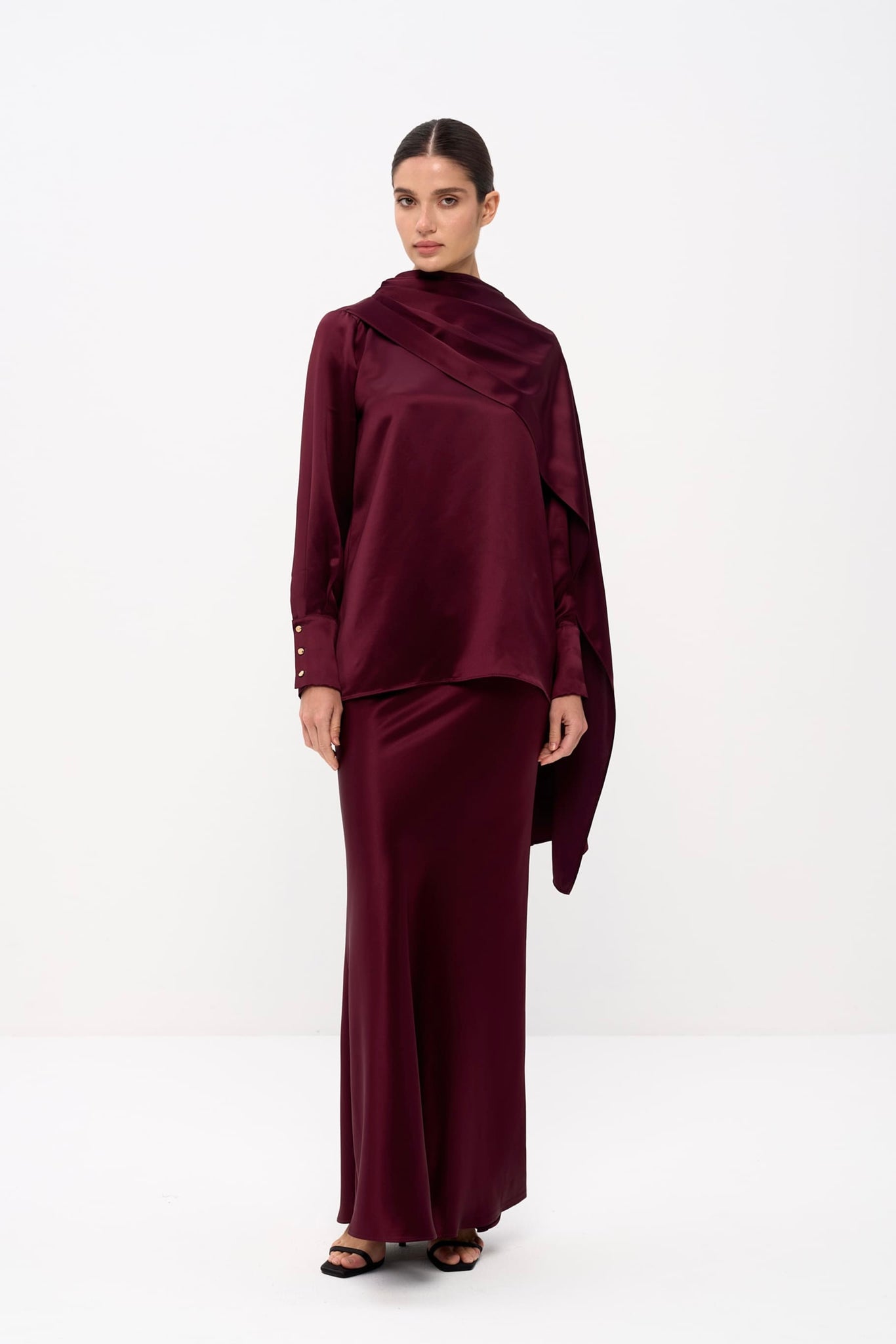
We touched on this idea of building a wardrobe with intention in our guide to signature statement pieces, and it's worth revisiting. The best pieces in your closet aren't the ones you bought because everyone was buying them. They're the ones that still feel like a decision you're proud of, two years later.
The Sustainability Angle Nobody Talks About
Sustainability in fashion gets reduced to fabric content labels and recycling programs. Both matter. But the most significant environmental choice a brand makes happens before any fabric is cut: how much to produce.
Overproduction is the industry's biggest waste problem. Not fast fashion specifically, but the sheer volume of clothing manufactured beyond what the market actually absorbs. Unsold inventory gets marked down, sent to outlet channels, donated (where it often isn't needed), or, in the worst cases, destroyed. The carbon footprint of a garment that was never worn is total waste.
When a brand commits to smaller runs, that calculation changes. You're producing closer to demand. You're not gambling with thousands of excess units. And because the per-unit quality is higher, the customer keeps the piece longer, wears it more, and replaces it less. The lifecycle of the garment extends naturally, without any sustainability messaging required.
This is where fabric choices become interesting. Naia satin, bamboo jersey, TENCEL lyocell, these are materials that feel better against the skin, hold their shape through repeated wear, and age more gracefully than their synthetic counterparts.
But they also cost more to source, which means they make financial sense primarily when production is controlled and the price point reflects real value rather than volume ambition.
The Hidden Cost of Always Being Available
There's a belief, mostly among people who work in e-commerce, that a product should always be in stock. That selling out is a failure rather than a signal. But any woman who's ever fallen in love with a piece because she found it at the right moment knows that availability changes perception.
When something is always there, you bookmark it. You think about it. You wait for a sale. You forget about it. The urgency fades, and with it, the emotional connection.
When something is available in a limited window, you either commit or you let it go. And commitment, even to a dress, changes how you feel about it once it's yours.
This isn't manufactured scarcity. It's honest production. A brand that makes 300 pieces of a gown in Naia satin isn't withholding supply to create hype.
It's producing what makes sense given the cost of the fabric, the capacity of the atelier, and the desire to maintain quality at every step. The limitation is a byproduct of care, not a marketing tactic.
How to Recognize the Difference
Not every piece labeled "limited edition" deserves the title. Some brands put the phrase on a standard product and reduce the quantity to create a story. The garment itself is identical to what they'd produce at scale, just with a smaller number attached.
The way to tell the difference is in the details. Look at the fabric. Touch it if you can. Does it feel like it was chosen specifically for this piece, or does it feel like a house fabric that gets used across everything?
Look at the construction. Are the seams clean? Does the lining exist where it should? Does the hem sit the way it was designed to, or does it pull?
And look at the collection it belongs to. A genuinely limited-production brand tends to have a tighter range. Fewer pieces, more thought per piece.
The dress collection feels like a wardrobe, not a catalog. Each piece has a clear purpose and a distinct character, and together they tell you something about who the brand is designing for.
The Woman Who Gets This
She's not chasing trends. She's not avoiding them either. She's dressed for her life, her shape, her standards. She walks into a room and looks polished without looking rigid. She probably owns fewer pieces than her friends think, and each one does more work than it appears to.
She understands, maybe intuitively, that the most luxurious thing about a garment isn't its price tag or its logo or its limited-edition number. It's the feeling of putting something on and knowing it was made well enough to match the life she's living. That feeling doesn't come from scarcity. It comes from standards.
I think about this every time I get dressed for something that matters. The pieces I reach for aren't the most expensive things I own. They're the ones that were made with enough intention that they still feel like they have something to say. (The kind of pieces you remember choosing, even years later.)
That's the real answer to why smaller runs feel more luxurious. It's not about having what others can't have. It's about having something that was made as if it mattered. Because it did. Because someone decided that 300 perfect pieces were worth more than 30,000 adequate ones. And you can feel that decision every time you get dressed.
If you're curious what that looks like in practice, NÓRA's new arrivals are worth a slow scroll. Not to buy everything. Just to notice how few pieces there are, and how much each one has to offer.