


How to Read a Clothing Label (and Why It Matters)
Most women I know can spot a beautiful dress in seconds. Fewer can flip the tag and understand what they're actually buying.
I've been thinking about this lately because the question keeps coming up: how to read a clothing label, rayon, viscose, modal, lyocell, acetate explained in plain language, without the chemistry lecture.
The terms get used interchangeably by brands, mixed up by sales associates, and ignored entirely by shoppers who just want something that looks good. I get it.
But understanding what's on that label is the difference between a piece that holds up through forty wears and one that pills after two.
So here's what I actually know, after years of touching fabric for a living and living in a city where your clothes have to perform in 45-degree heat and 18-degree restaurants, sometimes in the same afternoon.
They're All Related, but They're Not the Same
Rayon is the umbrella. Viscose, modal, lyocell, and acetate all sit under it. They're all made from plant cellulose, usually wood pulp, which makes them semi-synthetic: natural origin, manufactured process. That's where the similarities end.
Think of it like coffee. Espresso, filter, cold brew, and instant are all coffee. But you'd never confuse the experience of drinking one for another. Same principle applies here.
The process changes everything: how the fabric drapes, how it breathes, how it ages, how it reacts when you spill something on it at dinner. (And you will, eventually, spill something on it at dinner.)
The reason brands get away with vague labeling is that regulations in many countries only require them to list "rayon" or "regenerated cellulose."
They don't have to specify which type. A label that says "100% rayon" could mean viscose, could mean lyocell. The difference in quality, feel, and longevity is enormous.
Viscose: The One You Already Own
Viscose is the most common form of rayon. It's been around since the early 1900s, and if you've ever owned a blouse that felt like silk but cost a fraction of the price, it was probably viscose.
What makes it appealing: it drapes beautifully, it breathes well, it takes dye in a way that produces deep, rich color. It has a natural weight to it that reads well on the body without clinging. In Dubai's climate, that matters. A lot of synthetic fabrics sit on the skin and trap heat. Viscose moves with air.
What to watch for: conventional viscose production uses significant chemicals, and the fabric can be delicate when wet. It wrinkles. It can shrink if you're not careful with washing. These aren't flaws, exactly. They're characteristics. Linen wrinkles too, and nobody holds it against linen.
The quality of viscose varies widely. A viscose knit from a brand that sources intentionally will feel completely different from a viscose blouse you picked up at a fast-fashion chain. The fiber might have the same name on the label, but the yarn weight, the knit construction, the finishing, all of it changes the outcome.
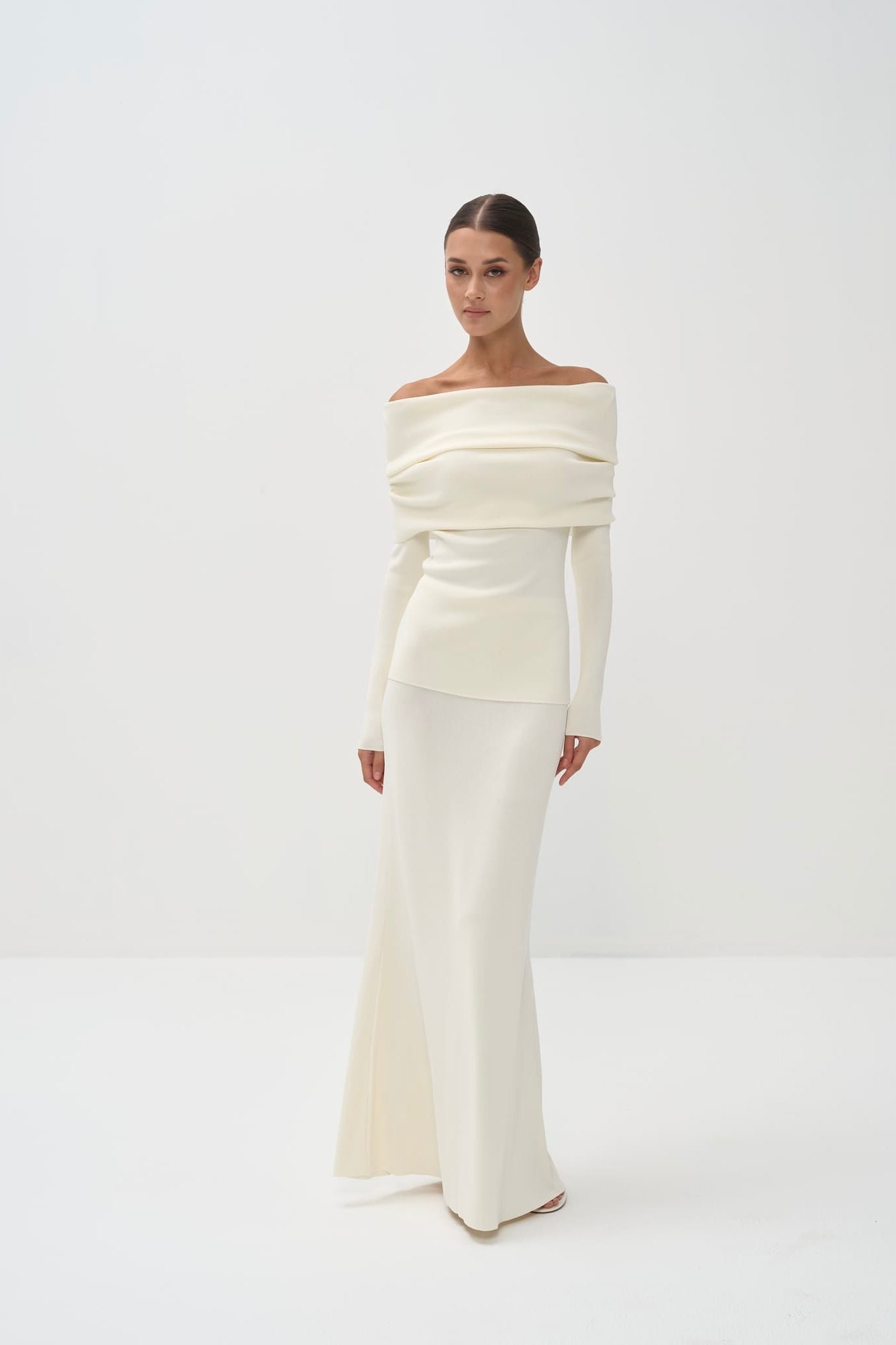
NÓRA's knit sets, for instance, use viscose knit that's heavier than you'd expect, with a structure that doesn't lose shape after a full day of wear. That's not the viscose doing all the work. It's the decisions around the viscose.
Lyocell: The One Worth Knowing About
Lyocell is where things get interesting. You might know it by the brand name TENCEL, which is produced by the Austrian company Lenzing. TENCEL lyocell has become something of a gold standard in sustainable fashion circles, and for good reason.
The production process uses a closed-loop system, meaning the solvents used to break down the wood pulp are recovered and reused at a rate of over 99%. Compared to conventional viscose production, the environmental footprint is greatly smaller. The resulting fabric is strong when wet, biodegradable, gentle on skin, and resistant to bacterial growth, which is a genuine advantage in a hot climate.
Lyocell has a particular quality that's hard to describe until you've felt it. It's smooth without being slippery. Cool without being cold. It has this almost imperceptible weight that makes garments fall in a way that looks considered, never stiff.
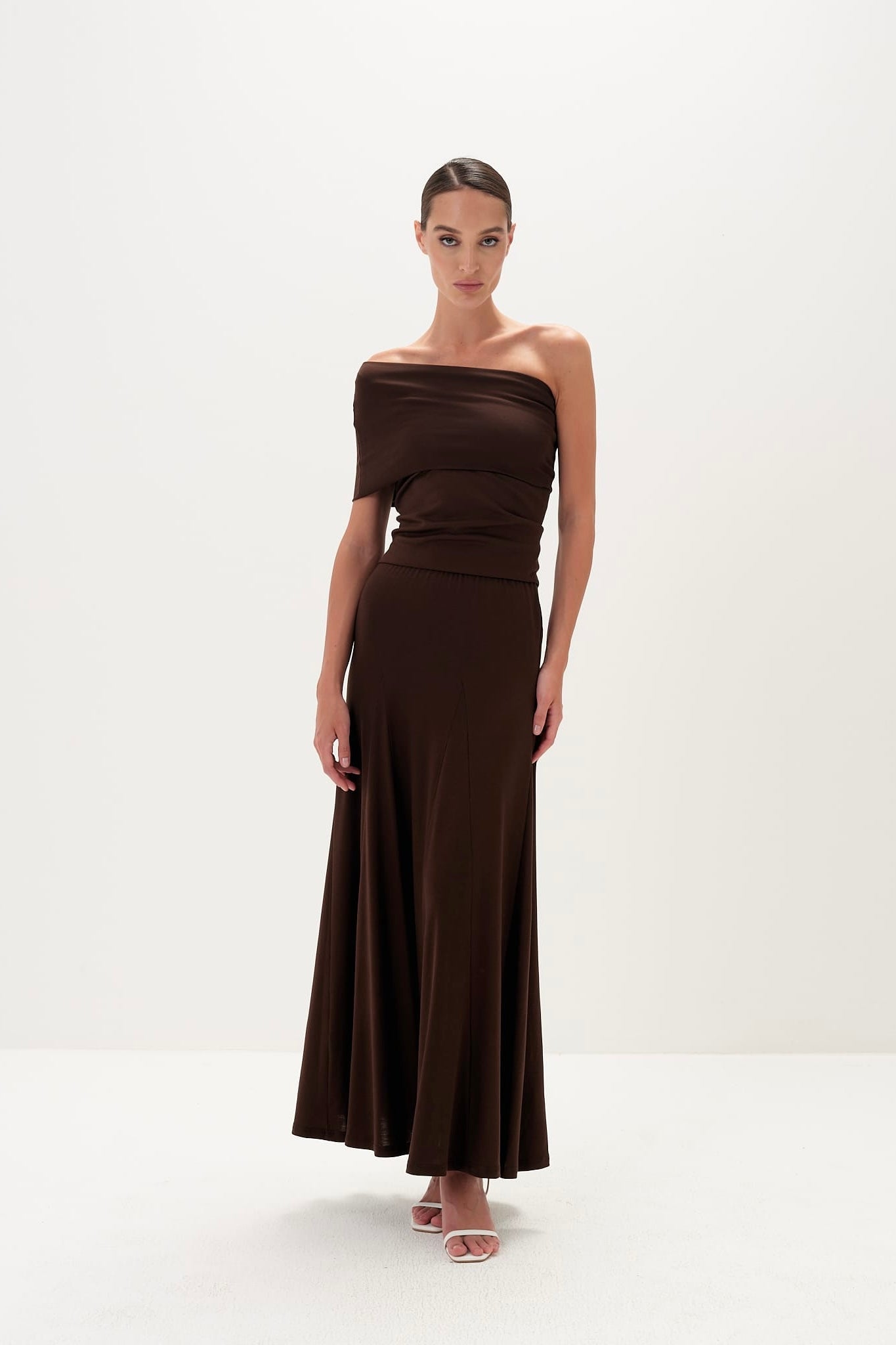
The Zaria Top & Skirt Set in TENCEL is a good example. The asymmetry works because the fabric cooperates with the design rather than fighting it. It moves the way you'd want it to.
Lyocell versus viscose comes down to this: lyocell is more durable, more stable, more sustainable in production, and generally more forgiving in care. Viscose has richer drape and deeper luster.
Neither is objectively better. They serve different purposes. The best brands know which one to reach for and when.
Acetate: The One That Confuses Everyone
Acetate sits in an odd position. It's technically classified as a different fiber category from rayon in some countries, though it's made from the same cellulose base. The chemical process is different, and the resulting fabric has distinct properties.
You'll find acetate most often in linings, formalwear, and satin-finish garments. It has a high sheen, it resists moisture absorption (which means it won't drape as fluidly as viscose), and it's relatively affordable to produce. It can look beautiful in photographs. It can also feel plasticky in person, depending on the grade.
Here's where reading your clothing label becomes a practical skill. If a satin dress lists "100% acetate" versus "100% Naia satin" (Naia being another Eastman-produced cellulosic fiber with better sustainability credentials), you're looking at two very different garments despite similar surface appearances. Acetate satin can yellow over time, it's sensitive to heat, and it doesn't breathe particularly well.
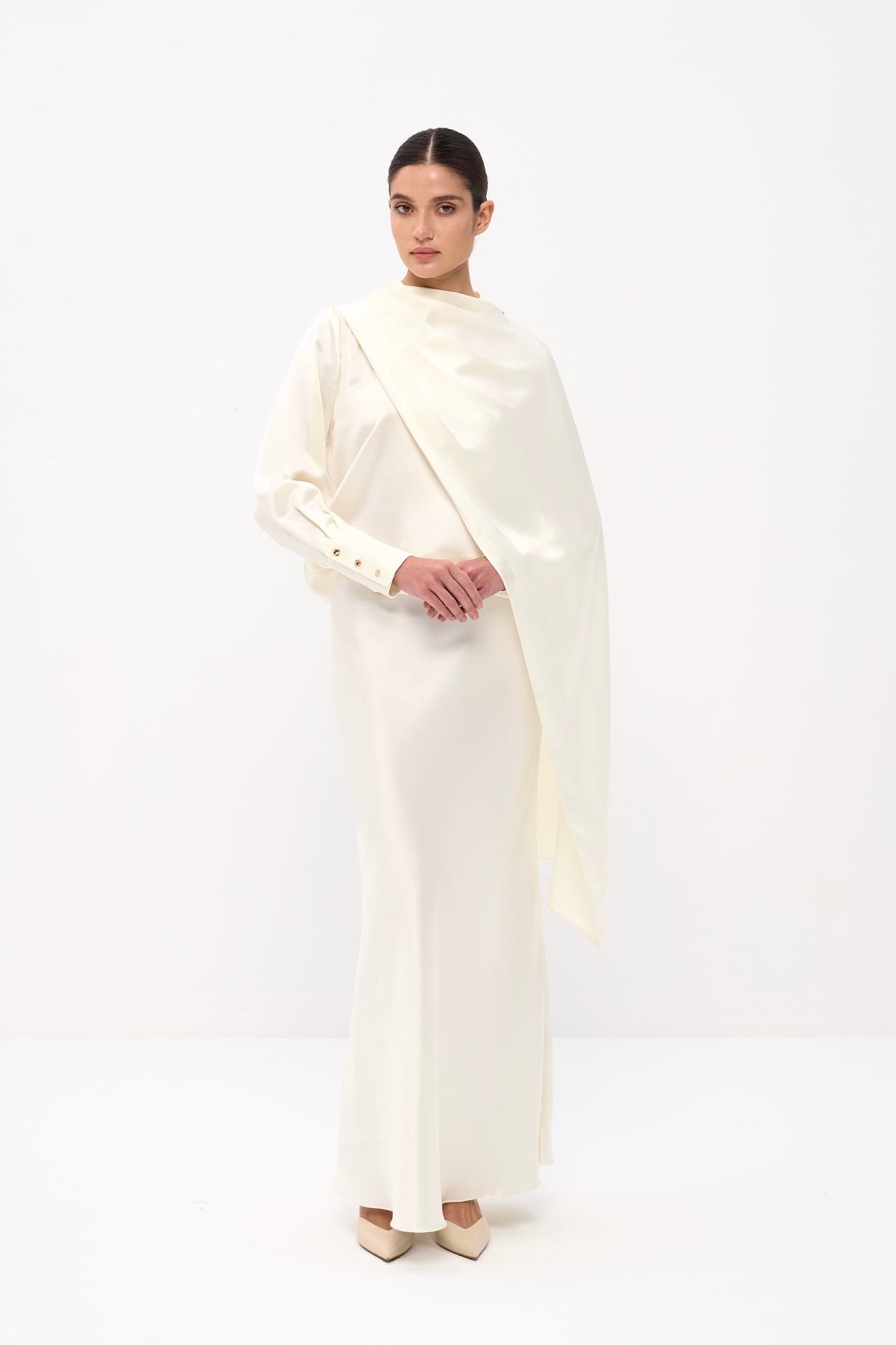
A set made from Naia satin, like the Avery Satin Set, will have a similar luster but better breathability, better longevity, and a lighter environmental profile.
The price difference between acetate satin and Naia satin is real. But the cost-per-wear equation tends to favor the better fabric, especially for pieces you'll return to often.
What the Label Doesn't Tell You
Even when a label is specific, it won't tell you everything. It won't tell you the yarn weight, or whether the fabric was garment-dyed or piece-dyed, or what finishing treatments were applied.
It won't tell you whether the viscose was sourced from sustainably managed forests or not.
It won't tell you if the knit construction is single-jersey or interlock, and that distinction alone can determine whether a dress keeps its shape through an eight-hour day.
This is where brand trust fills the gap. You have to rely on the brand to make good decisions about the things the label can't communicate.
And in my experience, the brands that are transparent about their fabric choices, that name specific fiber suppliers like Lenzing or Eastman, that explain why they chose bamboo jersey over cotton jersey for a particular silhouette, those are the ones making intentional decisions at every level.
I covered some of this in a different context in our guide to what to wear in Dubai, where fabric choice isn't just about aesthetics. It's about function.
A bamboo jersey that wicks moisture and resists odor is doing more work than a polyester blend that traps heat. Both might look fine on a hanger. Only one will feel fine at 2 PM in August.
A Quick Reference for Your Next Shopping Trip
Viscose: Beautiful drape, rich color, breathable. More delicate when wet. Best for dresses, blouses, anything that benefits from fluid movement. Handle with care in washing.
Modal: Softer hand feel, better durability than viscose, excellent color retention. Gets softer with washing. Best for knits, basics, pieces worn close to the skin.
Lyocell (TENCEL): Strong wet and dry, sustainable production, cool to the touch, resists bacteria. Best for warm climates, sensitive skin, pieces you want to wear repeatedly without worry.
Acetate: High sheen, less breathable, heat-sensitive. Best for formal linings and evening pieces where appearance is prioritized. Check for higher-grade alternatives like Naia.
Bamboo Jersey: Made from bamboo cellulose, naturally antimicrobial, soft and stretchy. Excellent for structured casual pieces that need to breathe.
Cotton Knit: Familiar, sturdy, tends to hold structure. Can feel heavy in humidity if the weave is too dense. Best for cooler months or well-ventilated environments.
Why This Matters More Than You Think
I'm not suggesting you need a textile degree to get dressed in the morning. But I do think there's something quietly empowering about understanding what you're putting on your body. It changes the way you shop.
You start noticing when a "satin" dress feels wrong, and you'll know why. You'll understand that the price difference between two seemingly identical knit sets isn't arbitrary, it's the fabric, the sourcing, the finishing.
The women I know who dress with the most consistency, who always seem to look right without seeming to try, they tend to have a good instinct for fabric.
They touch things before they look at them. They check the label before they check the price. They've learned, often through expensive mistakes, that a garment is only as good as what it's made of.
Dubai teaches you this faster than most cities. The heat is honest. It exposes cheap fabric within an hour. Polyester that looked fine in an air-conditioned fitting room starts to feel like a punishment by the time you reach your car.
Viscose knit, on the other hand, keeps its composure. Bamboo jersey stays cool. TENCEL lyocell barely registers the temperature shift between the restaurant and the valet stand.
Living here has given me a deep respect for fabric that works. And a short patience for labels that obscure more than they reveal.
The Case for Fewer, Better Things
Understanding your clothing label isn't about becoming a fabric snob. It's about making informed choices. When you know what viscose does well and where it falls short, when you understand why lyocell costs more and whether that premium is worth it for your lifestyle, you buy less and wear more.
Your closet gets smaller and better. You stop accumulating trend souvenirs made from mystery rayon and start investing in pieces that hold up.
I think that's where most women want to end up. Not with more clothes, but with the right ones.
Pieces made from fabrics that have been chosen with the same care you'd bring to choosing them yourself. Fabrics that work in your climate, your schedule, your life.
If you're curious about how intentional fabric choices translate to actual garments, NÓRA's dress collection is a good place to look. Every piece lists its fabric composition clearly, from Naia satin to viscose knit to bamboo jersey. You'll know exactly what you're getting. And now, you'll know exactly what that means.