


Which Fabric Actually Feels Best in the Heat?
If you've ever Googled bamboo viscose vs cotton vs linen wondering which actually feels best in hot weather, you already know: the answers out there are vague, clinical, and written by people who've never stood in a Dubai parking lot in August.
I have. Many times. And I've done it in cotton that clung, linen that creased before I reached the restaurant, and bamboo jersey that somehow still felt like I'd just gotten dressed. The differences between these fabrics are personal. They show up in how you sit, how you move, whether you reach for that piece again or leave it folded at the back of your closet.
So here's what I actually know, after years of living in a city where heat isn't seasonal. It's permanent.
Cotton in Hot Weather: Familiar, but Not Always Faithful
Cotton is the default. It's what most people reach for when they think "breathable," and they're not wrong. Cotton breathes. It's natural. It's soft against skin. For a casual morning or a breezy evening walk along JBR, cotton does what it's supposed to do.
But cotton has a ceiling, and in real heat, you hit it fast.
The problem is absorption. Cotton pulls moisture from your skin, which sounds great until you realize it holds onto that moisture. It gets heavy. It sticks. If you've ever worn a cotton tee for a full day in July here and noticed it felt damp and shapeless by 3 PM, that's not your imagination. Cotton soaks up sweat and takes its time letting go.
There's also the weight question. Lightweight cotton is wonderful, genuinely. But the cotton used in most affordable clothing tends to be heavier than you'd want for real heat. And lightweight cotton, the good kind, wrinkles almost as badly as linen. So you're trading one problem for another.
Where cotton still wins: casual pieces, layering basics, anything you're going to wash constantly and don't mind ironing. It's honest fabric. Reliable. Just not exceptional in extreme conditions.
Is Linen or Bamboo Better for Summer?
Linen has this reputation. The summer fabric. The vacation fabric.
What linen does well: it dries quickly. Much faster than cotton. It has a natural stiffness that keeps the fabric away from your body, which creates airflow between you and the cloth. That's real comfort. You feel it immediately when you put on a linen dress or a linen shirt. There's space. The fabric doesn't cling.
What linen doesn't do well: stay presentable.
I love linen at a beach lunch. I wore a linen piece to a Friday brunch at Flamingo Room and it looked perfect when I arrived. By the time we'd moved to the terrace for coffee, it looked like I'd slept in it. That's linen. It tells the truth about your day, whether you want it to or not.
In Dubai specifically, linen has another issue. We don't live outdoors. We move between aggressive air conditioning and serious heat, constantly. Linen is designed for one temperature. It doesn't transition well. In a cool restaurant, linen can feel stiff and almost cold. Outside, it's ideal. But how long are you actually outside?
The other thing about linen: it softens with every wash, which is beautiful in theory. In practice, it also loses some structure with every wash. After a season, your linen pieces start to look tired. Not worn in a charming way. Just tired.
So is linen better than bamboo for summer? If you're spending the day outdoors, in consistent heat, with no air conditioning to move through, linen is hard to argue with. But that's not how most of us actually live.
Is Bamboo Viscose Good for Hot Weather?
This is where things get interesting, and where I think most of the online comparisons miss the point entirely.
Bamboo viscose (and bamboo jersey, which is what you'll find in well-made clothing) behaves differently from cotton and linen in ways that matter more than breathability alone. Yes, it breathes. Yes, it wicks moisture. But the thing that actually sets it apart is something harder to measure: it regulates.
Bamboo has low thermal conductivity. That's the technical explanation. The practical explanation is this: when your skin is warm, bamboo doesn't warm with you. It stays cool to the touch. Not cold, not like stepping into a walk-in fridge. Just cool. Neutral. The fabric doesn't react to your body heat the way cotton does.
I first noticed this with the Melissa Draped Gown in bamboo jersey. Long sleeves in Dubai sounds like a contradiction. But I wore it to a dinner at Scalini, then walked to the car afterward in the open air, and at no point did I feel like the fabric was fighting me. It stayed the same temperature, the same weight, the same drape. That consistency is what makes bamboo different. Cotton would have absorbed the humidity outside. Linen would have wrinkled from sitting at dinner. The bamboo jersey just held up.
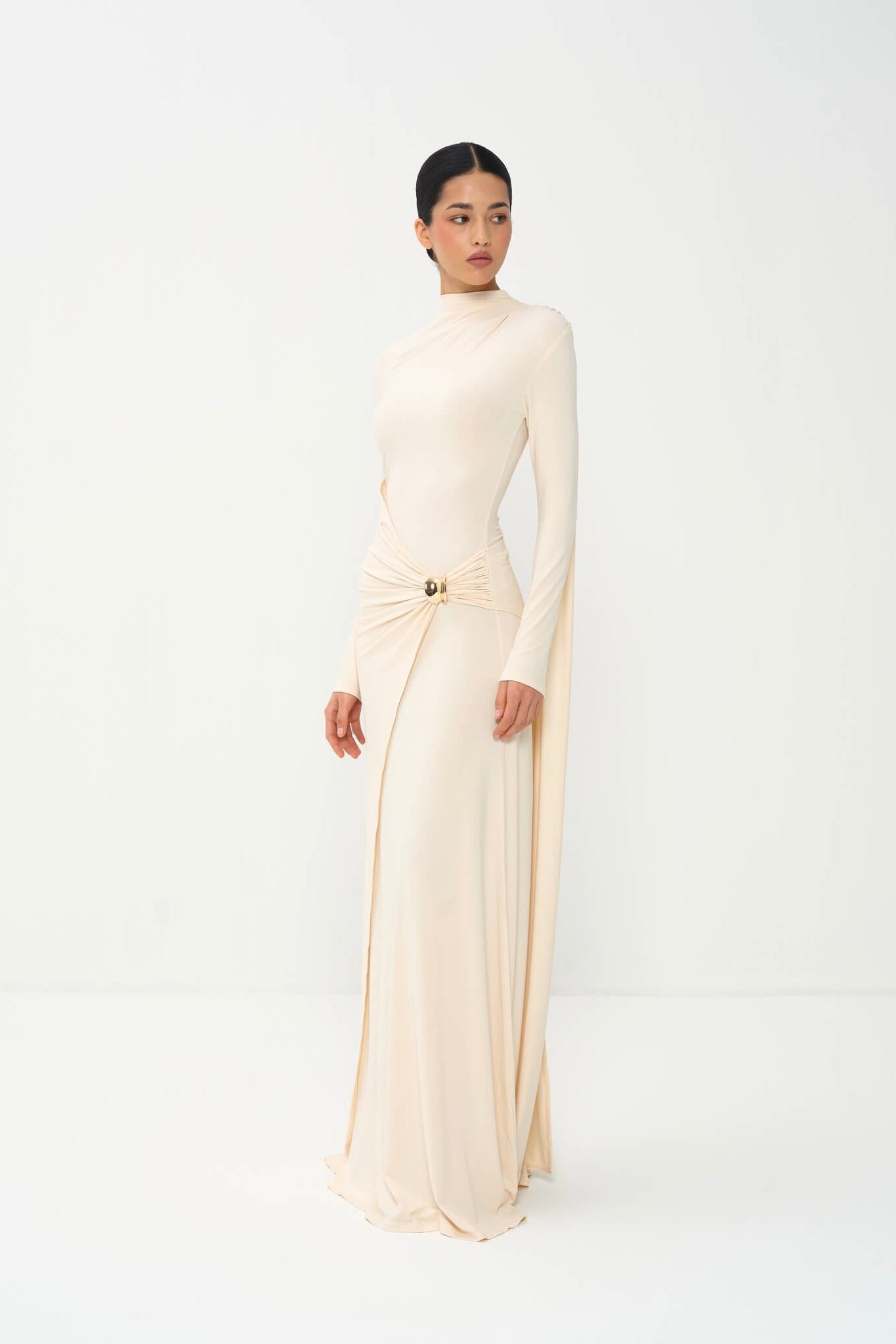
Bamboo also has a natural silkiness that cotton and linen simply don't. It falls against the body rather than sitting on it. If you've felt viscose knit, it's similar, that same fluid quality. But bamboo jersey is lighter, with a softness that feels almost unreasonable for something so durable.
What Nobody Mentions: The Wrinkle Factor
Here's where the real-world comparison gets decisive.
Cotton wrinkles. Linen wrinkles worse. Bamboo jersey barely wrinkles at all.
This matters more than any breathability chart. Because in Dubai, your outfit has to survive a car ride, a valet handoff, an air-conditioned lobby, a walk to your table, and two hours of sitting. If your dress looks different at the end of dinner than it did at the beginning, that's a fabric problem.
I've packed bamboo jersey for trips and pulled it out of the suitcase looking almost exactly the way it went in. (The kind of fabric you pack first and reach for most.) Try that with linen. I have. The results were not the same.
Wrinkle resistance isn't glamorous to talk about. But it's one of the most practical things a fabric can offer, especially for women who move through multiple environments in a single day, which in this city is everyone.
Is Viscose or Linen Better for Hot Weather?
Viscose sits in an interesting place. It's derived from natural fibers, cellulose usually, and processed into something smoother and more fluid than cotton. Good viscose (and there's a wide range of quality) can absorb moisture well, drape beautifully, and feel genuinely cool against the skin.
The Cyria Gown in Viscose is the perfect example. The drape is the kind you'd expect from viscose or even silk, but the fabric itself manages temperature in a way those materials don't. You get the elegance without the maintenance.
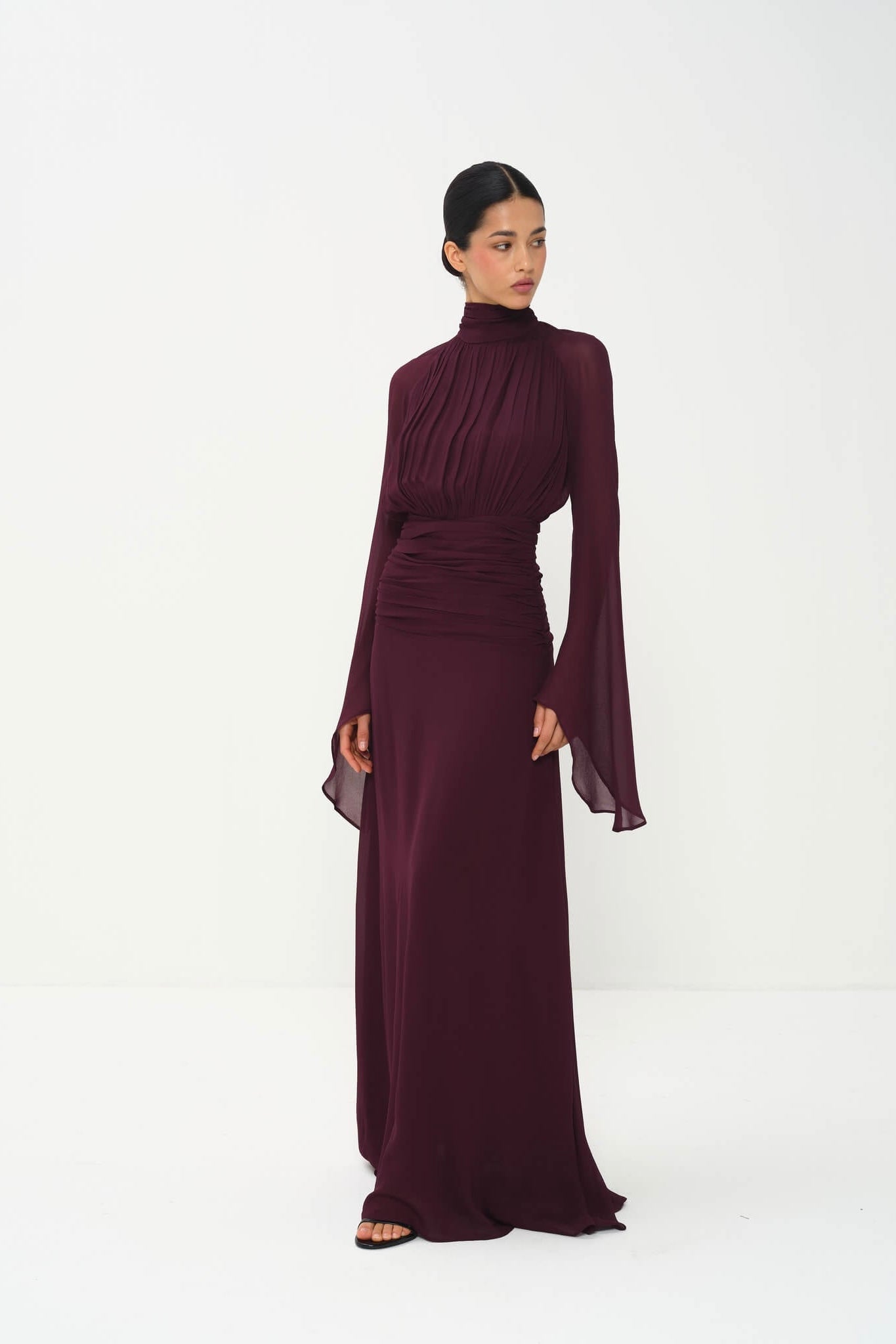
Standard viscose, can feel limp in high humidity. It absorbs moisture readily, sometimes too readily, and doesn't always dry as quickly as you'd want. In an air-conditioned office or restaurant, viscose is lovely. In outdoor heat, it can start to feel heavy faster than bamboo.
Linen, by comparison, dries faster than viscose but carries all the wrinkling issues I've already mentioned. So the honest answer is: viscose is better for comfort and drape, linen is better for pure airflow, and bamboo viscose (or bamboo jersey) takes the best qualities of both and adds temperature regulation on top.
The Fabric Comparison Nobody Asked For (But Everybody Needs)
Let me lay it out plainly.
Cotton is forgiving, familiar, easy to wash. But it holds moisture, wrinkles moderately, and can feel heavy when it's truly hot. It's a good fabric. It's not a great hot-weather fabric.
Linen is the most breathable of the group, dries quickly, and has that effortless European-summer quality. But it wrinkles immediately, loses structure over time, and doesn't transition between indoor and outdoor temperatures with any grace.
Bamboo viscose and bamboo jersey regulate temperature, resist wrinkles, drape with a natural fluidity, and wick moisture without holding onto it. The drawback? It's harder to find, and when it's done well, it costs more. But the cost-per-wear math tends to work out, because you actually reach for it.
There's a reason NÓRA uses bamboo jersey for pieces that need to work across situations. A gown you wear to a wedding at Madinat and then to the after-party. A dress that goes from an afternoon meeting in DIFC to an evening out without needing to be changed. The fabric makes that range possible.
What About Blends?
Pure fabrics are wonderful in theory. In practice, blends often perform better for daily wear.
Cotton-linen blends give you some of linen's airflow with less wrinkling. Viscose-cotton knit blends have a structure that pure viscose can lack. Bamboo is often blended with a small percentage of elastane for stretch, which makes it move with you without losing its shape.
The key is knowing what the primary fiber is. If a garment is 70% bamboo with a touch of elastane, you're getting bamboo's benefits with added flexibility. If it's 50% polyester with some bamboo blended in for marketing purposes, you're getting polyester. Read the composition. It tells you more than the product description ever will.
So Which Fabric Actually Feels Best?
If I had to choose one fabric for a full year in Dubai, every season (and yes, we have seasons here, even if summer dominates the conversation), I'd choose bamboo jersey. It performs in heat. It transitions into cooler weather without feeling out of place. It looks intentional, polished, put-together, without requiring effort or constant adjustment.
If I were packing for a week in the south of France and planned to spend most of my time outdoors, I might lean toward linen. Context matters.
And cotton? Cotton will always have a place. For basics, for sleepwear, for the pieces that live at the bottom of your drawer and come out when you're not trying to impress anyone. There's comfort in that.
But for the moments that matter, for the dress you wear when you want to feel good from the first minute to the last, fabric performance isn't optional. It's the difference between an outfit that works and one that you're constantly aware of wearing. We've written more about dressing for this climate in our guide to what to wear in Dubai, which covers the practical side of building a wardrobe that actually suits the way we live here.
The best fabric is the one you forget you're wearing. In my experience, in this city, that's bamboo jersey more often than anything else. If you're curious about how that feels in practice, NÓRA's new arrivals are a good place to start. The fabric does most of the talking for the upcoming summer.