


What to Wear in Oman: A Style Guide
Oman rewards the woman who dresses with thought. Here's what to wear in Oman, from Muscat's marble corridors to the wadis beyond.
Oman Is Not Dubai, and That's the Point
I spent a long weekend in Muscat last spring and the thing that stayed with me wasn't the Royal Opera House or the corniche at sunset, though both were worth the trip. It was how the city made me reconsider what I'd packed. Oman has a quieter pace than Dubai. More restrained. The architecture is low, the colors are sand and white, and the whole country seems to operate with a kind of unhurried grace that you don't want to interrupt with the wrong outfit.
Most guides about what to wear in Oman will tell you to cover your shoulders and knees. That's true. But it barely scratches the surface. The real question isn't how much skin to cover. It's how to look like yourself while respecting a place that takes modesty seriously, without defaulting to shapeless linen and calling it a day.
Oman deserves more effort than that. And honestly, so do you.
How to Dress in Muscat as a Woman
Muscat is more conservative than Dubai but far from unwelcoming. Women here, both Omani and visiting, dress with real intention. You'll notice it in the souqs, in the hotel lobbies, at the restaurants along Shatti Al Qurum. There's an appreciation for fabric, for drape, for color done well.
For daytime in Muscat, you want pieces that cover your shoulders and fall past your knees. Loose is better than tight. But loose doesn't have to mean baggy or unstructured. A well-cut maxi dress in a breathable fabric does exactly what you need it to: it moves with you, it reads well in photos, and it respects the local culture without looking like you're performing respect.
Something like the Avery Draped Set in Naia satin works beautifully here. The length is right, the pleating adds interest without volume, and the fabric doesn't cling in the heat. I wore mine to the Sultan Qaboos Grand Mosque (with a scarf draped over my head and shoulders) and then straight to lunch at The Beach Restaurant in Al Bustan without feeling overdressed or underdressed at either.
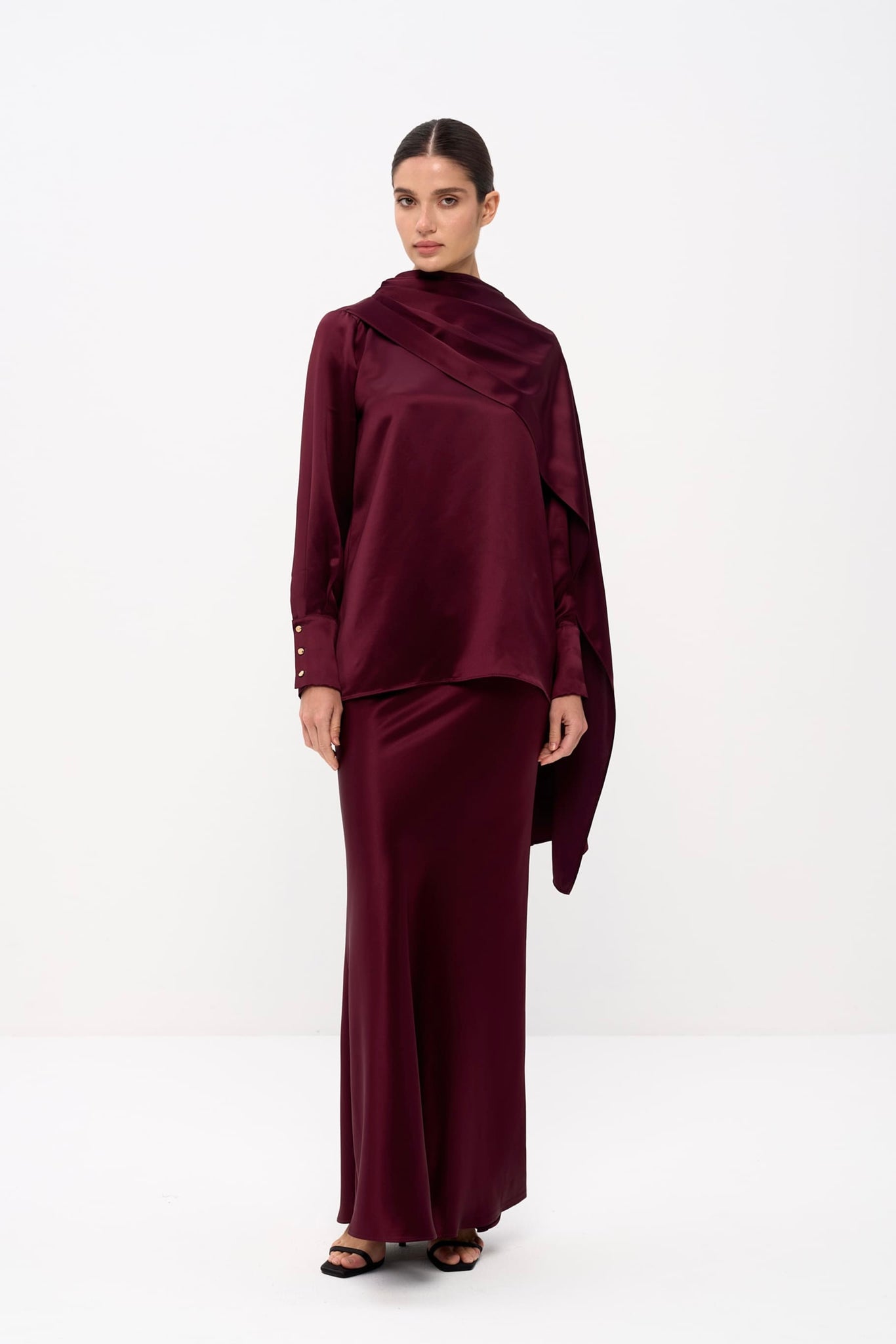
That's the test in Oman. Can the same outfit handle a mosque visit and a restaurant? If yes, you've packed well.
How Do You Dress Modestly in Oman Without Losing Your Style?
This is where most packing guides fall apart. They'll tell you to throw a few maxi skirts and loose tees into your suitcase, and while that technically works, it also makes you feel like you left your personality at the airport.
Modesty and style aren't in tension. They just require a little more thought about silhouette and fabric. In Oman, the women who look best are the ones who've chosen pieces with interesting lines, good drape, maybe an unexpected neckline or a sleeve detail that does something. Coverage is the starting point, not the whole story.
A knit set, for instance, gives you the coverage of separates with the polish of a coordinated look. The Sevin Dress Set in viscose knit is the kind of thing that works from Old Muscat to Nizwa Fort and still looks put-together at dinner. The fabric has enough weight to drape properly but won't overheat you.
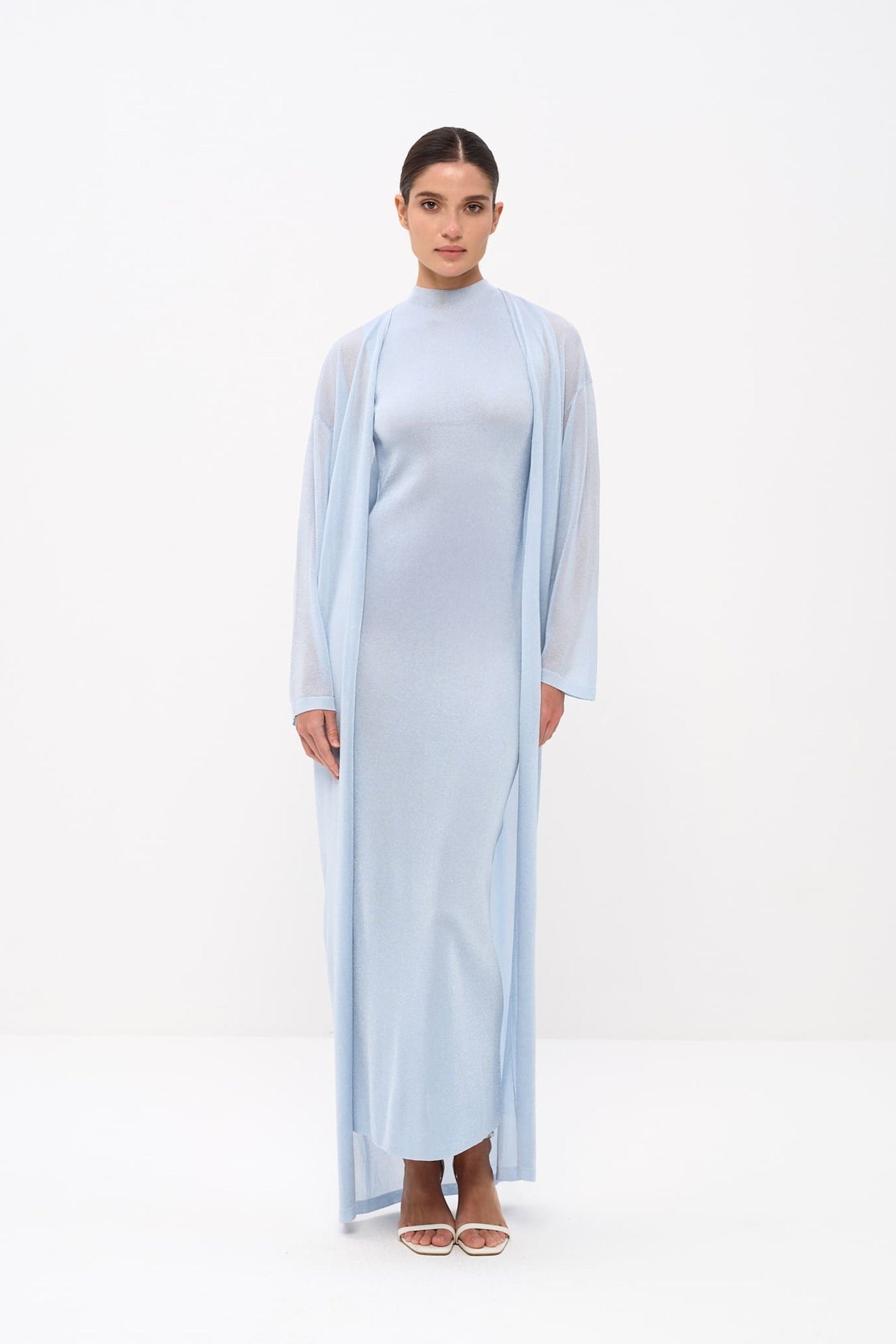
Color matters too. Oman's palette is warm, earthy, sun-washed. Deep greens, tans, rust, cream, soft blues. These tend to photograph well against the stone architecture and the mountains. Bright white reads beautifully here, though it picks up dust faster than you'd like on a wadi hike.
What About the Mosques?
The Sultan Qaboos Grand Mosque is one of the most beautiful buildings I've walked through anywhere. The dress code is specific. Women need to cover their hair, wear long sleeves, and cover to the ankles. No tight clothing, no sheer fabric.
Some women bring a separate outfit for mosque visits. I'd rather plan around it. If your dress already has long sleeves and hits the ankle, all you need is a scarf for your hair. Carry one in your bag. A lightweight viscose scarf works perfectly and folds down to nothing.
The Grand Mosque is open to non-Muslim visitors in the mornings, Saturday through Thursday. Plan to go early. The light in the main prayer hall before 10am is extraordinary.
Can I Wear Jeans in Oman?
Yes. Jeans are fine in Muscat, especially in malls, restaurants, and hotel areas. Omani dress codes are about modesty, not formality. A good pair of jeans with a loose top that covers your shoulders will work in most everyday settings.
That said, denim in 40-degree heat is a commitment. Between April and October, you'll want fabrics that breathe. Viscose, cotton, TENCEL, bamboo jersey. These all move air better than denim and they're lighter to pack. If you're visiting in the cooler months (November through February, when Oman is genuinely perfect), jeans are a comfortable option for the mountains around Jebel Akhdar or the coastal towns south of Muscat.
Can I Wear Leggings in Oman?
Leggings on their own aren't ideal for public spaces in Oman. They're technically covered but they're tight, and the local expectation leans toward looser fits. If you want to wear leggings, pair them with a long tunic or a dress that falls to mid-thigh or below. That combination is perfectly appropriate and quite comfortable for a day of walking through Muttrah Souq or exploring the old forts.
For hiking the wadis, leggings or fitted trousers are practical and nobody will mind, especially at spots like Wadi Shab or Wadi Bani Khalid where the crowd is mostly tourists. Just layer a longer top over them.
Packing for Oman: the Pieces That Actually Work
I've done the Muscat trip three times now, and my packing has gotten simpler each time. Here's what I've landed on.
Two maxi dresses in breathable fabric. One with sleeves for mosque visits and more conservative areas, one sleeveless for beach clubs and hotel pools where you can dress more casually.
A knit set that works for dinner. A loose top and wide-leg trousers for wadi days. A scarf. Comfortable sandals that can handle cobblestones (Muttrah's corniche is beautiful but the ground is uneven). One pair of shoes you can get wet for wadi swimming.
That's it. Pack with intention and you won't need more than a carry-on.
The fabric question is real in Oman. The heat from May to September is intense, hotter than Dubai in some stretches, and drier. Polyester and heavy cotton will have you counting the minutes between air-conditioned spaces.
Natural and semi-synthetic fabrics like viscose, bamboo jersey, and TENCEL handle the climate much better. They regulate temperature, they don't hold odor, and they wrinkle less than pure linen (which always looks incredible for the first hour and then looks like you slept in it).
Beyond Muscat: What to Wear in Sur, Nizwa, and the Wadis
Muscat is the most cosmopolitan city in Oman, but many visitors spend time outside the capital, and the dress expectations shift a bit depending on where you go.
Nizwa is more traditional. It's the old capital, home to a famous fort and a Friday goat market that's worth waking up early for. Here, I'd lean toward longer sleeves and looser fits even more than in Muscat. The locals are warm and welcoming, and dressing conservatively is a small gesture of respect that goes a long way.
Sur, on the coast, is quieter and more relaxed. You'll still want modest coverage in the town itself, but the beaches nearby are more casual. Same goes for Ras Al Jinz, where you can watch turtles nesting at night. (Bring a light layer for the beach at night. The wind off the Arabian Sea can surprise you.)
For the wadis, practicality takes over. You'll likely be scrambling over rocks, wading through water, and hiking in varying terrain. Quick-dry fabrics, secure shoes, and a top you don't mind getting wet are the priorities. Save your nicest pieces for Muscat.
Evenings in Muscat
Dinner in Oman is calmer than dinner in Dubai. There's less of the see-and-be-seen energy. The restaurants are beautiful, the food is extraordinary (The Restaurant at The Chedi Muscat is worth a visit, and Bait Al Luban overlooking Muttrah Corniche is perfect for Omani cuisine), but the dress code stays moderate.
A long-sleeve gown in a fabric with a bit of sheen, like the Cyria Long-Sleeve Gown in viscose, gives you evening polish without tipping into overdressed. It covers everything, it moves well, and the fabric catches light in a way that feels intentional rather than flashy. You can wear it to dinner and feel like the best-dressed person in the room while also looking like you didn't try too hard.

(That balance, incidentally, is the whole goal.)
A Note on Respect
Oman is one of the most hospitable countries I've traveled to. People are genuinely kind, often going out of their way to help visitors. The dress code isn't a burden. It's an invitation to engage with the culture on its own terms.
You don't need to wear an abaya (though you're welcome to, and many visitors find it a comfortable option). You don't need to cover your hair outside of mosques. You just need to dress with thought. Shoulders covered. Knees covered. Nothing too tight or too sheer. That's the whole structure.
We wrote about similar considerations in our guide to what to wear in Dubai, and many of the same principles apply. The difference is that Oman leans slightly more conservative, and the payoff for dressing well there feels even more personal. It's a smaller, quieter country, and the effort you put into your appearance registers differently.
The Real Style of Oman
The women in Oman have a way of dressing that I find genuinely inspiring. There's a commitment to fabric quality, to fit, to color that feels intentional without being studied. The abayas in Muscat are often stunning, with hand-stitched details and unexpected textures. The younger generation mixes traditional and contemporary pieces in ways that feel completely natural.
Visiting Oman taught me something about my own wardrobe. When coverage is non-negotiable, you start paying attention to the things that actually distinguish a good outfit from a forgettable one: the quality of the fabric, the way a sleeve falls, whether a hemline hits at the right point. You stop relying on exposure and start relying on craft.
That shift stays with you, even after you're home.
If you're putting together a travel wardrobe for Oman, start with our new arrivals collection. Most of what you need for a week in Muscat is already there, in fabrics that were designed for exactly this kind of climate and exactly this kind of occasion. The hard part isn't finding the right pieces. It's narrowing them down.