


Slow Fashion in the Middle East
What a better wardrobe really looks like has less to do with rules and more to do with paying attention. Here's what slow fashion in the Middle East actually means when you live here.
The closet that works too hard
I cleared out my wardrobe last Ramadan. Not in a dramatic, everything-must-go way. More like a quiet audit. I tried on every piece I owned, and I kept noticing the same thing: the clothes I reached for most were the ones I thought about least when I bought them. A viscose knit set I'd worn maybe thirty times. A satin dress that went from an iftar at a friend's house to a Friday brunch at Zuma without needing a second thought. A pair of straight-leg pants that worked under an abaya and on their own.
The pieces I never wore? Those were the ones I'd been most excited about. The trend-driven buys. The ones I'd ordered at midnight because someone on Instagram made them look like the answer to something I hadn't even asked.
That gap, between what excites us and what actually works, is where most wardrobe frustration lives. And it's where slow fashion in the Middle East starts to make real sense. Not as an ideology or a hashtag, but as a practical response to how we actually dress in this part of the world.
Why slow fashion looks different here
Most conversations about slow fashion are written from a European or American perspective. Buy less. Wear more. Capsule wardrobe. Thirty items. Those structures assume a certain climate, a certain lifestyle, a certain dress code. They don't account for the way women here dress.
In Dubai, your outfit might need to work in 22-degree air conditioning at noon and 40-degree humidity by evening. You might wear a full-length dress to a work meeting and then the same dress (or something similar) to a dinner at Scalini two hours later. You might layer an abaya over everything, which changes how a silhouette reads entirely. You might attend four events in a single weekend during wedding season, and repeating an outfit isn't always the comfortable option it is in cities where nobody's watching.
So telling women here to simply "buy less" misses the point. The better advice is to buy with more clarity. Know what your life actually demands, then fill those spaces with pieces that hold up across occasions, temperatures, and the particular social rhythm of this region.
What a better wardrobe actually looks like
I've spent years watching how well-dressed women in the Gulf build their closets, and the common thread isn't minimalism. It's intentionality. They don't own fewer clothes than everyone else. They own fewer wrong clothes.
Here's what I've noticed in practice:
They invest in fabrics that breathe. This sounds obvious until you realize how much of what's sold in malls here is polyester, nylon, or blended synthetics that feel fine in the fitting room and punish you by hour three. The women who dress well in this climate gravitate toward natural and semi-synthetic fibers: viscose, bamboo jersey, TENCEL, cotton knit, satin made from wood pulp rather than petroleum. These fabrics drape differently, feel different against skin, and look better as the evening goes on.
They buy for their actual calendar. A woman in Riyadh who attends family gatherings every Thursday evening has different needs than a woman in Dubai who splits her time between an office in Business Bay and dinners in JBR. Both might love fashion equally, but what "enough" looks like in each closet is completely different. The mistake is building someone else's wardrobe.
They care about how a piece ages. Not just whether it'll fall apart (though that matters), but whether they'll still want to wear it in two years. A well-cut Solene Cardigan Set in tencel is the kind of thing that moves with your life. Wear the dress alone in summer, add the jacket when winter arrives (Dubai's version of winter, anyway), style it differently each time. That's not a trend purchase. That's a wardrobe decision.

The real cost of a cheap dress
There's a question I hear often, usually phrased as a defense: "But I can get something similar for a quarter of the price." And you can. You absolutely can. The question is what you're actually getting.
A dress made from synthetic fabric in a fast production cycle tends to do a few things: it pills after a handful of washes, it traps heat against your body (particularly unpleasant here), it loses its shape at the seams, and it photographs differently than it looks in person, usually flatter, shinier, less refined. You wear it twice, maybe three times, then it sits in your closet generating guilt until you donate it or throw it away.
A dress made from bamboo jersey or Naia satin, cut with attention and sewn properly, does something else entirely. It softens with wear. It keeps its drape. It works across seasons because the fabric responds to your body rather than fighting it. You wear it ten times, twenty, fifty. The cost per wear drops to almost nothing.
This isn't a moral argument. I'm not interested in shaming anyone's shopping habits. It's a practical one. If you're going to spend money on clothes (and we all do, regularly), the math favors fewer, better things.
How to build a wardrobe with real staying power
There's a popular structure floating around called the 3-3-3 rule: choose 3 tops, 3 bottoms, and 3 pairs of shoes, and build a week of outfits from those 9 pieces. It's a fine exercise for understanding what you actually need. But it's a thought experiment, not a wardrobe strategy. Life here is too varied for that kind of rigidity.
What works better, in my experience, is thinking in terms of versatility per piece rather than total item count.
Ask yourself: how many different contexts can I wear this in? An Avery Draped Set in Naia Satin, for instance, works at a Friday lunch, a gallery opening in Al Quoz, an evening out, or a birthday dinner where you want to look put together without looking like you're trying to upstage the host. That's four contexts from one dress. Compare that to a statement piece you'd only wear once because it's too recognizable, too specific, too tied to a single occasion.
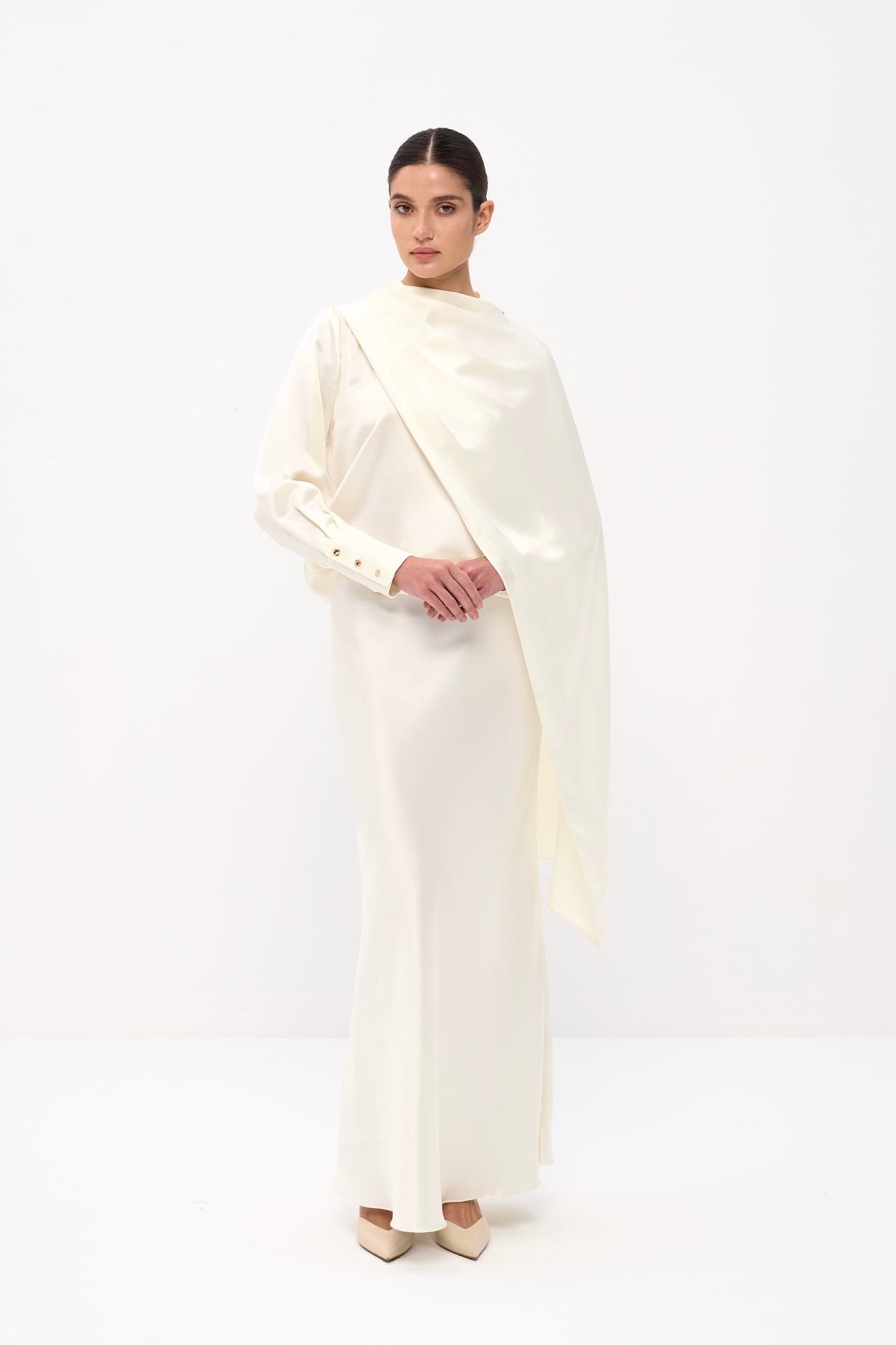
The women who build lasting wardrobes tend to follow a loose pattern: they anchor their closets with pieces that move across occasions, then add a few special-occasion items for moments that call for something more deliberate. The ratio shifts depending on lifestyle, but the principle holds. Your everyday pieces should work harder than your event pieces.
Fabric as a wardrobe decision, not a label detail
I want to spend a moment on fabric because I think it's the most undervalued part of getting dressed in this climate.
When you live somewhere with consistent heat and aggressive air conditioning, your clothing is essentially managing two environments every time you walk through a door. A fabric that breathes outdoors but offers enough weight to feel comfortable indoors is doing real work. Viscose knit does this well. So does bamboo jersey and TENCEL lyocell. These are fibers that regulate temperature naturally, wick moisture without that athletic-wear sheen, and drape in a way that reads well whether you're seated at a long dinner table or standing in a hotel lobby.
Polyester, by contrast, locks heat in. It's why a synthetic dress can feel fine for the first hour and suffocating by the second. It's also why so many "affordable" options end up abandoned. The problem isn't the design. It's the material.
Paying attention to what a garment is made from is probably the single most impactful slow fashion habit you can build. More than buying less, more than following capsule formulas, more than reading sustainability reports. Just check the label. Touch the fabric. If it doesn't feel like something you'd want against your skin for eight hours, it won't be.
What slow fashion is not
It's not wearing the same five things on rotation and calling it philosophy. It's not refusing to enjoy fashion or treat yourself to something beautiful. It's not a performance of restraint for other people's benefit.
Slow fashion, at least the version that makes sense to me, is simply caring about what you buy. It's pausing before a purchase and asking whether this piece will earn its place in your closet. It's choosing a Eliane Gown because you know it'll work for the dinner you have this week, the one next month, and the one you haven't planned yet, over a trending silhouette that'll feel dated by the time it arrives.
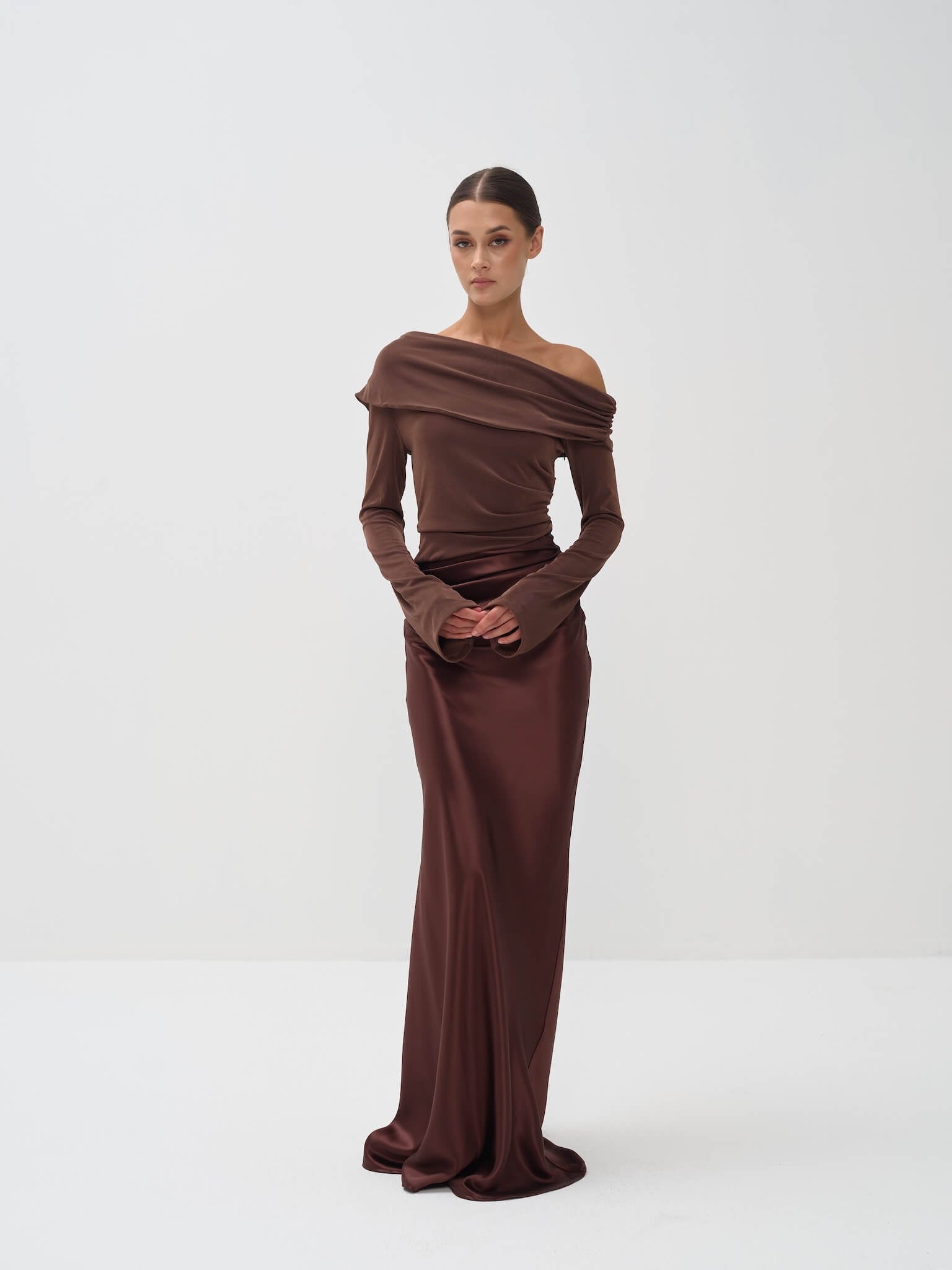
It's also, honestly, about pleasure. The pleasure of owning things that feel good. Of opening your closet and not feeling overwhelmed. Of getting dressed in four minutes because everything in there is something you'd actually choose.
We wrote about this idea from a different angle in our piece on signature statement pieces, and I think the two conversations overlap in an important way. A signature piece isn't about repetition. It's about having something so right for you that it becomes part of how you move through the world.
The Middle East is already ahead on some of this
Something that often gets overlooked in the slow fashion conversation: women in this region have been dressing with intentionality for a long time. The custom tailoring tradition, the care given to occasion dressing, the expectation that a garment should be well-made enough to pass down or re-wear across years of family events. These aren't new ideas. They're cultural habits that predate the slow fashion movement by generations.
What's changed is the availability of ready-to-wear that meets those same standards. For a long time, your options were either fast fashion from global chains or custom pieces that required fittings, time, and a relationship with a tailor. The middle space, well-made, thoughtfully designed ready-to-wear in fabrics that respect this climate, was thin. That's shifted in the last few years, and it's shifted meaningfully.
Brands based here, designing for women who live here, using fabrics chosen specifically for how they perform in this environment. That's the version of slow fashion that actually works in practice. Not imported guidelines from a different climate and culture, but wardrobes built around the way life here actually moves.
Where it starts
If you're reading this and thinking about your own closet, I'd suggest starting small. Not with a purge. Not with a spreadsheet. Just with your next purchase.
Before you add something to your cart, ask two questions: What is this made from? And how many times will I wear it?
If the answers are "something that'll feel good in Dubai's heat and hold up after many washes" and "more times than I can count right now," you're probably making a good decision. If the answers are "I'm not sure" and "at least once," you might want to keep looking.
There's a collection of dresses and sets worth spending time with, the kind that rewards the slow scroll. Not because everything will be right for your life, but because some of it will, and the difference between that and impulse shopping is the difference between a wardrobe that works and one that just takes up space.