


Plant-Based Fabrics: An Honest Guide
The marketing version of sustainable fabric is simple. The reality is more interesting, and worth understanding before you build a closet around it.
I've been asked some version of this question at least a dozen times in the past year, usually over coffee, usually by someone smart who's just read something conflicting online: are plant-based fabrics always better?
A more honest guide than the marketing version would require actual nuance. And nuance doesn't fit on a hang tag.
So here's what I've learned, both from paying attention to the industry and from living in Dubai, where your fabric choices have to answer to real heat, real air conditioning, and a social calendar that doesn't slow down.
The Simple Story Everyone Tells
You've heard it. Natural good, synthetic bad. Cotton comes from the earth, polyester comes from oil. One biodegrades, the other sits in a landfill. Case closed.
Except it isn't.
Conventional cotton uses enormous amounts of water. Depending on who you ask, a single cotton t-shirt can require anywhere from 700 to 2,700 liters. And the pesticide issue isn't minor. Cotton farming accounts for a disproportionate percentage of global insecticide use. The plant is natural. The process of growing it at scale, in many cases, isn't.
Meanwhile, not all synthetics are created equal, and not all plant-based fabrics are created equal either. The word "natural" on a label tells you where a fiber started. It tells you almost nothing about how it was processed, dyed, finished, or what it will feel like against your skin in June in Dubai.
Why Everyone's Getting Rid of Polyester
There's a real reason polyester has fallen out of favor with people who care about what they wear, and it's not just about environmentalism. It's about feel.
Polyester traps heat. It doesn't breathe. It pills. It holds onto odor in a way that's genuinely unpleasant. After a few washes, that "silky" polyester blouse starts to look like what it is: plastic. In Dubai, where you move between 24-degree interiors and 42-degree exteriors multiple times a day, polyester punishes you for the transition every single time.
The microplastics conversation matters too. Every wash cycle sends tiny plastic particles into the water system. That's real, it's measurable, and it's one of the strongest arguments against polyester specifically.
But the solution isn't as simple as "just buy cotton."
The Fabrics That Actually Work (and Why)
The more interesting conversation is about what's happened in between the two extremes. There's a generation of fabrics that start as plants but go through a thoughtful chemical process to become something with the drape and softness of silk without the environmental footprint of polyester.
Naia satin is one. It's derived from wood pulp, specifically from sustainably managed forests, and the production process recaptures and reuses solvents rather than dumping them. The result is a fabric that feels genuinely luxurious. Cool to the touch. Fluid. The kind of weight that moves with you rather than clinging.
TENCEL lyocell is another. Same idea, different finish. Eucalyptus-based, closed-loop production. It's softer than cotton, more breathable than linen, and it holds color well.
Bamboo jersey sits somewhere else entirely, with a stretch and recovery that makes it feel almost like a second skin, but without the synthetic snap-back that cheapens the silhouette over time.
These are all plant-based. But they're not your grandmother's cotton. And that distinction matters because the question was never really "plant or plastic." The question is: how much thought went into the choice?
What "Sustainable" Means When You Wear It Every Day
Here's where I think the honest conversation starts, and where the marketing version usually stops.
A truly sustainable fabric isn't just about the field it was grown in or the factory it was woven in. It's about what happens after you buy it. Does the garment hold its shape? Does the color stay true? Can you wear it twenty times, not just two? Does it wrinkle so badly you abandon it after one trip?
A dress made from organic cotton that you wear once and never touch again because it doesn't travel well, doesn't hold up at dinner, and fades after the first wash is not a sustainable purchase. It's a well-intentioned one. That's different.
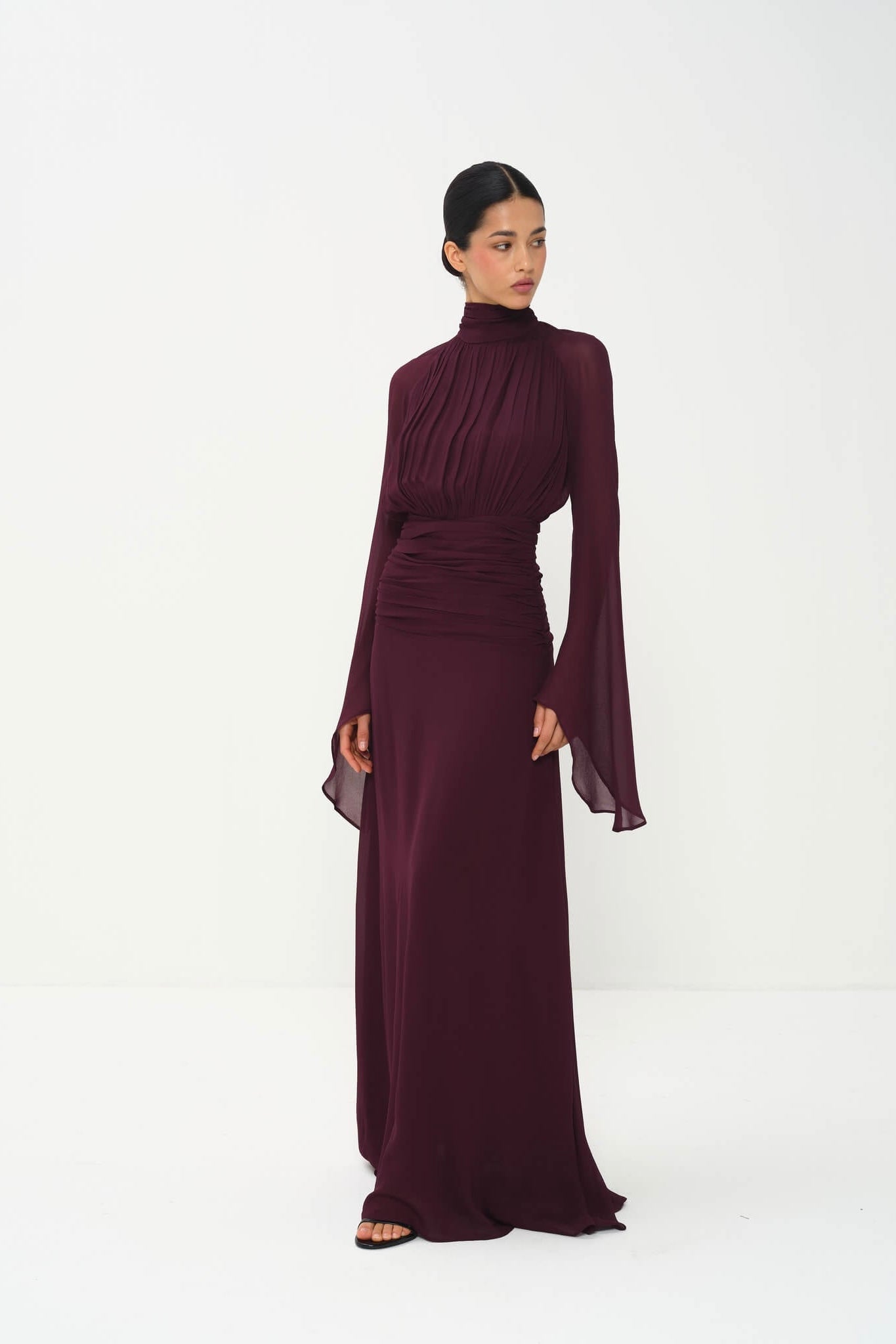
I think about this every time I pack for a trip. A piece like the Cyria Gown in viscose, for example, is the kind of dress that folds flat, doesn't wrinkle, and looks right at a dinner in Bodrum or a morning in Al Fahidi. (The kind of dress you pack first and reach for most.) That's sustainability in practice, not just on paper.
Why Eco-Friendly Textiles Are Becoming the New Luxury
There was a time when luxury meant excess. Heavy embroidery, overwrought construction, gold everything. That era feels dated.
The women I know who dress with the most intention have quietly moved toward fabrics that feel good on the body, hold up to real life, and don't require you to compromise comfort for polish. That's the new definition. And it happens to overlap almost entirely with the plant-based and responsibly produced fabric conversation.
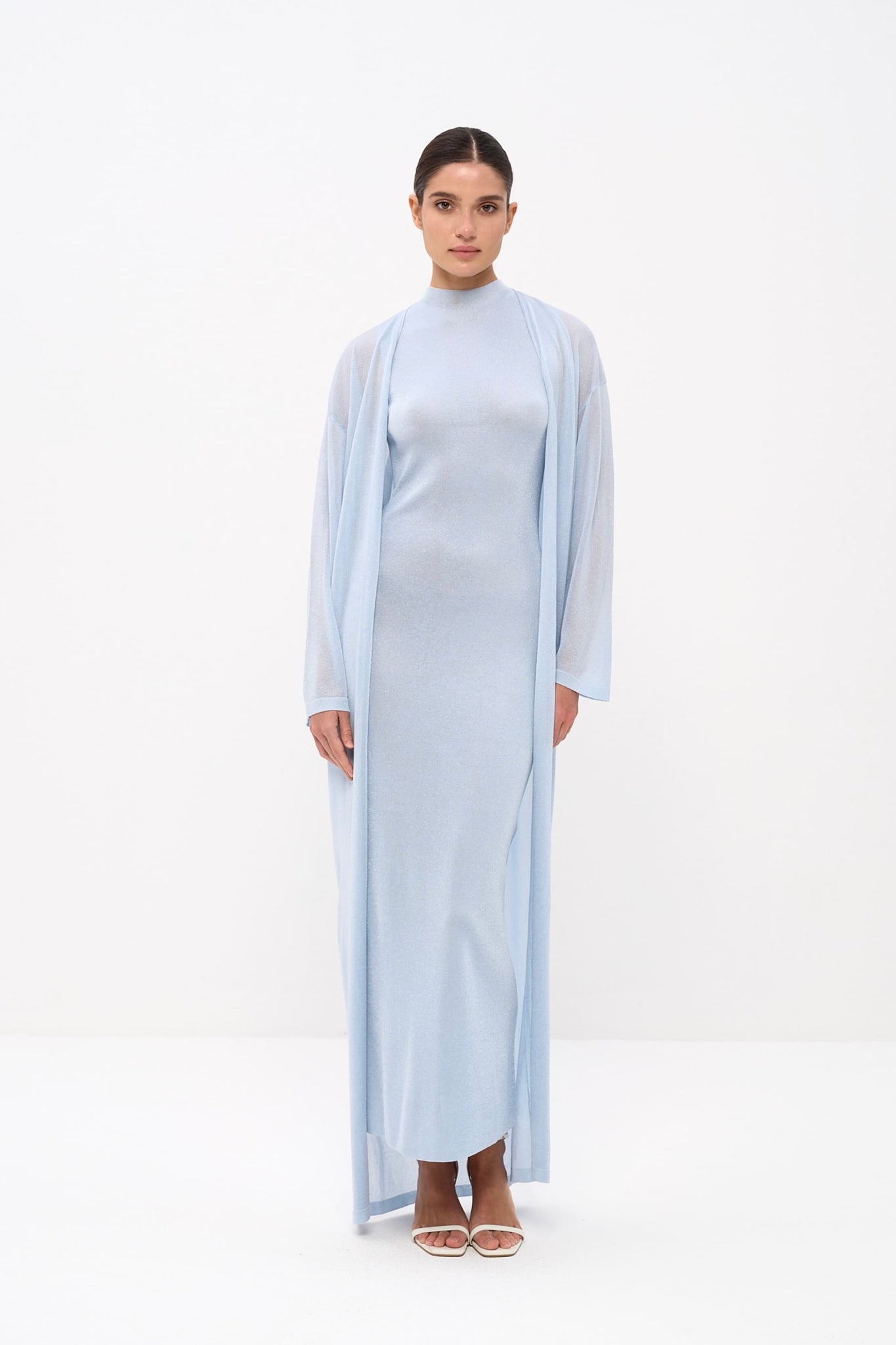
Viscose knit is a perfect example. It has a weight to it that reads well without feeling stiff. You can wear a viscose knit set to a meeting at DIFC, then straight to a late lunch at Scalini, and look like you planned exactly one outfit for the day. Because you did. Something like the Sevin Dress Set does this effortlessly. The drape looks intentional. The fabric moves. And after a full day, it still looks like you just put it on.
Luxury used to be about what you could afford. But recently, it's about what you chose and why. That shift is real, and it isn't going anywhere.
What the Marketing Version Leaves Out
A few things nobody puts on their website:
Not all viscose is created responsibly. Standard viscose production can involve harsh chemicals and deforestation. The fiber itself is fine. The sourcing and processing are where the problems live. You have to ask where the wood pulp comes from and what happens to the chemicals used in production. Closed-loop processes, like those used to make TENCEL and Naia, address this directly. Regular viscose from an unknown supply chain? Less clear.
Linen is wonderful in theory and complicated in practice. It wrinkles aggressively, which some people love and others find impractical. It softens over time but starts stiff. And it's not always produced at the scale or price point that makes it accessible. I love linen. I also know that for most women's daily lives in Dubai, it's a sometimes fabric, not an always fabric.
Organic certifications vary wildly in rigor. GOTS is the gold standard. Some other labels are less meaningful than they appear. If a brand is vague about its certifications, that vagueness is usually the answer.
And here's the part that might be unpopular: a small percentage of synthetic fiber in a blend isn't always a moral failing. Sometimes 5% elastane is what gives a garment the stretch and recovery it needs to last five years instead of five months. Context matters. A 95% bamboo jersey with 5% elastane is a far cry from a 100% polyester blouse. Treating them the same doesn't help anyone make better choices.
How Dubai Changes the Equation
Living in this city changes how you think about fabric completely. We covered this in more detail in our guide to what to wear in Dubai, but it's worth emphasizing here.
The climate is unforgiving. Polyester in August is genuinely punishing. Heavy cotton in humidity feels like wearing a damp towel. And anything that doesn't transition smoothly from the car to an air-conditioned restaurant to a walk along JBR at sunset isn't pulling its weight.
This is why the semi-synthetic plant-based fabrics, Naia satin, bamboo jersey, TENCEL, have become so popular with women here. They handle temperature shifts without complaint. They breathe. They drape rather than cling. They don't arrive at dinner looking like they've been through something.
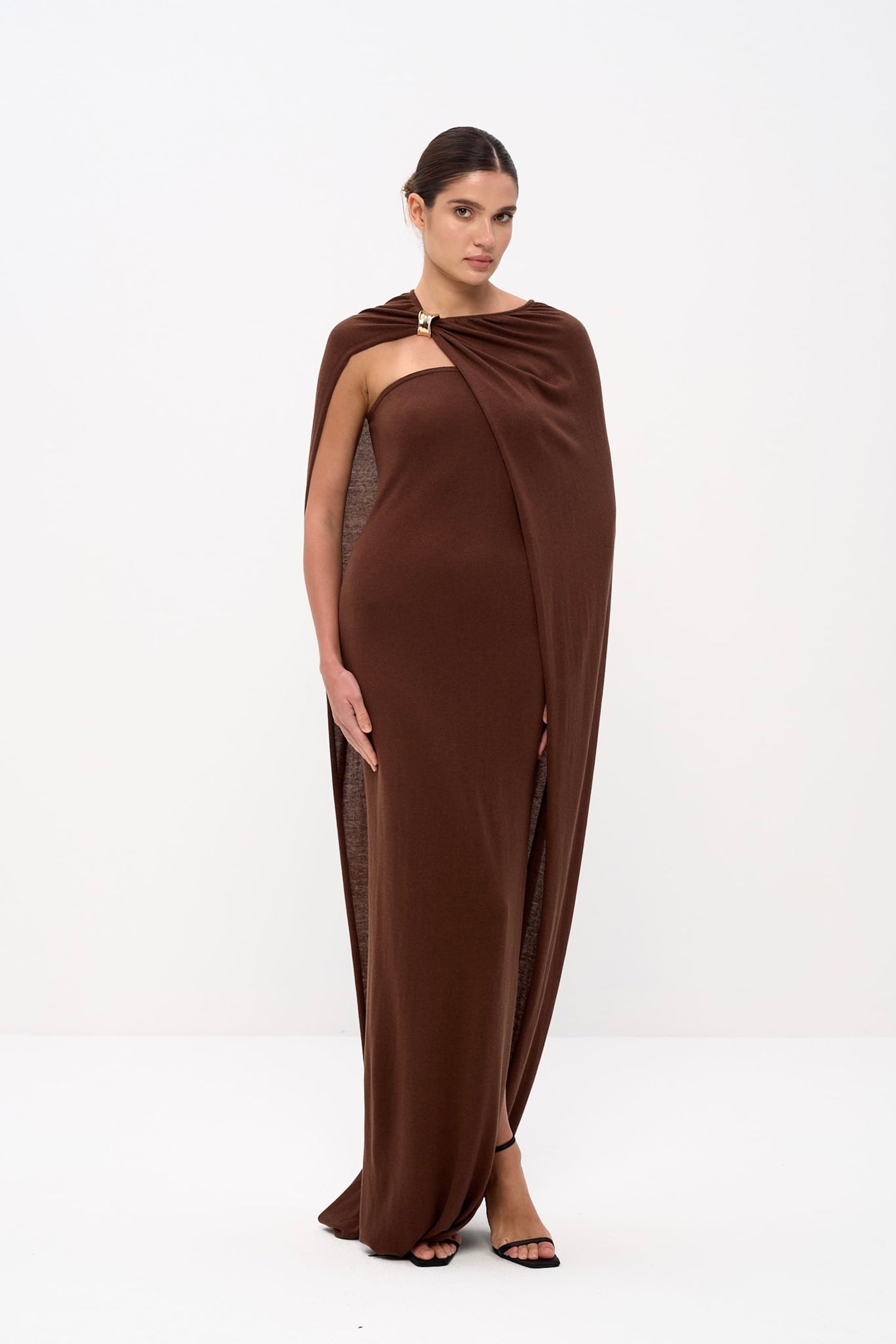
The Thalia Strapless Gown in TENCEL is a good example of this in action. The fabric is light enough for outdoor heat but has enough substance that it doesn't look flimsy under the restaurant lights. That balance is harder to achieve than it sounds.
Dubai's style has its own rhythm. It borrows from everywhere but copies nothing. And the fabrics that work here tend to be the ones that were designed with real conditions in mind, not just photographed well in a studio.
A More Honest Answer
Are plant-based fabrics always better? No. Not always. A poorly sourced, conventionally grown cotton garment that falls apart in three months isn't better than a well-made recycled polyester piece that lasts years.
The honest guide acknowledges that "plant-based" is a starting point, not a finish line.
What matters is the full picture. Where the raw material comes from. How the fabric is processed. Whether chemicals are recaptured or released. How the garment is constructed. And, perhaps most practically, whether you'll actually wear it enough to justify its existence in your closet.
The best approach I've found is to ask fewer questions more carefully. Instead of "is this natural?" try "what is this made of, specifically, and how will it hold up to my actual life?" That second question is less Instagram-friendly but far more useful.
The women I know who have the most purposeful wardrobes aren't the ones who read every sustainability report. They're the ones who buy fewer things, choose fabrics that feel good and last, and wear what they have with confidence. That's the version of sustainability that actually sticks.
If you're in the mood to rethink your own closet along those lines, NÓRA's new arrivals are a good place to start looking. Not because they'll solve the global textile problem. But because they're the kind of pieces you reach for again and again, which, quietly, is the most sustainable thing a garment can do.