


A Modest Capsule Wardrobe for the GCC
Most capsule wardrobe advice was written for someone who lives in London or Brooklyn. Here's how to build a modest capsule wardrobe for the GCC, where the climate, the culture, and the way you actually dress demand something different.
I've read enough capsule wardrobe guides to know they all start the same way. A numbered system. A color wheel. A promise that 15 pieces will change your life. And they might, if you live somewhere with four seasons and spend your weekends in jeans. But if you're dressing for Riyadh in July, for a dinner at Zuma after a day in air conditioning that could frost a window, for a family gathering where you want to look like yourself and not like you're trying too hard, those guides don't quite land.
The GCC has its own rhythm. The weather is its own category. And modesty here isn't a constraint you're working around. It's the starting point. The foundation. Everything else gets built on top of it.
So instead of another numbered formula, here's what I've actually learned about building a wardrobe that works in this part of the world.
Why Most Capsule Wardrobe Rules Don't Work Here
The popular formulas, they're built on assumptions that don't hold up in the Gulf. They assume you rotate coats. They assume denim is a neutral. They assume a "layering piece" means a cardigan, not a shayla or an abaya.
They also assume your wardrobe has one job. But here, your closet has to handle a 48-degree walk from the car to the mall entrance, a restaurant interior that feels like winter instantly, a work meeting, a family iftar, a Friday brunch, and a wedding, sometimes in the same week.
The idea that you can pare everything down to a formula of interchangeable basics ignores how much range your life actually requires.
What works better is thinking in terms of categories that reflect how you live. Not "tops and bottoms" in the Western sense, but full silhouettes. Pieces that do more than one thing. Fabrics that earn their place.
Start With Fabric, Not Color
Every capsule guide tells you to pick a neutral palette first. That's fine. But in the GCC, color is secondary to how something feels against your skin at 2 PM in August. A beautiful camel blazer in polyester is a beautiful mistake.
The fabrics that hold up here share a few things: they breathe, they drape instead of clinging, and they don't wrinkle the moment you sit down. Viscose knit is one of the most versatile. It moves well, packs flat, and keeps its shape through a full day. Bamboo jersey has a soft weight to it that feels expensive without being heavy. Naia satin, which is derived from wood pulp, has the look of traditional satin but doesn't trap heat the same way. TENCEL lyocell is another one worth knowing about. It's cool to the touch, which sounds like a small thing until you've spent ten minutes in a parking lot.
If you're going to invest in fewer pieces, the fabric is where that investment shows. A well-cut dress in the wrong material will sit in your closet. A simple dress in the right material will become the one you reach for every time.
The Pieces That Actually Earn Their Place
Here's where I'll be specific, because vague advice about "versatile neutrals" helps no one.
Two to three maxi dresses with full coverage. This is the workhorse of a modest wardrobe in the Gulf. A long-sleeved maxi in a fluid fabric goes from a workday to a dinner without changing. Something like the Melissa Gown in bamboo jersey is the kind of piece that handles both. The fabric is soft enough for a full day, the silhouette is clean, and it doesn't ask you to add much to make it feel complete. You want at least one in a dark shade for evenings and one in a lighter tone for daytime.
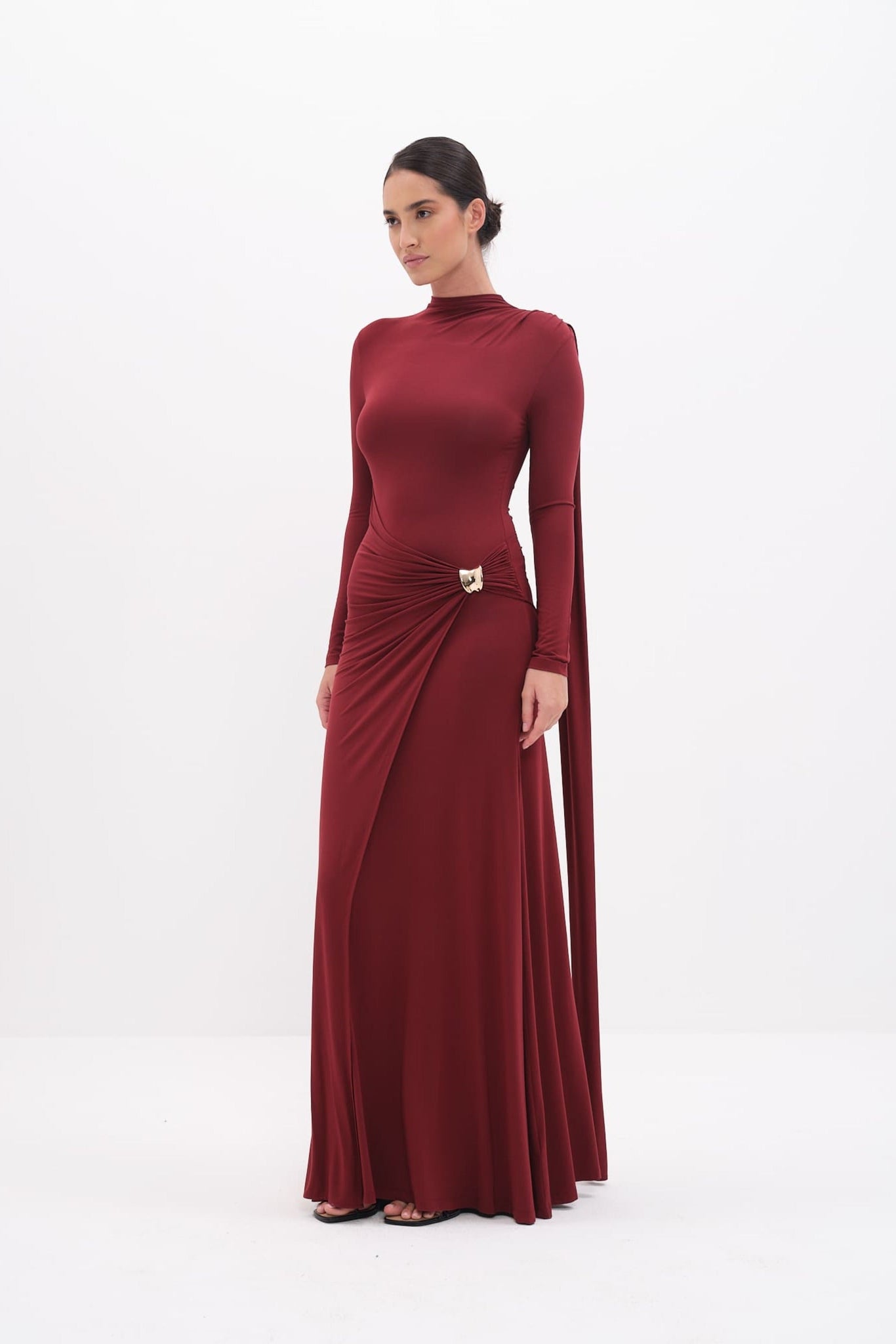
Two matching sets. Sets have become the quiet backbone of dressing well here, and for good reason. A coordinated top and skirt reads as polished without the rigidity of a dress. You can split them up later and wear each piece separately, which means one set functions as three outfits. The Seraphine Three Piece Set in viscose knit is a good example. Draped, easy, modest by design rather than by compromise. You'll find a full range in NÓRA's sets collection, and most of them work just as well taken apart as worn together.
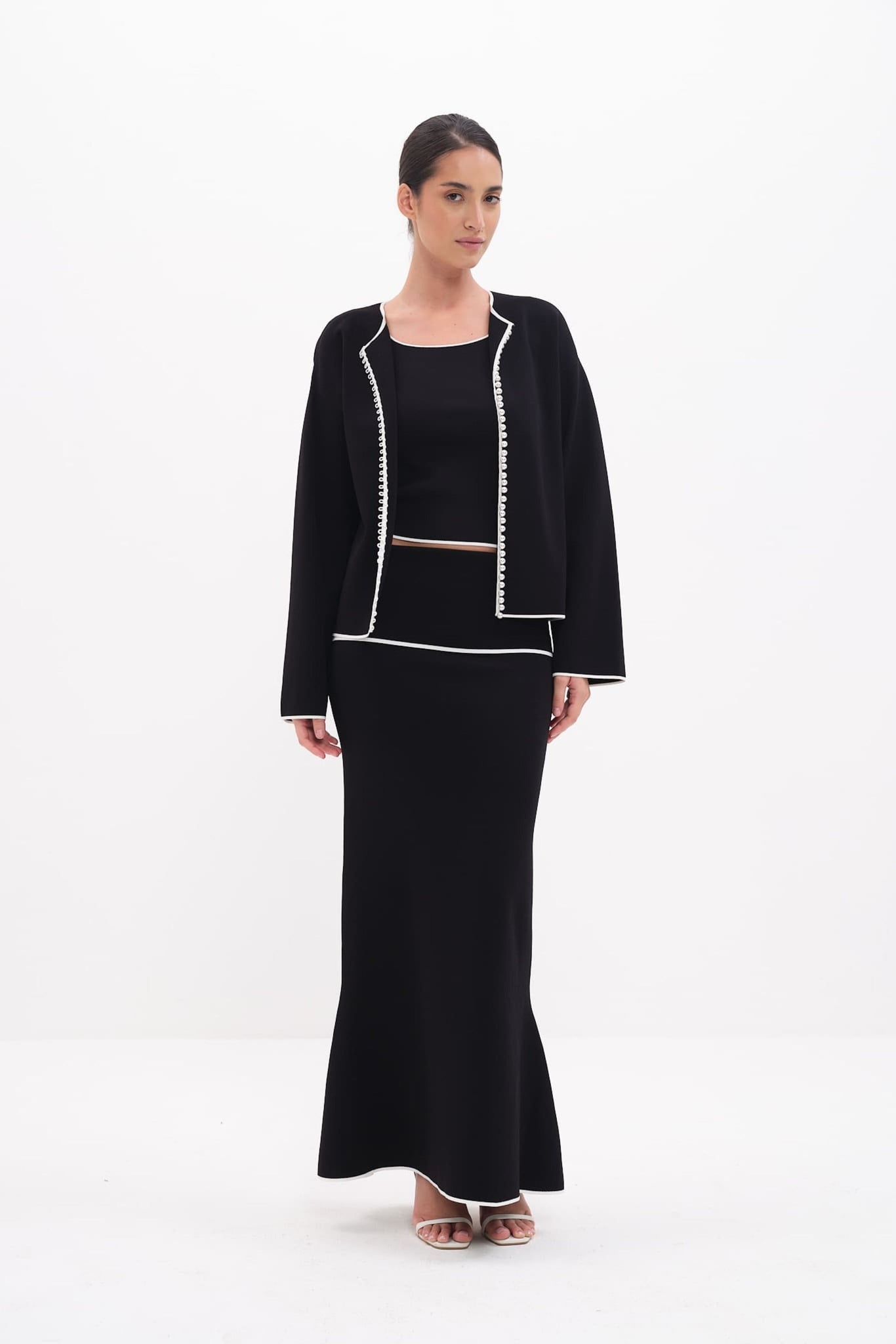
One gown you trust completely. In the GCC, formal events come up more often than most capsule guides account for. Weddings, engagements, national day celebrations, Eid gatherings that lean formal. You need at least one piece that's ready for those without requiring a last-minute shopping run. A cape gown or a scarf gown tends to work well because the built-in drama means you don't need to layer on accessories. (The kind of gown you hang at the front of the closet because you know its moment is coming.)
One abaya that feels like you. For many women here, the abaya is the first thing people see and the last thing you put on. It deserves the same thought as anything else in your wardrobe. A well-chosen abaya in a refined fabric can elevate even the simplest outfit underneath.
Two versatile tops. A high-neck top and a draped or wrapped top give you options for different moods. Pair either with wide-leg trousers or a maxi skirt, and you've covered everything from a cafe morning to a gallery opening in Al Quoz.
How to Think About Color in the Gulf
The standard capsule advice is to pick two neutrals and one accent color. That's not wrong, but it misses something about how color works here.
In the GCC, you'll see a lot of black, olive, camel, and white. Those are the obvious choices, and they work. But don't underestimate deeper tones like burgundy, forest green, or navy. These read as neutral in practice. They pair with each other easily. They photograph well. And they feel less predictable than a closet that's entirely black and beige.
The other thing to consider is how color looks under the specific light here. Dubai's sunlight is intense and golden. A color that looks muted in a fitting room can look entirely different outdoors. Sage, dusty rose, slate blue, these mid-tones tend to hold their character in both natural and artificial light, which matters when your day takes you through both.
If you're building a capsule of roughly 12 to 15 pieces, aim for most of them to live within the same color family, with one or two pieces that bring a little contrast. That way, nearly everything works together without looking like a uniform.
What About Occasion Wear?
This is where most capsule wardrobe advice falls apart for women in the Gulf. The guides say to keep things minimal and everyday. But your life includes events. Regularly. A capsule that can't handle a formal dinner at Scalini or a family celebration isn't a capsule. It's an incomplete wardrobe.
The trick is choosing occasion pieces that share the same sensibility as your everyday ones. If your daily palette is warm neutrals, your evening gown should live in that same world. If you gravitate toward fluid, draped silhouettes in your day-to-day life, a structured cocktail dress will feel like someone else's clothes.
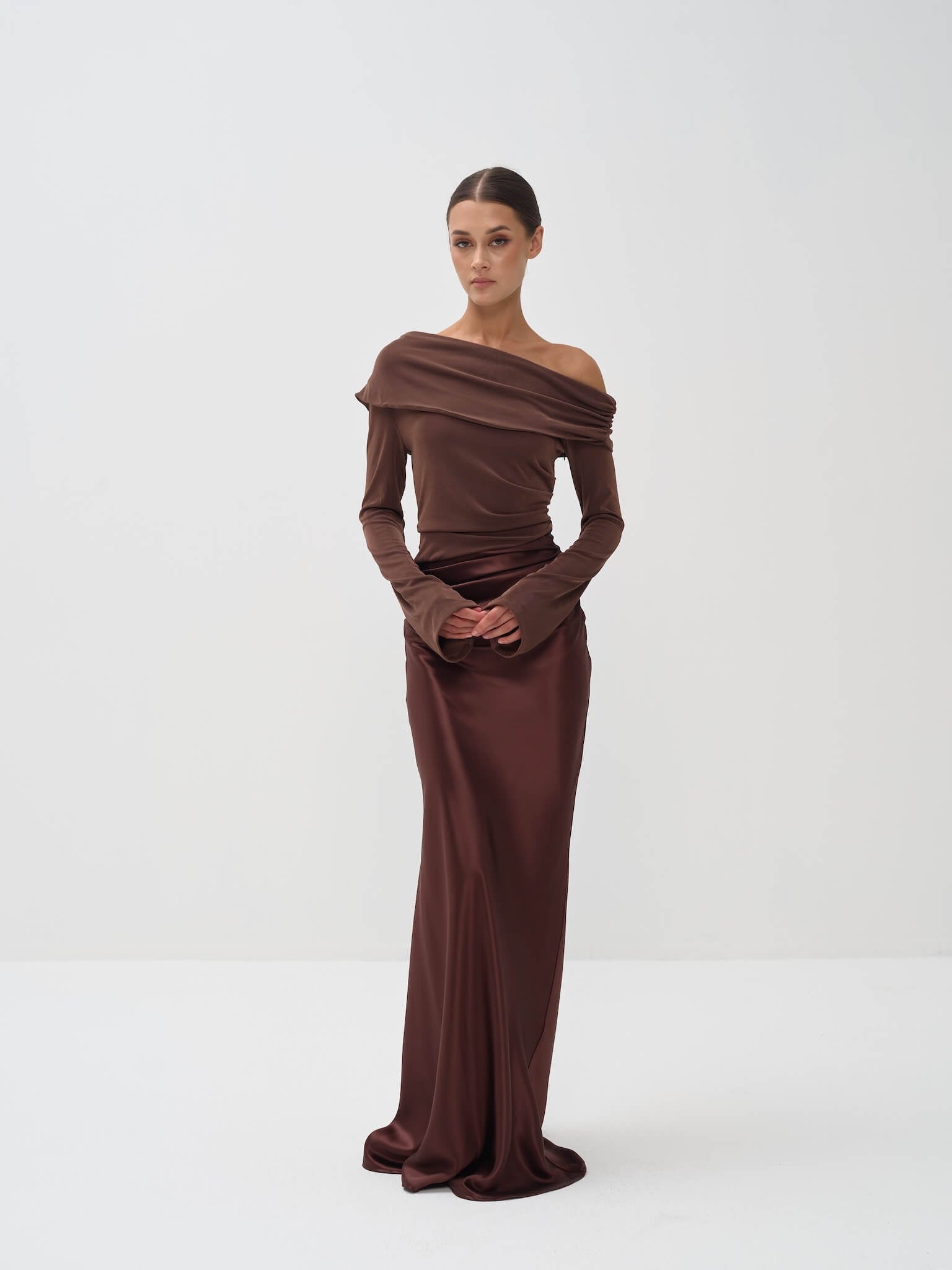
NÓRA's dresses collection is worth browsing with this in mind. Many of their pieces blur the line between daily and formal, which is exactly the kind of range a capsule needs. The Eliane Off Shoulder Gown in Naia satin, for instance, can go to brunch with flat sandals and to an evening event with heels and a statement earring. Same dress, different context.
The Role of an Abaya in a Capsule
Some capsule guides treat outerwear as an afterthought. Here, your abaya or outer layer is often the most visible part of your outfit. It's the piece that ties everything together when you step out.
A capsule wardrobe in the GCC should include at least one abaya that works with everything underneath it. Something in a quality fabric, with clean lines, that doesn't compete with whatever you're wearing but adds to it. Think of it less as outerwear and more as the final word on your outfit.
Packing With Intention When You Travel
One of the benefits of a capsule wardrobe is how well it travels. And if you're moving between GCC cities, Jeddah to Dubai to Muscat to Doha, the climate is similar enough that the same pieces work everywhere. A set you wore to a lunch in Bahrain works for dinner in Abu Dhabi. A maxi dress from a Tuesday work meeting packs flat and reappears for a Thursday evening out.
We wrote more about this in our guide to what to wear in Dubai, which covers the specific realities of dressing for heat, AC, and everything in between. Much of it applies across the region.
When packing, I've found that a capsule of about eight pieces, two dresses, two sets, one gown, two tops, one bottom, covers a full week without repeating a look. The key is that they all work within the same color story, and the fabrics all pack without needing to be pressed. Viscose knit is particularly good for this. It comes out of a suitcase looking the way it did when it went in.
How Many Pieces Do You Actually Need?
The internet loves a number. Fifteen. Twenty. Thirty-three. The truth is, the right number depends on your life. A woman working in an office five days a week in Riyadh needs different things than someone freelancing from home in Dubai with two weddings on the calendar.
But if you want a starting point, I'd say 12 to 16 pieces, not counting undergarments, shoes, bags, or accessories. That typically breaks down to something like four to five dresses, two to three sets, one gown or formal piece, one abaya, two to three tops, and one to two bottoms. That gives you enough variety to dress for a full two weeks without feeling repetitive, and enough restraint that every piece actually gets worn.
The test of a good capsule isn't how small it is. It's whether you reach for everything in it. If there's a piece you keep skipping over, it doesn't belong, no matter how beautiful it is on its own.
Building It Over Time
The pressure to build a capsule wardrobe all at once is part of what makes people abandon the idea. You don't need to buy 15 perfect pieces in one weekend. Start with the gaps. What's the thing you never have when you need it? For most women in the GCC, it's a reliable formal piece or a set that works for both work and social settings. Fill those gaps first with pieces in fabrics and silhouettes you already know you love. The rest will come.
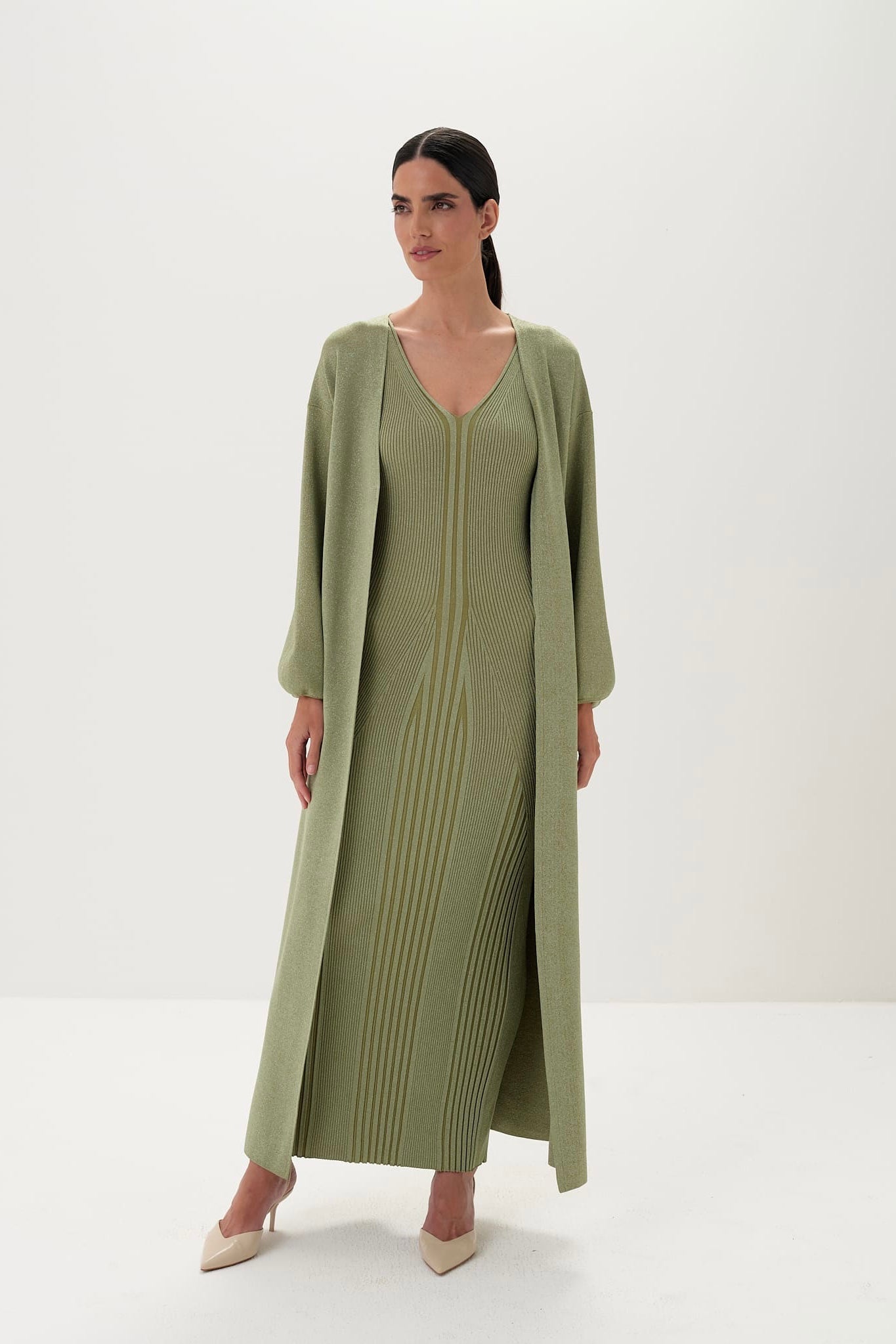
The Liana Dress Set in viscose knit is the kind of piece that tends to fill a gap you didn't realize you had. It's polished enough for a lunch at LPM but relaxed enough for a weekend errand. Those dual-purpose pieces are the ones that hold a capsule together.
A modest capsule wardrobe for the GCC doesn't look like anyone else's capsule wardrobe. It shouldn't. It should look like your life, in your climate, with your standards. The best version of it won't photograph well for a flat-lay on Instagram. It'll just mean that every morning, when you open your closet, there's nothing in there that feels like the wrong answer.