


What Responsible Viscose Really Means
Most fabric labels tell you what something is. Very few tell you how it got there, or whether it should have.
If you've looked into sustainable clothing with any seriousness, you've probably come across the phrase "responsible viscose" and wondered what it actually means. The term gets used loosely. Brands drop it into product descriptions the way restaurants use "artisanal" on menus. Sometimes it's earned. Often, it's not. And the difference matters more than you'd think, because viscose is everywhere, in your closet, in mine, in most of the pieces that feel good against your skin on a warm evening in Dubai. Understanding what responsible viscose really means is worth the few minutes it takes, especially if you care about what you put on your body and what that choice costs the world around you.
I want to be straightforward here. This isn't an exposé. It's a conversation about fabric, one that I think women who dress thoughtfully are already quietly having.
What Is Viscose, Really?
Viscose is a fiber made from wood pulp. That's the simple version. The longer version is that cellulose, the structural material inside trees and plants, gets dissolved in chemicals, extruded through tiny holes, and reconstituted into a silky thread. The result is something that drapes like silk, breathes like cotton, and costs less than either.
It was invented in the late 1800s as an alternative to silk. For decades, it was treated as a cheap substitute. That reputation has shifted. Today, viscose is the third most-used fiber in the world, and some of the most refined garments you'll touch are made from it.
The confusion comes from the fact that viscose sits in an unusual middle ground. It starts as a natural material (wood). It ends as a natural material (cellulose fiber). But the journey between those two points involves chemistry, water, energy, and decisions. Lots of decisions. And those decisions are where "responsible" either means something or doesn't.
The Part Most Brands Skip Over
Here's what typically happens when a brand calls its viscose responsible: they mention the forest. They'll tell you the wood came from sustainably managed sources, maybe certified by FSC or PEFC. That's good. That matters. Ancient and endangered forests are genuinely at risk from pulp harvesting, and certification is one of the better tools we have to address it.
But sourcing is only the first chapter.
The chemical conversion process, where wood becomes fiber, is where most of the environmental cost lives. Traditional viscose production uses carbon disulfide, a solvent that's harmful to workers and ecosystems when not properly managed. The wastewater can contain heavy metals and alkali. The air emissions aren't gentle either.
A brand that tells you about the forest but says nothing about the factory is giving you half a story. Maybe less than half.
Responsible viscose, in any meaningful sense, has to account for what happens at every stage. Where was the wood harvested? Was the pulp processed in a closed-loop system that recovers and reuses its chemicals? Were emissions and wastewater treated to a high standard? Were the workers in the factory protected? Was the fiber traceable from forest to finished garment?
These aren't impossible standards. They exist. Some producers meet them. But you have to ask, or at least know what to look for.
Is 100% Viscose Good Quality?
This is one of those questions that sounds simple and isn't. The answer depends entirely on which viscose you're talking about.
Conventional viscose can pill, shrink, lose its shape after a few washes, and develop that slightly tired look that makes you stop reaching for it. That's the viscose that gave the fiber its "cheap" reputation. And honestly, if your experience with viscose has been disappointing, it was probably this kind.
Higher-grade viscose, and specifically branded fibers like LENZING's ECOVERO or Naia from Eastman, behaves differently. The fiber quality is more consistent. The drape holds. The color stays true. The hand feel, that first impression when you touch a garment, is noticeably better.
I've worn viscose knit pieces through long days in Dubai, the kind where you go from an air-conditioned office to a warm car to an outdoor dinner and back again, and the right viscose handles all of it. It doesn't cling when it shouldn't. It doesn't wrinkle the way linen does (and I say that as someone who loves linen). It recovers. The Madeline Maxi Set in viscose knit is the kind of piece that looks the same at 10pm as it did at noon. That's not magic. That's fiber quality.
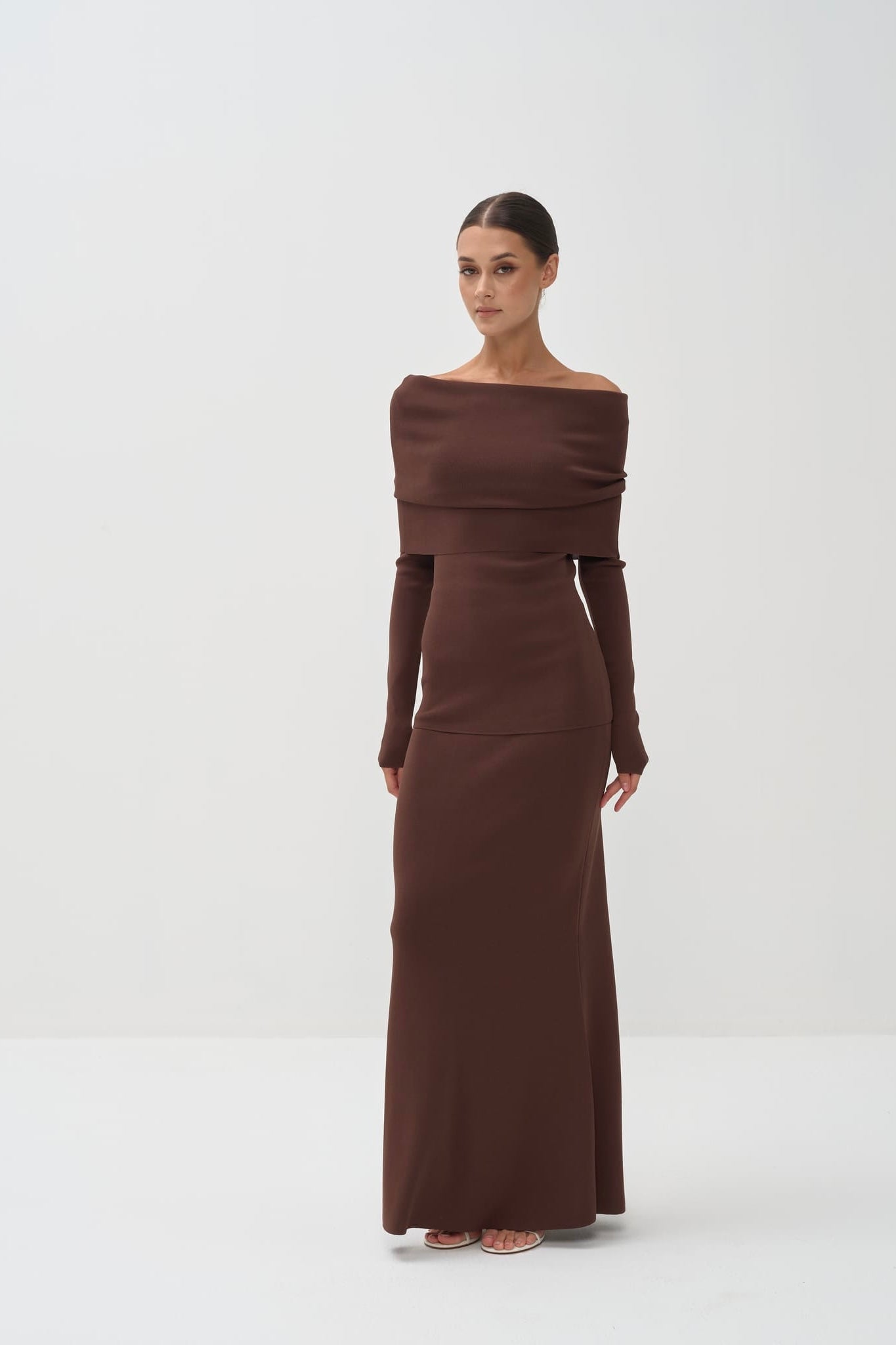
So yes, 100% viscose can be excellent quality. But "viscose" alone doesn't tell you much, the same way "leather" doesn't tell you whether you're holding a fine Italian wallet or a gas station belt.
How Viscose Compares to Cotton
People ask this a lot: is cotton better? The answer is genuinely complicated, and anyone who gives you a clean one-word response is simplifying.
Cotton is natural, familiar, and has been trusted for centuries. It's also one of the thirstiest crops on the planet. Conventional cotton farming uses enormous amounts of water and pesticides. Organic cotton uses less of the latter but still needs plenty of the former. Cotton production has been linked to the shrinking of the Aral Sea, one of the worst ecological events of the past century.
Viscose uses less water per ton of fiber than cotton, by a wide margin. Its raw material, wood, grows faster and requires less agricultural intervention. The environmental cost of viscose concentrates in the chemical processing stage, which means it can be meaningfully reduced through better technology and stricter standards.
Cotton breathes beautifully but wrinkles easily and can feel heavy when it absorbs moisture. Viscose drapes more fluidly, resists wrinkling better, and tends to feel cooler on the skin in hot weather. In a city like Dubai, that difference is real.
Neither fiber is perfect. Both can be produced responsibly or carelessly. The honest position is that the best fabric choice depends on the garment, the climate, the intended use, and how the specific fiber was made. I tend to reach for viscose knit in Dubai's warmer months and appreciate cotton in cooler weather or for more casual moments.
Is Viscose Safe to Wear?
Occasionally I'll see someone online claim that viscose is "toxic" or unsafe for skin contact. This deserves a clear answer.
Finished viscose fiber is cellulose. Cellulose is the same structural material that makes up cotton, linen, and bamboo. By the time it reaches your skin, the chemical solvents used in processing are gone. You're wearing plant-based fiber.
The health concerns around viscose are real, but they're occupational. Workers in poorly regulated factories can be exposed to carbon disulfide, and that's a serious issue. It's one of the strongest arguments for choosing viscose from producers with transparent, well-managed chemical processes. When you buy responsibly produced viscose, you're not just making an environmental choice. You're supporting safer conditions for the people who made the fiber.
On your skin, viscose is gentle. It's hypoallergenic for most people. It's often recommended for sensitive skin precisely because it's smooth, breathable, and free of the micro-irritations that some synthetics can cause.
What to Actually Look For
If you want to know whether a brand's viscose is genuinely responsible, here's what I'd pay attention to.
First, traceability. Can the brand tell you where the fiber came from? Not just "sustainably sourced wood" but which fiber producer, which certification, which standard? Vagueness is a warning sign. Specificity is earned.
Second, the fiber itself. Branded fibers like Naia, ECOVERO, and TENCEL have built-in accountability because the producing company's reputation is attached. Generic "viscose" on a label tells you very little about the production process.
Third, look at whether the brand talks about the fabric with any depth. A company that understands its materials will tell you about drape, about care, about why they chose viscose knit over polyester or acetate. A company that doesn't understand its materials will just say "sustainable" and move on.
NÓRA uses viscose knit across a large portion of their sets collection, and what I appreciate is that they're specific about it. They'll tell you which pieces are viscose, which are viscose-cotton blends, which are Naia satin. That specificity, quiet as it is, tells you the team knows what they're working with.
Why This Matters More in Dubai
Dubai's climate tests fabric in ways that most fashion conversations don't account for. You step outside in June and the heat is immediate. You walk into a restaurant and the air conditioning is uncompromising. You're in and out of cars, malls, offices, restaurants. Your clothes go through temperature swings that would make a European wardrobe very confused.
Synthetic fabrics trap heat and moisture. Cotton absorbs moisture but takes its time releasing it. Viscose, especially high-quality viscose knit, manages both temperature and moisture with a kind of quiet efficiency that I've come to rely on.
We covered how to dress for this climate in more detail in our guide to what to wear in Dubai, but the short version is: fabric choice matters here more than silhouette, more than color, more than trend. A beautiful dress in the wrong fabric will have you thinking about the fabric all evening. The right fabric disappears. You just feel like yourself.
The Rosalia Pleated Maxi in viscose is a good example. It's a dressy piece that could easily have been made in polyester satin (most brands would have gone that route, honestly). In viscose, it moves differently. It breathes. It holds its pleats without feeling stiff. That's a material decision that shows up in how the dress actually lives on your body, not just how it photographs.

The Uncomfortable Truth About "Sustainable" Labels
I want to be honest about something. The fashion industry uses the word "sustainable" the way real estate uses "cozy." It can mean something. It often doesn't.
Responsible viscose is a real, meaningful category. But it exists on a spectrum. Some producers are genuinely invested in closed-loop chemical recovery, renewable energy, forest preservation, and worker safety. Others have made incremental improvements and hired a good marketing team.
As someone who buys clothes and writes about them, I've come to trust specifics over slogans. Tell me the fiber name. Tell me the producer. Tell me what certification it carries. I'll form my own opinion.
I've also come to accept that perfection isn't available. No fiber is zero-impact. No garment is without some cost to the planet. The question isn't "is this perfect?" The question is "is this better, and are the people making it trying to do better still?" That's a question you can answer with a little attention and a willingness to read past the label.
Viscose Knit, Specifically
Most of this conversation applies to viscose broadly, but I want to spend a moment on viscose knit, because it's the form you'll encounter most often in NÓRA's collection, and because it behaves quite differently from woven viscose.
Viscose knit has stretch. Not the synthetic, rubber-band stretch of elastane, but a gentle give that comes from the knit structure itself. It moves with your body rather than holding a rigid shape around it. This makes it exceptionally comfortable for long wear, which is why it's become a preferred fabric for pieces that need to carry you through a full day or evening.
It also packs well. Viscose knit resists creasing better than woven fabrics. I've pulled viscose knit pieces out of a suitcase after a flight and worn them straight to dinner. (The kind of dress you pack first and reach for most.)
The environmental profile of viscose knit is similar to woven viscose, the same sourcing and processing considerations apply. The knitting process itself tends to produce less waste than weaving, since there's no warp and weft to set up and trim.
Making the Choice
Choosing what you wear is personal. It always has been. But it's also, more and more, a set of small ethical decisions that add up over time. Knowing what responsible viscose really means, not the marketing version, the actual version, puts you in a better position to make those decisions with your eyes open.
You don't have to become a textile scientist. You don't need to memorize fiber certifications. You just need to notice when a brand is being specific and when it's being vague. That instinct, the same one that helps you tell a well-made garment from a pretty one, works here too.
The women I know who dress well in this city tend to be the same women who ask good questions about what they're buying. Not loudly. Not performatively. Just with the quiet attention that good taste has always required. If you're curious about how viscose knit and Naia satin feel in person, NÓRA's collections are a good place to start looking.