


TENCEL vs Cotton in Hot Weather
If you've ever wondered about TENCEL vs cotton and which is better for hot weather, the answer depends on where you live, how you dress, and what you expect from your clothes.
Most of the content online about this comparison is about bedsheets. Pillow cases. Duvet covers. That's fine if you're optimizing your sleep, but it doesn't help when you're standing outside a restaurant in June, waiting for your car, and your dress is already clinging to your back. I live in Dubai. The question here isn't theoretical.
What TENCEL Actually Is (and Isn't)
TENCEL is a brand name for lyocell fiber, made from sustainably sourced wood pulp, usually eucalyptus. The fiber is produced in a closed-loop process, which means the solvents used to break down the wood are recovered and reused. It's a regenerated cellulose fiber. Not synthetic. Not exactly natural in the way cotton is natural. Somewhere in between, and often better than both extremes.
The fabric has a smooth, cool-to-the-touch surface. It drapes well. It doesn't pill easily. And it manages moisture differently than cotton, which is where things get interesting for anyone living in a hot climate.
Cotton, on the other hand, is the fabric most people default to. It's familiar. It breathes. It's been the answer to "what should I wear when it's hot?" for so long that questioning it feels almost rude. But familiarity and performance aren't the same thing.
How Each Fabric Handles Real Heat
There's a difference between warm weather and hot weather. Warm weather is a May afternoon in Southern France. Hot weather is Dubai from May through October, where you step outside and the air itself feels heavy. The distinction matters because the two fabrics behave differently under pressure.
Cotton absorbs moisture. That's its reputation, and it's earned. But absorption has a second act that people don't talk about enough: cotton holds onto that moisture. It gets heavier. It stays damp. If you've ever worn a cotton tee in 40-degree heat and felt it start to stick and darken at the back, you know exactly what I mean. The fabric did its job absorbing. It just didn't let go.
TENCEL absorbs moisture too, but it also releases it more efficiently. The fiber structure allows water vapor to move through the fabric and evaporate, rather than sitting in the weave. In practical terms, this means a TENCEL garment in high heat feels drier against your skin for longer. It recovers. Cotton, in the same conditions, needs more time and more airflow to do the same.
This is why TENCEL has become a preferred fabric for warm-climate dressing, not because cotton is bad, but because TENCEL handles the extremes with more grace. And in Dubai, the extremes are the baseline.
Is TENCEL Fabric Good for Summer?
Very. And not just for the moisture management.
TENCEL has a natural coolness to it. When you pick up a piece of TENCEL lyocell, it feels like it's been sitting somewhere air-conditioned, even when it hasn't. That initial cool touch is partly due to the fiber's smoothness, which allows heat to transfer away from your skin quickly. Cotton, even high-quality cotton, has a warmer hand feel. It's comforting in cooler months. In summer, comfort and coolness aren't always the same thing.
There's also the drape. TENCEL falls close to the body without clinging. It moves with you rather than bunching or riding up. For longer silhouettes, this matters. Something like the Azura Dress in TENCEL holds its shape through a full evening, from an air-conditioned dinner to a walk along the marina, without looking like it went through heat damage.
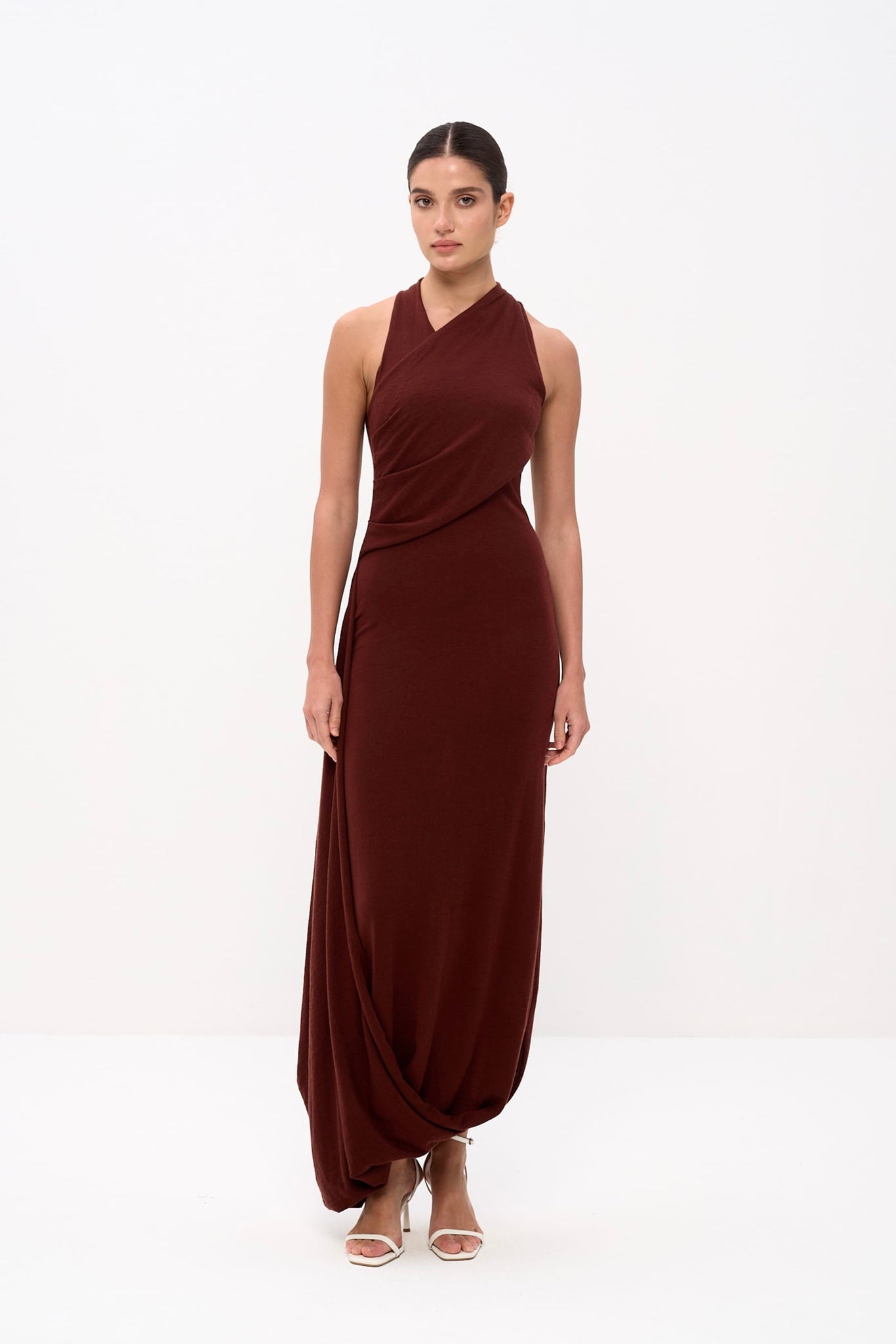
Cotton, especially woven cotton, tends to hold its structure more rigidly. That's a strength for tailored pieces, shirts, structured trousers, things that are meant to have defined lines. But for summer dresses and flowing sets, that rigidity can work against you. The fabric doesn't move as easily, and in heat, you want ease.
The Texture Question
People underestimate how much texture affects comfort in hot weather. A fabric can be technically breathable and still feel uncomfortable if the surface is rough against sensitized, warm skin.
TENCEL's surface is exceptionally smooth. Under a microscope, the fibers are rounder and more uniform than cotton fibers, which have natural irregularities. Those irregularities are part of what gives cotton its character, its slightly textured, matte, lived-in quality. But they also create more friction against the skin, which can mean irritation for sensitive skin, especially in heat.
If you have sensitive skin, or if you've ever noticed that certain fabrics feel itchier when you're warm, TENCEL is worth trying. It's gentler. That smoothness also means it picks up less lint and resists odor better than cotton, because bacteria have fewer places to settle on the fiber surface.
Does TENCEL Make You Hot?
No. This is one of the most common misconceptions, and I think it comes from people confusing TENCEL with polyester-based fabrics that also have a smooth, slightly shiny look. The resemblance is surface-level only.
Polyester traps heat. It's a plastic-based fiber with poor moisture management. TENCEL is cellulose-based, breathable, and thermoregulating. It adapts to your body temperature to some degree, staying cool when it's hot and providing a bit of insulation when it's cool. It won't make you hot. If anything, it'll keep you cooler than most alternatives.
I've worn TENCEL through Dubai summers, through Ramadan iftars held outdoors, through late-afternoon errands that start in a freezing mall and end in a parking lot that feels like standing too close to an oven. The fabric adjusts. It doesn't punish you for changing environments, which is what daily life in this city actually looks like.
Where Cotton Still Wins
I don't want to be unfair to cotton. It's still a wonderful fabric, and there are contexts where it outperforms TENCEL.
Cotton is more durable under frequent washing. If you're looking for something you'll throw in the machine twice a week without thinking, heavy-weight cotton handles that cycle better over time. TENCEL is durable, but it benefits from gentler care, lower temperatures, less aggressive spin cycles.
Cotton also comes in a wider range of weights and weaves. You can get paper-thin cotton voile, sturdy cotton canvas, soft jersey, crisp poplin. That versatility means cotton can be adapted to almost any garment type. TENCEL's range is narrower, though it's growing.
Not to mention, some people simply prefer the feel of cotton. It has a warmth and a familiarity that's hard to replicate. If you grew up wearing cotton and it feels like home, there's nothing wrong with staying loyal to it. Comfort is partly emotional.
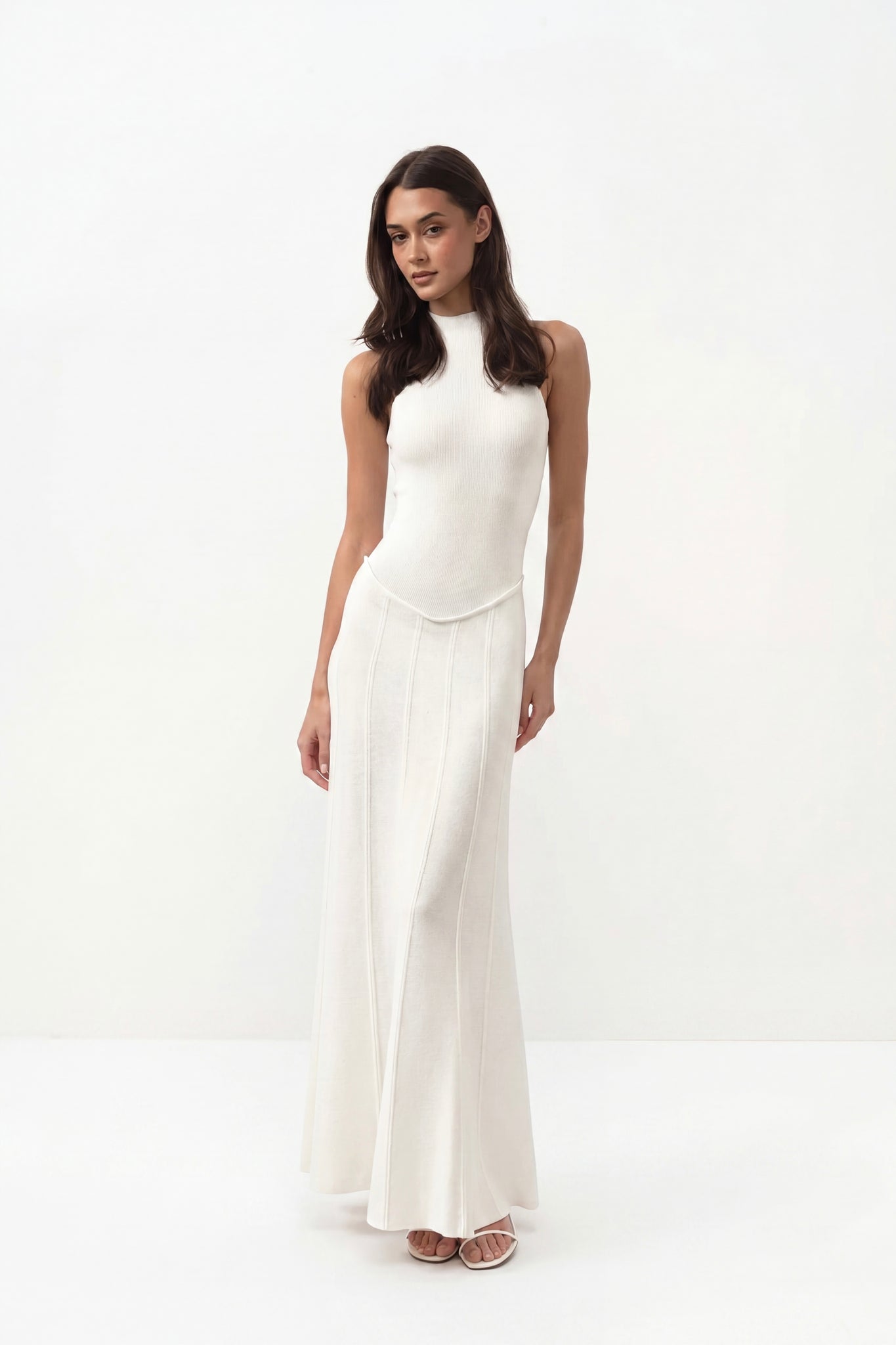
For a cotton knit that genuinely performs well in warm weather, something like the Asteri Maxi in cotton knit is a good reference point. The knit structure adds stretch and gives the cotton more movement than a woven version would.
Which Is Better for Dubai Specifically?
Dubai has specific demands that most fabric comparisons don't account for. We covered some of this in our guide to what to wear in Dubai, but the fabric question deserves its own space.
First, you're constantly moving between extremes. Outdoor temperatures above 40 degrees Celsius, indoor temperatures around 20. Your outfit doesn't just need to handle heat. It needs to handle the shock of going from one to the other, repeatedly, throughout the day. TENCEL's thermoregulating properties give it an edge here. Cotton adjusts too, but more slowly.
Second, humidity. Dubai's summer humidity can reach 90 percent. In those conditions, the difference between a fabric that holds moisture and one that releases it quickly becomes very noticeable. Cotton in high humidity can start to feel heavy within an hour. TENCEL stays lighter.
Third, appearance. This might be the most important factor for how we actually dress here. A fabric can be perfectly breathable and still look like it's been through something by the end of the night. Cotton wrinkles. It wrinkles getting out of the car. It wrinkles sitting at dinner. It wrinkles walking from the valet to the door. TENCEL resists wrinkles greatly better. It holds up through a full day and still looks intentional at the end of it.
For women who dress with purpose in this city, and most do, that matters. Looking polished at 10 PM shouldn't require a second outfit.
What About Blends?
Many of the best performance fabrics are blends. Viscose-cotton knit, for instance, combines some of cotton's familiarity with viscose's smoother drape and better moisture properties. The Solene Cardigan Knit Set in TENCEL is a good example of how the fiber works in a set that needs to look put-together across different moments in a day.

Blends let designers balance qualities: the structure of one fiber with the softness of another, the breathability of one with the durability of another. If you're choosing between pure cotton and pure TENCEL and can't decide, a blend might be where you land happily.
That said, a well-made 100% TENCEL piece in hot weather is hard to argue against. The fiber was essentially designed for the conditions we're talking about.
What About Sustainability?
This is where TENCEL pulls ahead clearly. Conventional cotton farming uses enormous amounts of water and, in many cases, pesticides. The numbers vary by source, but estimates suggest a single cotton t-shirt requires around 2,700 liters of water to produce. TENCEL's production uses greatly less water and comes from sustainably managed forests. The closed-loop manufacturing process recovers over 99% of the solvents used.
Organic cotton narrows the gap. It eliminates pesticides and often uses less water. But it's still more resource-intensive than TENCEL by most measures.
If environmental consideration is part of how you choose what goes into your closet, and for more and more women I know, it is, TENCEL is the more responsible choice. You can feel good about the fabric without having to sacrifice comfort or aesthetics for it. That's rare.
What Is the Disadvantage of TENCEL Fabric?
Honesty is useful here. TENCEL isn't perfect.
It can be more expensive than cotton, because the production process, while cleaner, is more technically complex. That cost gets passed along. You won't find TENCEL at the same price points as basic cotton.
Care requires a bit more attention. TENCEL does best with cold or lukewarm washes, gentle cycles, and line drying or low-heat tumble drying. It's not high maintenance, but it's not "throw it in with everything else" easy either.
And it can feel almost too smooth for some people. If you like the slight grip and texture of cotton, TENCEL's silkiness might feel unfamiliar at first. It's a preference thing, not a flaw, but worth noting.
Color fastness can also vary depending on the dye process. Some TENCEL garments may fade slightly faster than cotton if exposed to direct, prolonged sunlight. In a place like Dubai, where UV exposure is intense, this is worth keeping in mind. Store your pieces out of direct light and they'll hold their color longer.
The Short Answer
If you live somewhere genuinely hot, if your daily life involves moving between extremes of temperature and humidity, if you want your clothes to look as good at the end of the evening as they did at the beginning, TENCEL is the better fabric for hot weather. Cotton is still excellent, still comfortable, still a perfectly good choice. But TENCEL was made for the conditions cotton tolerates.
The best approach, really, is to have both. Cotton for the days and pieces where you want that relaxed, slightly textured feel. TENCEL for the moments when performance and polish need to coexist without compromise.
If you're building a warm-weather wardrobe with intention, NÓRA's dress collection and sets collection are good places to start looking. The fabrics are chosen for this climate, this life, these temperatures. You can feel that the moment you put something on.