


Modern Abaya Style: How the Abaya Is Being Reimagined
There’s a moment at DIFC Art Nights, right when the galleries start to fill and everyone’s deciding where to go next, when you notice who’s dressed for the room and who’s dressed for the photo.
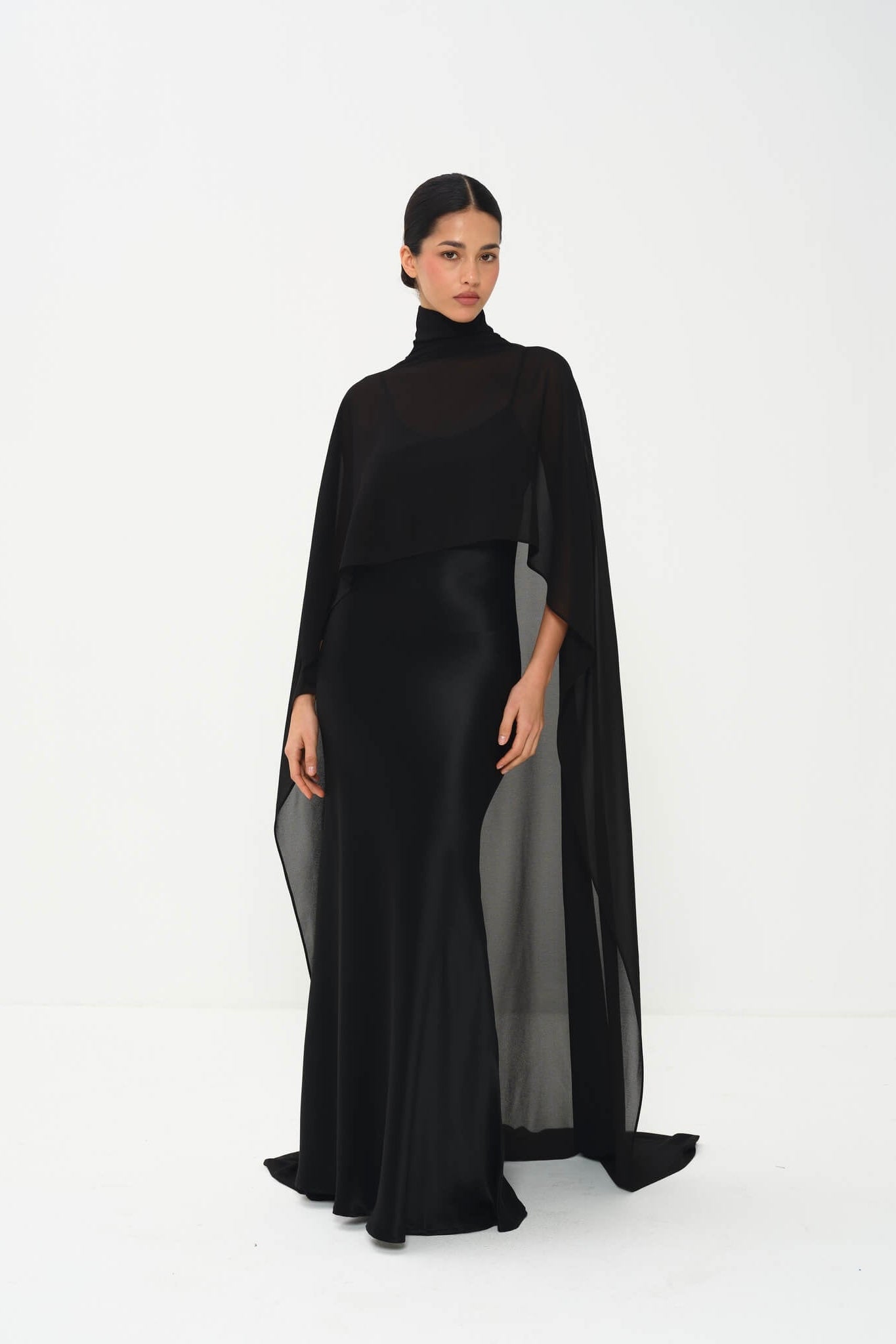
Last week, I watched a woman in a modern abaya slow down actual traffic. Three cars eased up as she crossed, not out of drama, just out of instinct. The abaya was black, but not the kind of black that feels flat. It had depth. The fabric moved like it understood air, pooling softly at the hem, then lifting again as she walked. No crystals. No embroidery trying to do the talking. Just cut, drape, and restraint.
I caught up with her later at the Leila Heller Gallery opening. Mutual friends, Dubai being Dubai. I asked where she found it.
“My tailor in Riyadh,” she said, then smiled. “But honestly, the cuts I’m seeing in Dubai lately feel better.”
I’ve been thinking about that ever since, because she’s right. The modern abaya happening here now doesn’t feel like it’s borrowing modernity from somewhere else. It feels like it’s coming from the garment itself.
The New Abaya Logic
Somewhere between 2020 and now, designers stopped treating the abaya like something that needed fixing. There used to be this quiet urgency around making it “fashion.” As if it wasn’t already.
The best ones I've seen recently work like architectural pieces. Clean lines that reference Tadao Ando more than traditional tailoring. Fabrics that cost more per meter than complete outfits. Cuts that require technical skill, and not just cultural knowledge.
At NÓRA, they're doing just as interesting with organza. Not the stiff, wedding-dress organza. This moves, it has light weight but also float. The kind of fabric that makes you understand why certain designers only work with certain materials.
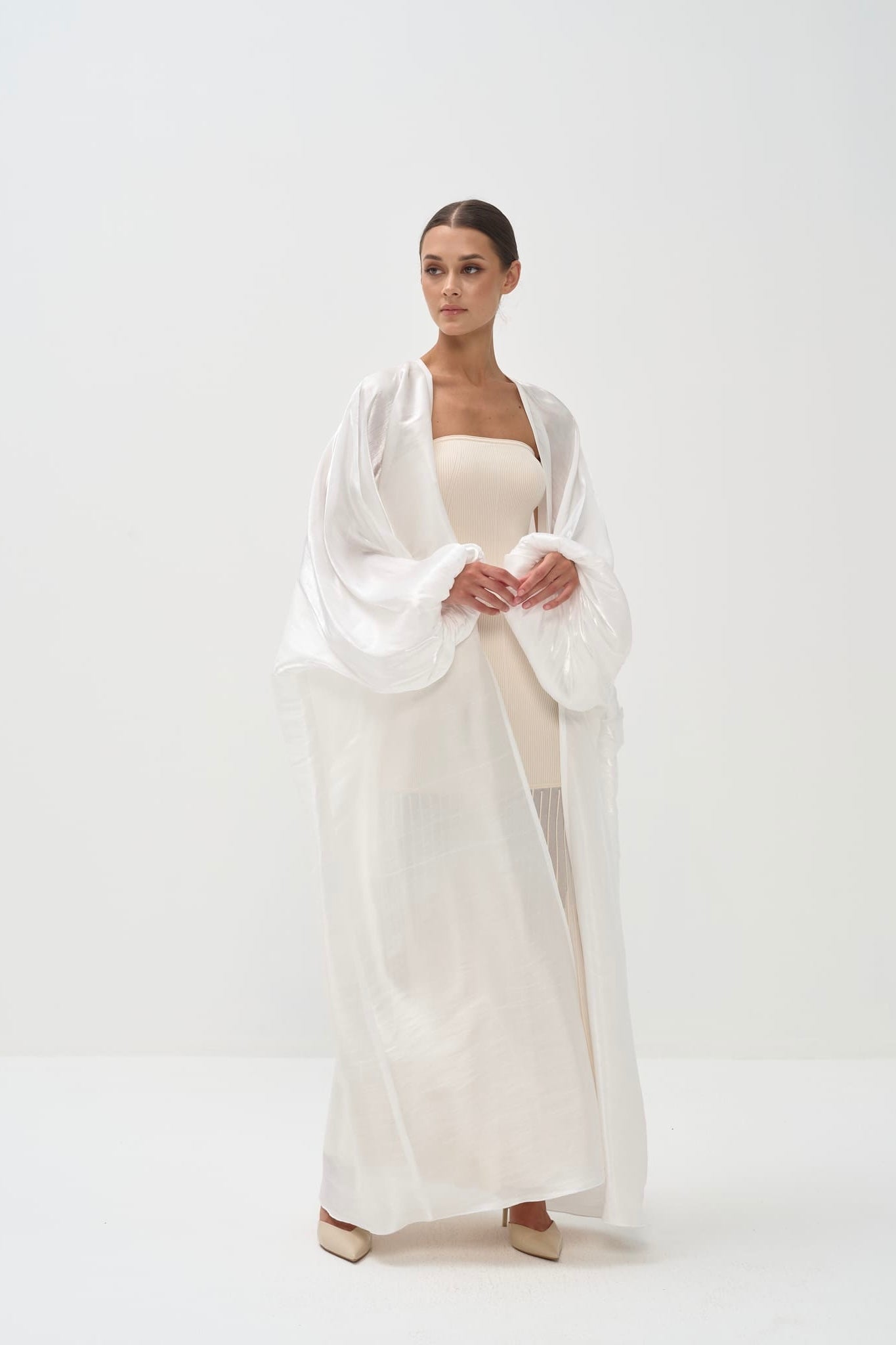
Yes, construction matters more than ever. A modern abaya can look completely different with the smallest adjustment in proportion. Too long and it starts to feel heavy. Too short and it loses that calm, sweeping line that makes the abaya what it is. The sweet spot is when the hem grazes the floor in heels and lands in a circle on marble. (People test this. I’ve seen it happen in boutiques. It’s real.)
What Makes an Abaya Modern, Actually?
Color used to be the shortcut. Beige or blush instead of black and suddenly it’s ‘modern.’ Add a belt and it’s ‘modern’ again. Throw on a print and it’s supposedly ‘revolutionary.’ It really isn't.
The real modern abayas I'm seeing understand that innovation happens in structure, not decoration. They're playing with:
- Negative space (cutouts that keep it modest, but make it modern)
- Fabric behavior (how organza falls differently than crepe, how bamboo jersey drapes versus modal)
- Volume distribution (where the fabric gathers, where it releases)
- Entry points (hidden zippers, magnetic closures, wraps that look simple but require creative pattern making)
That woman at DIFC had one seam running from shoulder to hem. One. The whole piece felt like geometry turned into fabric. Not traditional tailoring. That's contemporary design at its most sophisticated.
The Dubai Difference
Walk through Dubai Mall on a Thursday night and look at the abayas around you. You’ll see variety now, real variety. That shift happened quickly.
Dubai’s version of the modern abaya feels international because Dubai is. Designers here don’t seem burdened by having to explain tradition. They don’t design defensively. They design with freedom.
I’ve seen abayas in Dubai that nod to kimono construction, and others that feel like modern outerwear, cocooned, sculpted, elegant without feeling like costume. I’ve seen pieces in JBR that use volume the way couture uses it, but the result still works for real life. Brunch, meetings, openings in Al Quoz. All of it.
The fabric story here is its own category of luxury. Naia satin made from renewable wood pulp. Bamboo jersey that feels cool and soft against skin. TENCEL lyocell that has that smooth, clean finish you usually associate with silk, but with a more wearable ease. These choices don’t just look good. They behave well.
Which Fabric Works for Modern Abayas?
The fabric question gets asked wrong. It's not about "better," it's about intention.
Viscose knit works when you want architecture. The Liana Knit Set uses it to create volume with light weight. The fabric holds its shape but moves with the sea breeze and cool air. It's sculptural but alive.
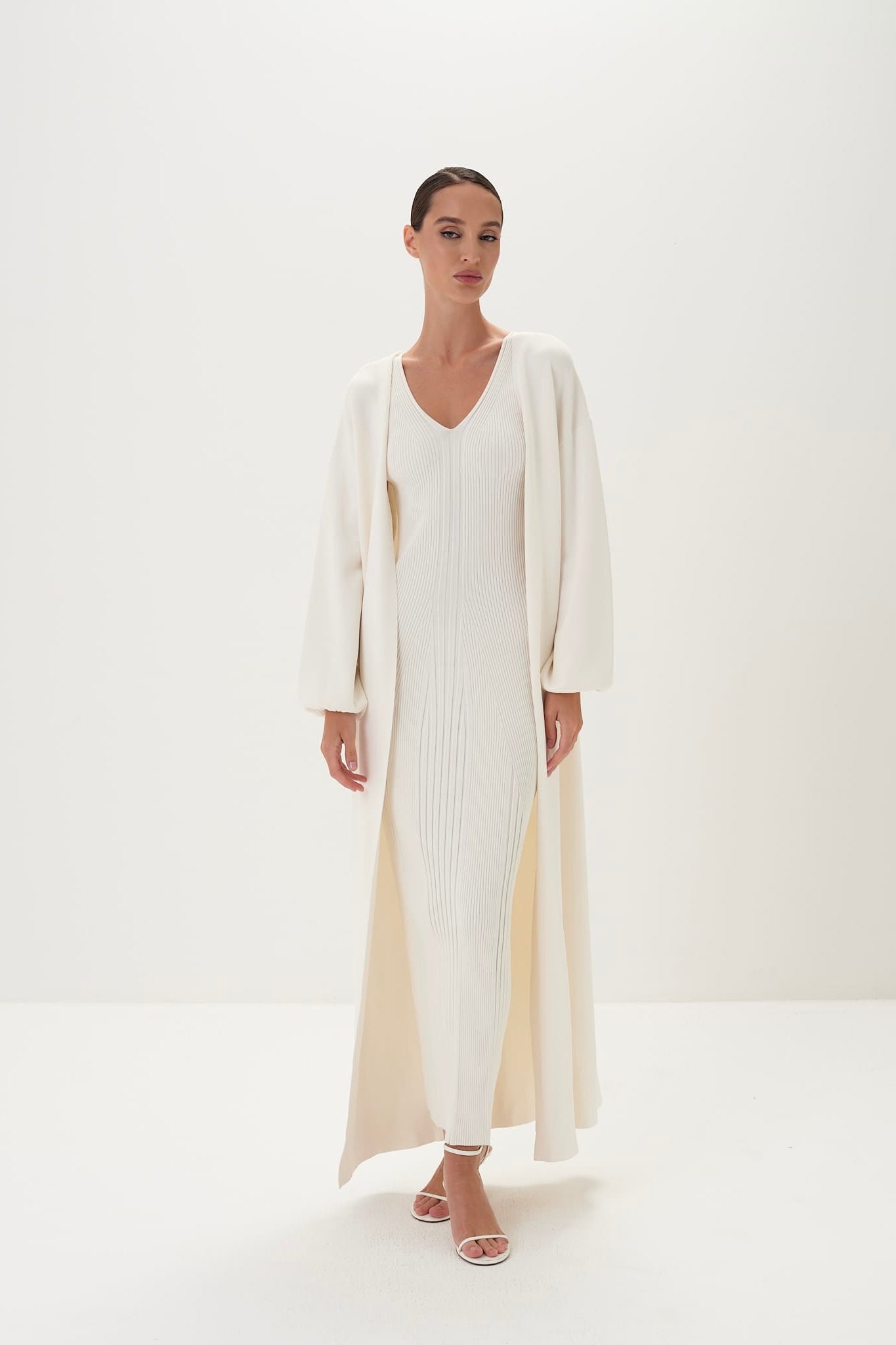
Crepe is my everyday go-to. It travels well, it doesn’t crease easily, and it reads polished at noon and at midnight.
Jersey, especially bamboo jersey and soft cotton blends, are what I call quiet luxury. They feel incredible on skin. They drape softly. They look simple in a photo, then feel special in real life.
What I avoid is anything that looks shiny in the wrong way, or feels heavy without purpose. If it doesn’t breathe, it won’t get worn. If it rustles loudly, it won’t feel refined.
The Color Shift
Black is still central. It’s just a more thoughtful black now.
Matte blacks that absorb light. Textured blacks that pick up shadow. Black-on-black details that you only see when you move. Sometimes black organza layered over a deeper base, so the colour has dimension without needing contrast.
When colour shows up, it’s usually nuanced. Ash, stone, sage, tones that change depending on the light in the room, or the lighting outside when you step out at night.
Some colours can feel too literal. Soft pinks that once felt fresh can now feel stuck in an older moment. Bright jewel tones can work, but only when the styling is confident and clean.
The modern abaya doesn’t explain itself. It doesn’t need to.
How to Look Modern in an Abaya
Fit comes first. Every time. A beautifully made abaya that sits incorrectly at the shoulder won’t read as luxury, no matter what the fabric is.
The shoulder line should sit where your shoulder actually is. The hem should look chosen, not accidental. The sleeve should let you move easily.
Then think in proportions. Some shapes look incredible on tall frames and feel overwhelming on petite ones. Others feel perfect until you try to lift your arm and the cut fights you. This isn’t about size. It’s about balance.
Accessories should either disappear or lead. A single sculptural bag. A strong shoe. Jewellery that feels intentional, or none at all. The middle ground can blur the look.
And then there’s the part nobody can fake. You have to wear it like it’s yours. I’ve seen women in classic cuts look more modern than anyone in experimental silhouettes, simply because their ease was real.
The Investment Pieces
Luxury isn’t only the number on the receipt. The pieces worth owning share a few quiet traits.
They’re cut by someone who understands drape. The internal finishing is as clean as the outside. The fabric improves the more you wear it. Most importantly, the piece makes you feel powerful, not decorated.
When I’m deciding, I watch how it moves. I turn quickly in front of the mirror. I sit, stand, reach for my bag. The abaya should follow you. It shouldn’t need constant adjustment. If it does, the issue isn’t styling. It’s workmanship.
Where This Goes Next
The designers I’m watching aren’t chasing novelty. They’re refining function.
You’ll see modular ideas, pieces that shift shape with hidden snaps or discreet fastenings. You’ll see technical textiles used thoughtfully, elevated through cut rather than gimmick. You’ll see transparency used with restraint, as part of silhouette, not as decoration.
The future feels less like “fashion abayas” and more like “abayas as fashion.” That difference matters. One asks for permission. The other doesn’t.
I saw the woman from DIFC Art Nights again last week at a private viewing in Alserkal. Different abaya this time. Dove grey organza, soft movement, no embellishment. Same effect.
That’s the real modern abaya. It isn’t about proving anything. It’s about perfecting the essential, then letting the woman wearing it do the rest.