


How to Clean Fabric Stains Without the Damage
Knowing how to remove makeup, deodorant, and perfume residue without ruining fabric is quiet a skill that keeps your best pieces lasting years longer.
The Real Problem With Stain Advice Online
Most stain removal guides are written for fast fashion. Cotton tees. Polyester blends. Clothes you bought knowing they'd last a season, maybe two.
The advice reflects that: bleach it, soak it overnight in something harsh, toss it in the machine on hot. If the fabric pills or the color shifts, well, it was only $30.
But that's not how you treat a piece you actually love. If you've spent time choosing the right cut, the right fabric, the right color, you don't want to fix one problem by creating another. A foundation smudge on your neckline is annoying. A faded, warped neckline from aggressive cleaning is permanent.
This is especially true in Dubai, where the combination of full makeup, serious fragrance, and warm weather means your clothes absorb more than they would in cooler climates. You're getting ready in air conditioning, stepping outside into heat, then back into a restaurant that's practically winter.
Your fabric is working hard. The residue it collects reflects that.
So here's what actually works, specifically for the kinds of fabrics worth protecting: satin, viscose, bamboo jersey, TENCEL lyocell, and fine knits.
How to Get Makeup Stains Off Fabric
Foundation is the most common offender. Liquid formulas, especially long-wear ones, contain oils and pigments that bond to fabric fibers fast. The longer they sit, the deeper they set.
The instinct is to rub. Don't. Rubbing pushes the pigment further into the weave and can damage delicate surfaces like satin or fine knit.
Here's what to do instead:
For fresh foundation stains: Take a clean, dry microfiber cloth and gently lift as much product as you can. Don't press down. Think of it like blotting a lipstick print on a napkin. Once you've lifted the surface layer, dampen a cotton pad with micellar water (the same kind you use on your face) and dab the area.
Micellar water is designed to dissolve makeup without harsh surfactants. It's gentle enough for skin, which means it's gentle enough for bamboo jersey or viscose knit.
Work from the outside of the stain inward so you don't spread it. Let the fabric air dry, then assess. Most fresh stains come out completely this way.
For set-in foundation stains: Mix a small amount of gentle liquid dish soap (a drop, truly) with cool water. Apply it to the stain with your fingertip and let it sit for ten minutes. Then blot with a damp cloth. Repeat if needed. The key word is cool water. Hot water sets oil-based stains permanently.
For lipstick, the approach is similar, but you'll want to start with a tiny amount of rubbing alcohol on a cotton swab, applied only to the stain itself. Test on an inside seam first.
On a piece like the Aria Off-Shoulder Dress in Naia satin, you want to be precise. Alcohol evaporates quickly and won't leave a water ring the way soap can if you're not careful.
 Mascara is another story. It's essentially a wax-and-pigment combination, so you need something that breaks down wax. A tiny amount of coconut oil on a cotton pad works. Apply it, let it sit for five minutes, then follow with the micellar water method to remove the oil itself. Two steps, but it works without stressing the fabric.
How to Remove Deodorant Residue From Clothes
Those white marks on dark fabric. The yellow buildup on light fabric.
Deodorant residue is one of the most persistent clothing problems, and in Dubai's climate, it accumulates faster.
The white streaks you see on a black dress after one wear are aluminum salts from antiperspirant. They sit on the surface of the fabric. The good news: they're usually the easiest to remove.
A dry microfiber cloth, rubbed gently in one direction (not back and forth), will lift most fresh white marks immediately. Some people use the foam edge of a dry cleaning sponge for this. Both work. Keep one in your closet. It takes ten seconds.
The yellow stains are harder. They're caused by aluminum compounds reacting with proteins in perspiration over time, and they build up with repeated washing, especially in warm water. This is why your white tops yellow in the underarm area even though you wash them regularly. The washing itself can accelerate the discoloration if you're using the wrong temperature or detergent.
For yellowed areas on light fabric, make a paste of baking soda and white vinegar. Yes, the competitors' guides mention baking soda, but here's what they leave out: the ratio matters, and so does the timing. Use two tablespoons of baking soda, one tablespoon of white vinegar, and enough water to make a spreadable paste. Apply it to the yellowed area and leave it for 20 minutes, not longer. Baking soda is mildly abrasive, and leaving it too long on delicate fibers can cause surface damage.
Rinse with cool water. If the stain has improved but isn't gone, repeat once. If it's still there after two rounds, take the piece to a professional who specializes in delicate fabrics. Pushing further at home risks more harm than the stain itself.
One prevention note that makes a real difference: let your deodorant dry completely before getting dressed. Two minutes. That's all. It reduces transfer by about 80%, and it's the single easiest thing you can do to keep your viscose sets and tops looking clean wear after wear.
What Gets Perfume Out of Fabric
Perfume stains are deceptive. You might not see anything at first, but fragrance contains alcohol, oils, and dyes that can discolor fabric over time, especially lighter colors. Spraying perfume directly onto clothing is one of those habits that feels harmless until you notice the faint brown marks on your favorite ivory piece six months later.
If you've just sprayed perfume on fabric and want to minimize damage, blot the area immediately with a damp cloth. The alcohol component evaporates quickly, but the oils linger. A light application of micellar water will help draw out those oils before they settle.
For older perfume stains, the approach depends on the fabric. On satin, try a mixture of one part white vinegar to two parts cool water, applied with a cloth and blotted gently. On viscose or bamboo jersey, plain cool water and a tiny amount of enzyme-based laundry detergent (the kind marketed for delicates) usually works. Let it sit for 15 minutes, then rinse.
The better solution is prevention. Spray perfume on your skin, your hair, or a scarf you don't mind replacing. Let it dry before the fabric touches those areas.
This is how women in the Gulf have handled fragrance for years. Oud, bakhoor, concentrated perfume oils: the tradition here has always involved applying scent to the body and letting the clothes fall around it, not saturating the fabric directly.
(If you do love scenting your clothes, spray a light mist into the air and walk through it. The diffusion is gentler on fibers.)
Fabric-Specific Guidance That Actually Helps
Generic stain advice fails because it treats all fabric the same. A cotton t-shirt and a Naia satin gown have almost nothing in common in terms of how they respond to moisture, heat, and cleaning agents. Here's what I've learned from caring for specific fabrics over time.
Naia Satin: Beautiful, with a natural drape and a subtle sheen. It's also sensitive to water spots. When cleaning any stain, use as little liquid as possible and blot, never rub. After treating a stain, lay the piece flat on a clean towel and let it dry completely before hanging. Water rings are more common than stain damage on satin, and they're entirely avoidable with patience.
Viscose Knit: Forgiving in terms of stain removal, less forgiving in terms of stretching. Always work with the garment laid flat, never hanging. When you dab or blot, support the fabric from underneath with your other hand. The Melange Maxi Dress in viscose knit is one of those pieces that rewards careful handling. Treat it well and it holds up beautifully for years.
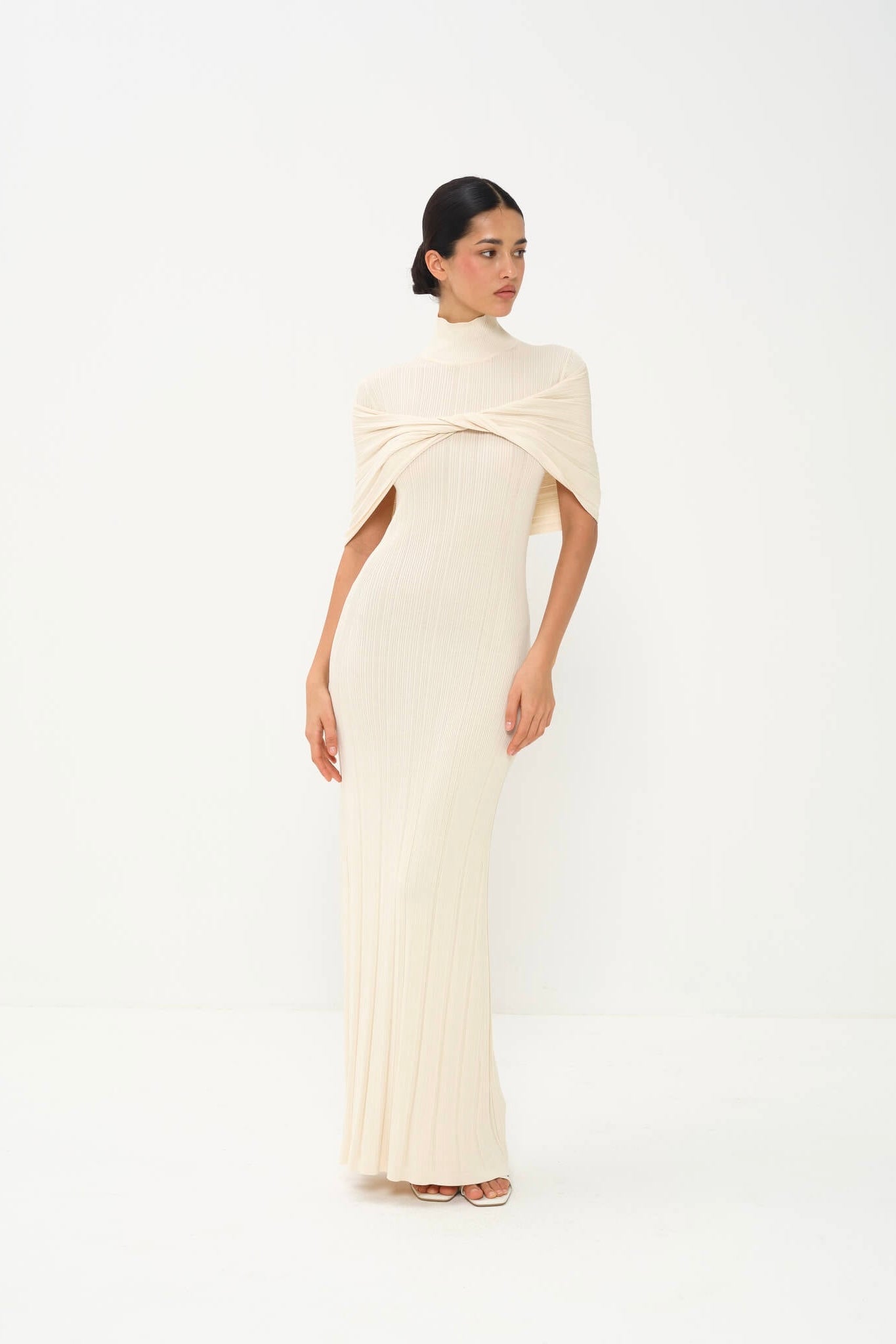
Bamboo Jersey: Naturally antimicrobial, which means it resists odor buildup better than most fabrics. Stains on bamboo jersey respond well to cool water and gentle soap. It's one of the easier fabrics to maintain, which is partly why it works so well for pieces you reach for constantly.
TENCEL Lyocell: Incredibly soft, holds color well, and responds to gentle washing without complaint. For stains, cool water and a mild detergent are usually enough. Avoid wringing. Press the water out gently between two towels.
The Habits That Prevent Most Stains
Stain removal is useful knowledge. Stain prevention is better.
A few things I do consistently, and they've saved me more than any cleaning trick:
I get dressed last. Makeup, perfume, hair products, sunscreen. All of it goes on before the clothes do. This alone eliminates probably 90% of the transfer that causes stains. In Dubai, where you're likely applying SPF 50 every morning, this is worth the extra minute of standing around in a robe.
I keep a small kit in my closet: one microfiber cloth, one bottle of micellar water, one dry cleaning sponge. When I take something off and notice a mark, I deal with it immediately. Fresh stains are simple. Old stains require effort, products, and sometimes professional help. The ten seconds it takes to blot a foundation smudge before hanging a dress back up saves significant trouble later.
I store fragrance-heavy pieces separately from clean ones. This sounds excessive, but perfume oils transfer between garments in a closed closet, especially in warm climates. If I've worn something to a dinner where bakhoor was involved (which, in Dubai, is most dinners), that piece gets aired on a padded hanger near a window before returning to the closet.
And I wash delicate pieces less often than you might expect. Over-washing causes more wear than stains do. If a piece doesn't have a visible mark or a noticeable odor, it doesn't need washing. A gentle steam and proper airing between wears keeps most things fresh. We covered more on caring for clothes in Dubai's climate in our guide on what to wear in Dubai, which touches on fabric choices that naturally handle the heat.
When to Take It to a Professional
There's a point where home treatment stops being helpful and starts being risky. If a stain has already been through a hot wash cycle, it's likely set. If you've tried two rounds of gentle treatment and it's still visible, stop. If the fabric is already showing texture changes from your efforts, definitely stop.
Find a dry cleaner who works with delicate fabrics. In Dubai, there are several good ones, particularly in DIFC and Jumeirah.
Ask specifically about their process for satin and fine knits. A good cleaner will spot-treat rather than submerge the whole garment, and they'll know the difference between a fiber that can handle perchloroethylene and one that can't.
It's worth the cost. A professional cleaning for a piece you love is always less expensive than replacing it.
The Longer View
Learning how to remove makeup, deodorant, and perfume residue without ruining fabric isn't really about stain removal. It's about extending the life of the things you've chosen carefully. The dress you wore to your friend's engagement at Zuma. The knit set that became your go-to for Friday brunches. The gown you're saving for your sister's wedding. These pieces carry more than fabric. They carry context.
Treating them well is a form of respect for your own taste, your own choices, your own closet. It costs nothing but a little attention and a few minutes of patience.
If you're building a wardrobe of pieces worth that kind of care, NÓRA's dresses and sets are a good place to look. The fabrics are chosen to feel good and hold up, and every piece is the kind you'll want to keep for a long time. Which, of course, is the whole point.