


Statement Pieces vs Simple Ones: A Real Guide
Knowing when to invest in a statement piece vs when to keep it simple is the difference between a wardrobe that works and one that just accumulates.
I've been thinking about this lately because of something I noticed at a dinner last week. Two women walked into Scalini within minutes of each other. One wore a floor-length gown with draping that caught the light every time she moved. The other wore a fitted knit set in black, no embellishment, no hardware, nothing to photograph. They both looked incredible. And that's the thing nobody tells you: the question isn't which approach is better. It's which one belongs where.
Most wardrobe advice treats this like a math problem. Ratios, rules, percentages. You've probably seen the formulas floating around, the 60/30/10 rule, the capsule wardrobe equations, all those tidy structures that sound right but feel wrong the moment you're standing in your closet at 7pm trying to get dressed for something.
Real dressing doesn't work that way. It works on instinct, context, and a few honest questions you learn to ask yourself over time.
What counts as a statement piece, really
There's a common misunderstanding here. A statement piece doesn't have to be loud. It doesn't need to be sequined or oversized or printed in something you'd never normally wear. A statement piece is anything that does the talking for you. It carries the outfit so completely that everything else, your shoes, your bag, your jewelry, just has to stay out of the way.
Sometimes that's a gown with a cape detail. Sometimes it's a beautifully draped dress in a single color that moves in a way you can't ignore. The Enza Pleated Gown in soft jersey is a good example: it's one color, one silhouette. But the pleated cape construction and the fabric's weight give it a presence that fills a room without raising its voice.
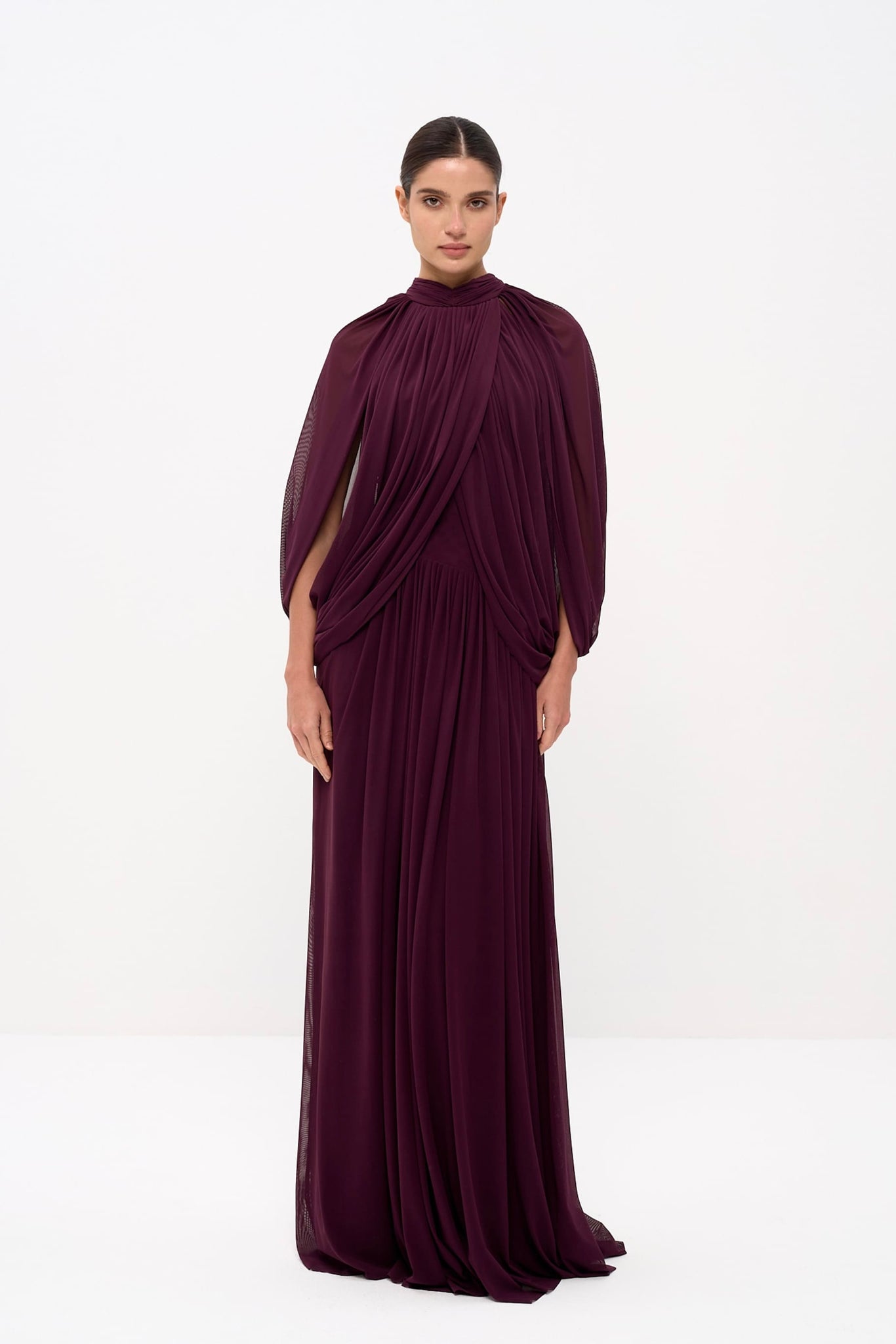
The point is, a statement piece earns its place through design, not decoration. If you're drawn to something because it feels like a costume, that's a different purchase entirely. If you're drawn to something because it makes you feel a certain way the moment you put it on, that's worth paying attention to.
And what does "keeping it simple" actually mean
Simple gets misread constantly. People hear it and think plain. Or boring. Or safe. But the simplest pieces in a wardrobe are often the hardest to get right, because they rely entirely on fit, fabric, and proportion. There's nothing to hide behind.
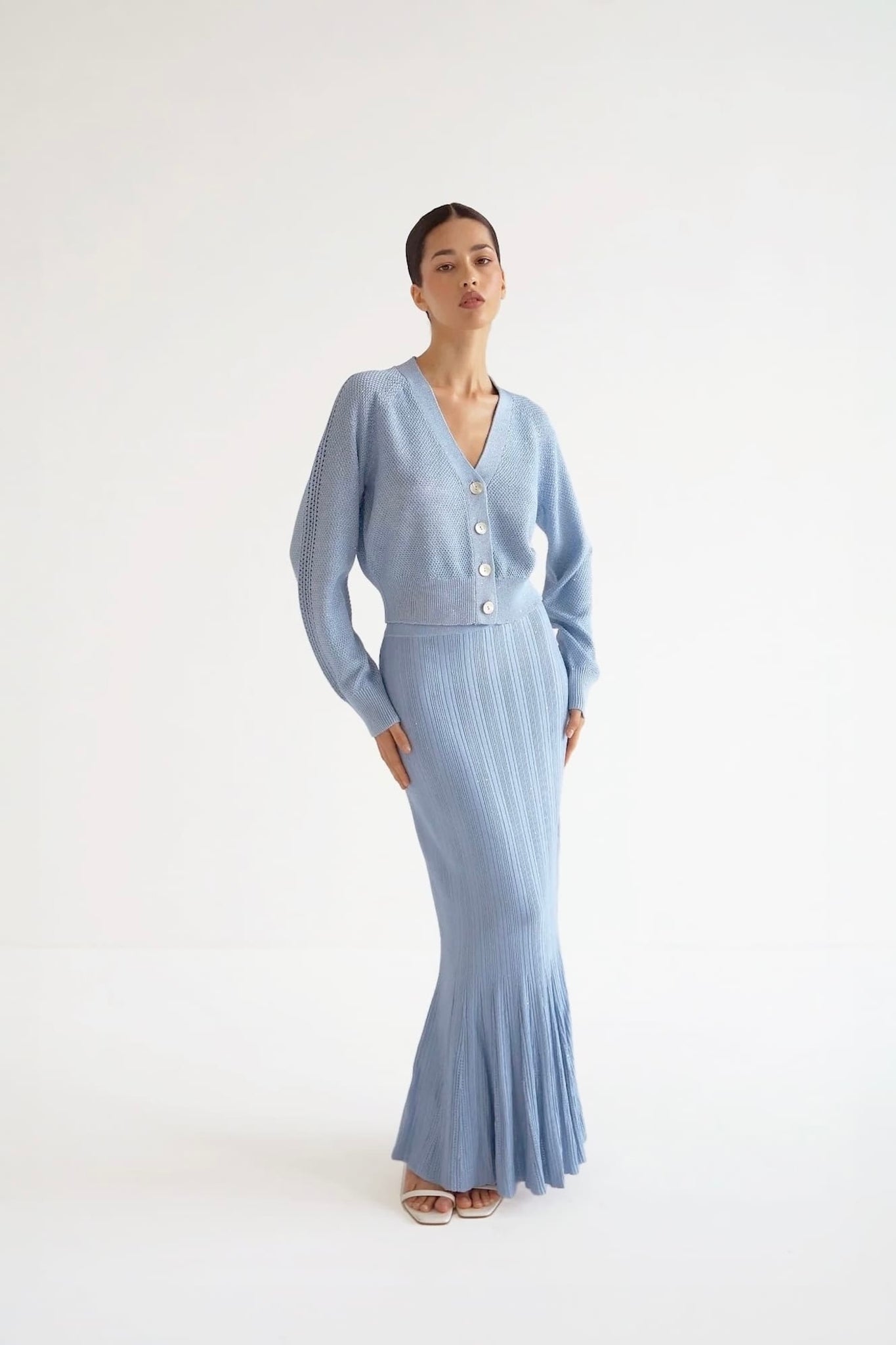
A well-made knit set in the right weight, worn with flat sandals and one gold bangle, can be the most polished thing in the room. Simple means the garment disappears into you. You don't think about it. You just look like yourself, put together, at ease.
The women who dress well here in Dubai share one quality: they look like the outfit happened naturally. That almost always comes from simpler pieces that fit properly and are made from something that feels good against skin. Viscose knit, bamboo jersey, TENCEL. Fabrics that don't fight you.
The real question: what's the occasion asking for
Forget ratios for a moment. The clearest way to decide between a statement piece and something simple is to ask: what's the occasion actually asking of me?
Some events want you to show up fully. A wedding. A gala. A milestone birthday at a private dining room. These are moments where the statement piece isn't vanity, it's generosity. You dressed up because the moment mattered. People notice. People remember. That's the whole point.
Other occasions want you to be present, not on display. A long Friday lunch with friends. A work meeting followed by school pickup. An evening where you're not sure if you'll end up at dinner or just walking along JBR. These moments call for restraint. Something that works across settings, that transitions without needing a wardrobe change.
Here's a way I think about it. If the event has a specific start time and an ending, it probably deserves something with more intention. If the day is shapeless, if you're moving between places and moods, you want simplicity. You want something like a viscose knit set from NÓRA's sets collection, the kind of piece that holds up from morning coffee through to an unplanned dinner without looking like it's been through a full day.
Does the 60/30/10 rule in fashion actually help
You'll see this rule everywhere. The idea is that 60% of your wardrobe should be basics, 30% should be mid-range pieces with some personality, and 10% should be true statement items. It's neat. It photographs well for Pinterest boards. And honestly, it's not terrible as a starting point.
But it falls apart when you try to apply it to real life, because it treats all wardrobes and all lifestyles as interchangeable. A woman who attends four events a month in Dubai has completely different needs from someone who works remotely and socializes mostly on weekends. A woman who wears an abaya daily builds her wardrobe around different anchors than someone who doesn't.
The more useful version of this rule is simpler. Most of your wardrobe should be things you reach for without thinking. A smaller portion should be things you reach for with intention, for specific moments. That's it. The percentages don't matter. What matters is that both categories are filled with pieces you genuinely love, not pieces you bought because a formula told you to.
How to know if a statement piece is worth the investment
This is where most people get stuck. A statement piece usually costs more. It might be something you wear less often. So how do you justify it?
I use four questions. Not a checklist, just things I turn over in my mind before buying.
First: can I picture the exact moment I'll wear this? If I can see the dinner, the event, the setting, that's a good sign. If I'm buying it on vague optimism, hoping something will come up, I wait.
Second: does it feel like me, or does it feel like someone I'm trying to be? Statement pieces amplify who you already are. They don't reinvent you. If you feel like you're playing a character, it's the wrong piece.
Third: will I still want this in two years? Trend-driven statement pieces have the shortest shelf life of anything in your closet. Something with a timeless silhouette and refined construction will still read well long after the moment passes. We wrote about this idea in more detail in our post on why every woman needs a signature statement piece, and it's worth a read if you're on the fence about something specific.
Fourth: is the fabric worth touching twice? This sounds small, but I mean it. If a garment doesn't feel as good as it looks, you won't reach for it. You'll admire it on the hanger and then close the closet door. The best statement pieces feel as intentional on the inside as they look on the outside.
When simplicity is the harder, better choice
There's a version of this conversation that treats simple dressing as the fallback. The thing you do when you can't be bothered. I think that's backwards.
Simple dressing, done well, requires more clarity about who you are and what you want. You're not leaning on drama or embellishment. You're trusting that the right cut, the right fabric, the right color is enough. That takes confidence. Quiet confidence, the kind that doesn't announce itself.
Dubai's style has its own rhythm, and it rewards this kind of dressing more than people realize. Yes, there are events that call for full production. But most of life here, the Tuesday dinners at Zuma, the weekend brunches, the afternoon meetings in DIFC, happens in that middle register where you want to look put together without looking like you planned it for an hour.
Something like the Sevin Dress Set in viscose knit does this well. It's a set, so the proportions are already resolved. The knit has enough weight to drape properly but doesn't trap heat. You could wear it to a gallery opening in Al Quoz and then to a late dinner without changing. (The kind of set you pack first and reach for most.)
Building a wardrobe where both coexist
The best-dressed women I know don't choose one philosophy over the other. They have both. They own a few pieces that make them feel extraordinary, and they own a foundation of simpler things that make daily life feel effortless. The two categories support each other.
Your statement pieces look better when they're surrounded by restraint. A cape gown doesn't need a statement bag and statement earrings and a bold shoe. It needs a clean sandal and maybe one ring. The gown does the work. Everything else just shows up.
And your simple pieces look more intentional when they're not competing with a closet full of noise. When you own fewer loud things, the quiet things have room to breathe. You start noticing how much you appreciate a perfectly fitting dress in a color that happens to be your best one.
This is why I'd never tell someone to stop buying statement pieces. Or to only buy basics. The wardrobe that actually works is the one where every piece, whether it's a gown you wear twice a year or a knit set you wear twice a week, was chosen with the same care.
A few practical thoughts on when to go which direction
If you're getting dressed and you're thinking about the outfit more than the event, simplify. The outfit should support the moment, not compete with it.
If you're getting dressed and you feel underwhelmed, like the occasion deserves more than you're giving it, that's when the statement piece earns its place. Trust that instinct. It's usually right.
If you're packing for a trip, pack with intention. One statement piece, maybe two. Then fill the rest with versatile, simple things that layer and transition. You'll wear the simple pieces more often, but you'll be grateful for the statement piece on the one night it matters.
If you're building a wardrobe from a smaller place, start simple. Get the foundation right first. The knit sets, the well-cut dresses, the pieces that work across your actual life. Then, once you feel solid in those, start adding statement pieces one at a time, with purpose.
The difference between investing and spending
This matters more than most fashion advice acknowledges. Spending is reactive. You see something, you want it, you buy it. Investing is slower. You think about your life, your closet, the gaps, the events on your calendar, and then you choose something that fills a real space.
Both statement pieces and simple pieces can be investments. A well-made viscose knit dress you wear forty times a year is every bit as smart a purchase as a Naia satin gown you wear four times. The cost-per-wear argument works in both directions.
What makes something an investment is whether it holds up, physically and emotionally. Does the fabric maintain its shape after the fifth wash? Does the silhouette still feel right six months later? Do you still feel like you when you put it on? Those are the real metrics. Not the price tag, not the trend cycle, not whether someone on the internet called it a "must-have."
NÓRA's approach to this has always made sense to me. Whether you're looking at their dresses or their knit sets, the construction and fabric quality stay consistent. A simpler piece gets the same attention as a more dramatic one. That consistency is what makes it possible to build a wardrobe where everything feels like it belongs together, even when the pieces themselves are very different in personality.
The best wardrobe isn't the one with the most interesting pieces. It's the one where you can get dressed in five minutes and feel right. Sometimes that means reaching for the thing that turns heads. Sometimes it means reaching for the thing that just fits. Knowing the difference, and trusting yourself to choose, is the whole game.