


Steam vs Iron for Delicate Fabrics
If you own anything worth caring about, the question of steam vs iron and what delicate fabrics actually need has probably come up at the worst possible moment.
I'll tell you when it came up for me. A Friday morning, maybe forty minutes before a lunch reservation at Scalini. I'd pulled a viscose knit dress off the hanger and found a crease running diagonally across the front, the kind that looks like the garment slept wrong. I stood there with an iron in one hand, a steamer in the other, and genuinely didn't know which one to trust.
Most guides on this topic give you a generic breakdown. Iron for cotton, steamer for silk, done. But if your closet is built around fabrics like Naia satin, bamboo jersey, TENCEL lyocell, or viscose knit, those rules don't go far enough.
These are specific materials with specific tolerances, and getting it wrong doesn't always mean a visible burn. Sometimes it means a subtle shift in drape, a loss of that soft hand feel, a piece that just stops looking the way it did when you first wore it.
So here's what I've learned, from trial, from error, from asking people who actually make clothes with these fabrics.
Is Steaming More Gentle Than Ironing?
Yes. Almost always yes. But "gentle" is only useful if it also gets the job done.
A steamer works by pushing hot moisture through fabric fibers, relaxing them without direct pressure. There's no plate pressing against the surface, no friction, no flattening. For anything with texture, drape, or a deliberate softness, that matters. A lot.
An iron, on the other hand, combines heat with weight. It presses fibers flat. That's exactly what you want for a crisp cotton shirt or linen trousers, where the point is structure.
But on a fabric designed to move and fall a certain way, an iron can do something quiet and permanent. It can change the way a garment hangs.
I noticed this with a bamboo jersey pieces. I ironed it once, on low, with a pressing cloth. The crease came out. But the fabric felt slightly different afterward, a little stiffer in that spot, like it had been compressed into a version of itself that didn't quite match the rest. It wasn't ruined. It just wasn't right.
Steaming would have avoided that entirely.
What Each Fabric Actually Needs
This is where the generic guides lose me. "Delicate fabrics" is too broad.
A silk charmeuse and a viscose knit behave completely differently. Here's what I've found works, fabric by fabric, based on the kinds of materials I reach for most.
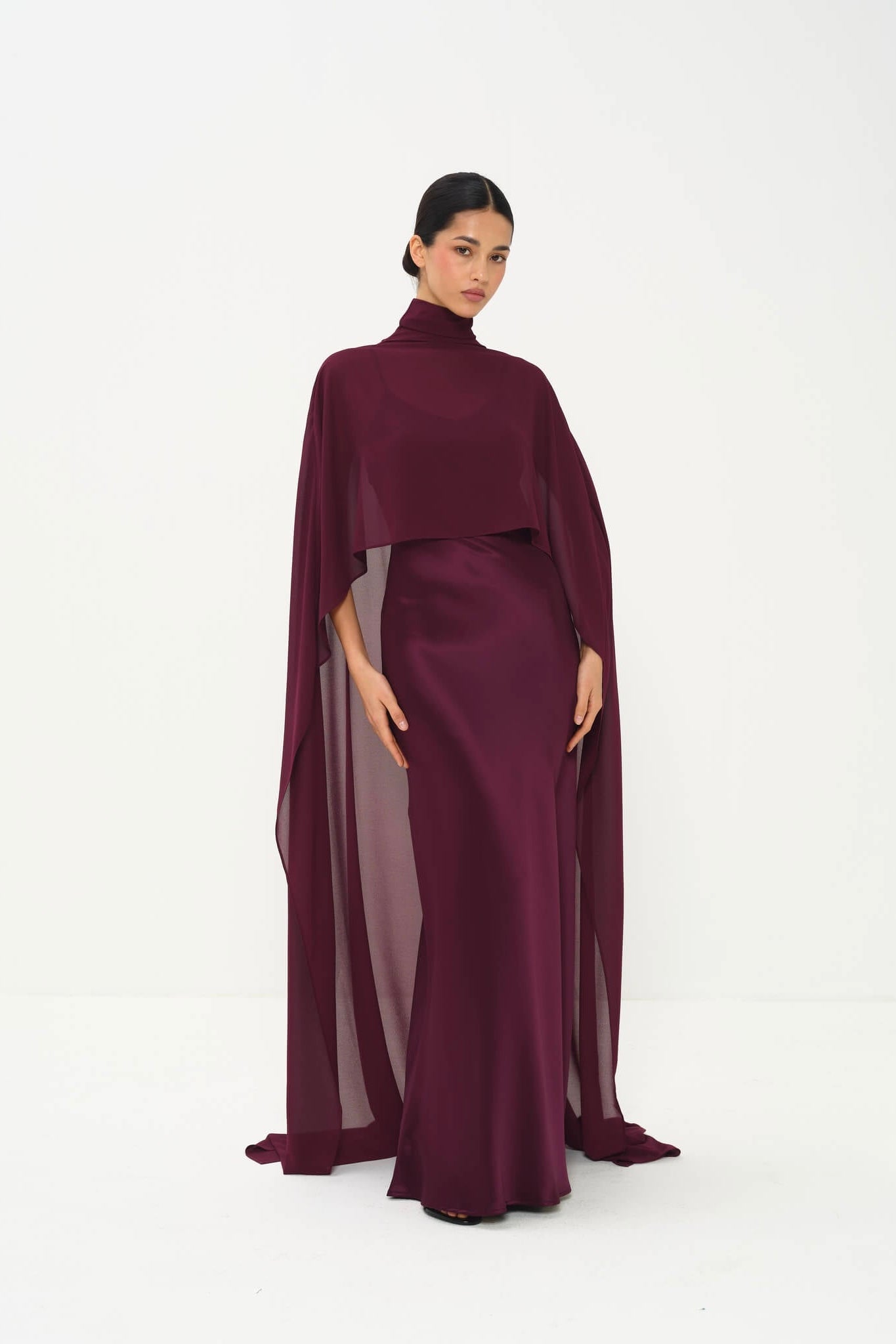
Naia satin. This is a cellulosic fiber with a beautiful surface sheen. That sheen is the first thing an iron will compromise. Direct heat, even on a low setting, can leave marks on satin that catch the light differently from the rest of the fabric. Steam is the clear answer here. Hold the steamer about two inches from the surface, let it do the work, and the wrinkles release on their own.
A piece like the Estelle Cape Gown in Naia satin has a drape that relies on the fabric being uniformly smooth. One iron mark and that uniformity breaks.
Viscose knit. This is where people get into trouble, because viscose knit wrinkles easily and the temptation to iron is strong. But viscose knit has a natural stretch and recovery. An iron flattens the knit structure. You lose that slight dimension, the way the fabric catches light differently on each ridge. Steam on a low to medium setting, and if the wrinkle is stubborn, lay the garment flat on a towel and steam from above with very slight downward passes. Don't press.
Bamboo jersey. Incredibly soft, temperature-regulating, and it hates direct heat. Bamboo jersey is one of those fabrics that wrinkles in storage but releases wrinkles naturally when worn for ten minutes.
If you can't wait, a quick steam while it hangs will sort it out. I've found that bamboo jersey responds to steam faster than almost any other fabric. Two passes and it's done.
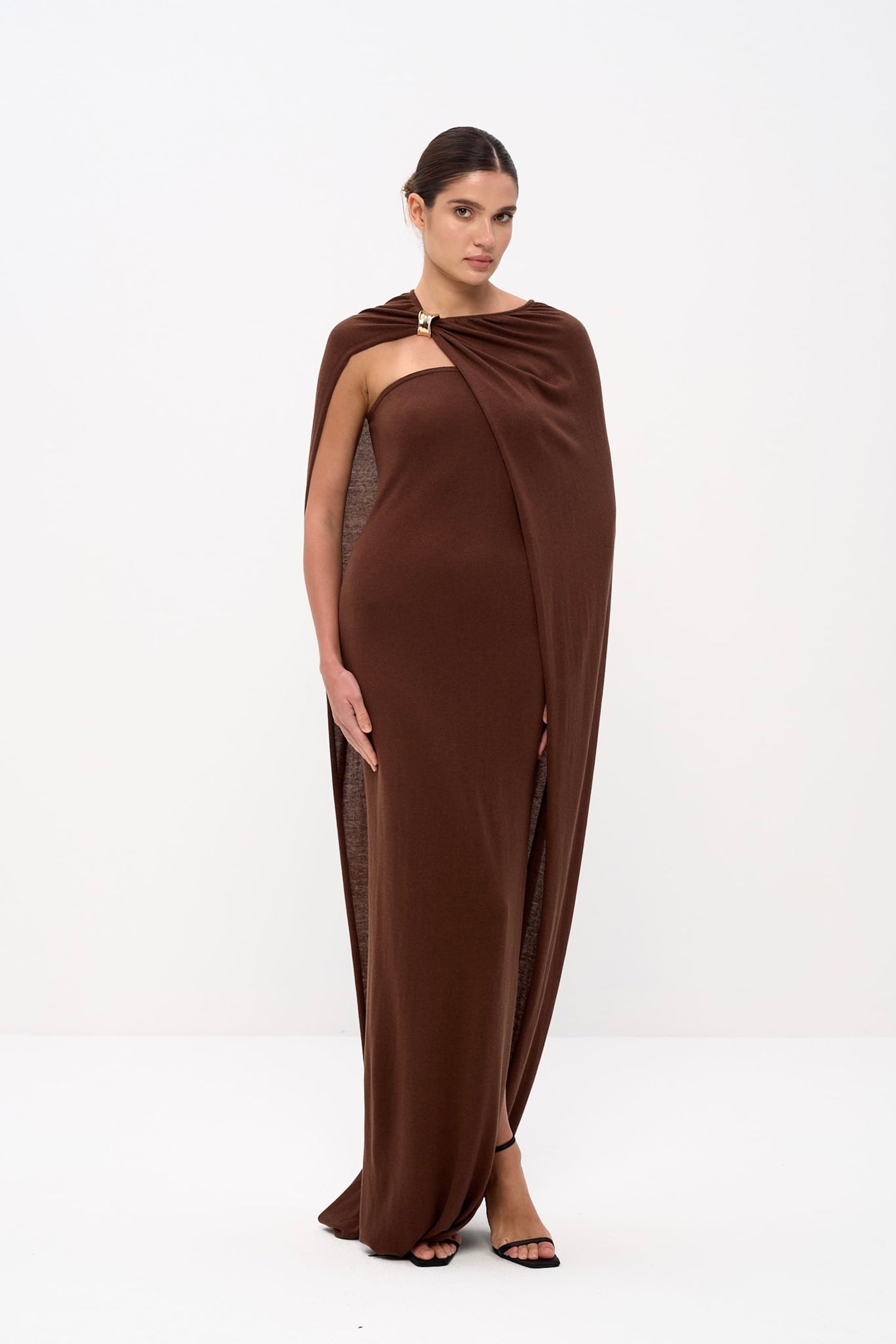
TENCEL. TENCEL has a smooth, cool surface and a fluidity that feels almost liquid. It wrinkles less than most natural fibers, but when it does, steaming is the way. The fiber itself is strong when wet, which means steam won't weaken it, but an iron's pressure can create unwanted shine on the surface.
Something like the Thalia Cape Gown in TENCEL has a clean drape that looks best when the fabric is left to do what it naturally does.
Cotton and linen. These are the exceptions. Cotton wants an iron. Linen almost demands one. If you're pressing a cotton poplin shirt or linen pants, reach for the iron, use steam from the iron itself, and press with intention. These fibers respond to pressure, and the crispness is part of the point.
The Dubai Factor
Here's something the general guides don't account for. In Dubai, your clothes go through a temperature cycle that most wardrobes never experience. You get dressed in an air-conditioned room. You walk through heat that can reach 45 degrees. You step into a restaurant or office where it's winter, instantly. Then you do it all again in reverse.
That cycle affects fabric differently depending on how you've cared for it. An ironed garment that's been pressed flat can show creases more quickly in humidity, because the fibers were locked into position rather than relaxed. A steamed garment tends to recover better, because the fibers were already in their natural state when the wrinkles were released.
I've noticed this most with viscose knit sets, the kind you wear to a morning meeting, then keep on through lunch, then into an afternoon somewhere else entirely. The ones I've steamed hold up through the full day. The ones I've ironed sometimes show new creases by early afternoon, right along the same lines where the original wrinkles were.
The iron didn't remove the wrinkle so much as temporarily override it.
We covered wardrobe planning for Dubai's particular rhythm in our guide to what to wear in Dubai, but the care side of it matters just as much as what you choose to put on.
What Ironing Method Works Best for Very Delicate Fabrics
If you absolutely need to iron something delicate, maybe it's a deep-set crease from packing, maybe you don't own a steamer yet, here's how to minimize the risk.
First, always use a pressing cloth. A clean, thin cotton cloth between the iron and the fabric. This is non-negotiable for satin, silk, or anything with a sheen.
Second, use the lowest heat setting that actually works. Start lower than you think you need. You can always go up slightly. You can't undo scorched fibers.
Third, iron on the reverse side. Flip the garment inside out. Any slight shine or compression happens on the interior, not the face.
Fourth, don't drag. Lift and press, lift and press. Dragging creates friction, and friction on delicate fibers creates that subtle distortion that's hard to name but easy to see.
Fifth, let the garment hang immediately after. Don't fold it. Don't lay it flat on the bed and forget about it. Hang it and let gravity do the final smoothing while the fibers are still warm and responsive.
But honestly, if you're going through all five of those steps, a steamer would have been faster and safer. The iron workaround exists for when you're in a hotel room with no other option.
Which Fabrics Require Less Ironing in the First Place
This is really the better question. The best wrinkle strategy isn't a better tool. It's a fabric that doesn't wrinkle much to begin with.
Knit fabrics wrinkle far less than woven. That's true across the board. A viscose knit or cotton knit has inherent stretch and memory, which means it recovers from folding and sitting much more readily than a woven cotton or linen.
Bamboo jersey is especially good at this, it tends to smooth itself out within minutes of being put on.
Satin, despite its reputation for being high-maintenance, actually resists deep wrinkles well. It creases lightly, but those creases release with minimal steam. Naia satin in particular has a fluid quality that self-corrects more than you'd expect.
The fabrics that wrinkle most aggressively are pure linen, cotton poplin, and certain silk weaves. Beautiful fabrics, all of them. But they require more care between wearings, and they're the ones that genuinely benefit from an iron's direct pressure.
If your wardrobe leans toward materials that recover well on their own, your morning routine gets simpler. That's one of the things I appreciate about a closet built around dresses in fabrics like viscose knit and Naia satin. They don't require the same negotiation before every wearing.
A Few Things I Wish Someone Had Told Me Earlier
Don't steam or iron anything that's stained. Heat sets stains. If there's a mark on the fabric, clean it first.
Hang your steamer vertically when you steam. The water tank works with gravity. Tilting it sideways can cause spitting, and water droplets on satin leave temporary marks that look like the fabric is puckering. (They dry out, but it's stressful.)
Let garments air after steaming before putting them into a closet. Fabric that goes into an enclosed space while still slightly damp will develop a faint mustiness over time. Ten minutes on a hanger in open air is enough.
Travel steamers are worth it. They're small, they heat up in under a minute, and they handle the kind of light creases you get from packing. I keep one in my carry-on permanently.
If you're between trips and want to reduce wrinkles in storage, fold garments with tissue paper between the layers. This prevents hard crease lines from forming. It sounds fussy, but for a piece you love, thirty seconds of tissue paper saves you five minutes of steaming later.
The Short Answer
For most of the fabrics worth investing in, steam is the right call. It's gentler, it preserves drape, it respects the way a fabric was designed to move. An iron has its place, and that place is structured cotton, linen, and fabrics where crispness is the goal.
If your closet is built around pieces that drape, flow, and move with you, a good steamer is the single most useful tool you can own. More useful than a lint roller. More useful than fancy hangers. (Though decent hangers help too.)
The real takeaway isn't about one tool being better than the other. It's about knowing what your specific fabrics need and giving them that, nothing more, nothing less. A well-cared-for garment looks intentional. An over-pressed one looks like it's trying too hard. And you can always tell the difference.
If you're curious about the kinds of fabrics that practically take care of themselves, the NÓRA Resort '26 Collection are worth spending a few minutes with. The material descriptions alone will tell you a lot about how each piece wants to be treated.