


How to Layer Modestly in Hot Weather
Last week at Coya, I noticed a woman who’d clearly solved the summer layering puzzle. She walked in from the heat and still looked calm. Not overdressed. Not underdressed. Just right.
A fluid white shirt, worn open the way it’s meant to be, over a barely-there cami. Wide-leg linen trousers. A light cardigan resting on her shoulders for the indoor air that always feels a little too committed. The whole look had movement. Nothing clung. Nothing looked like it needed fixing every five minutes.
I’ve thought about that outfit ever since, because layering modestly in hot weather isn’t hard because of modesty. It’s hard because Dubai gives you two climates in one afternoon, and your clothes have to stay polished through both.
The Real Rule is Movement
Layering in the heat works when air can move through the outfit. That’s it. That’s the secret.
I learned this at Art Dubai last year. I wore a tank, then a linen shirt, then a blazer because I wanted structure, and by midday I realised I’d chosen pieces that sat on the body instead of skimming it. The issue wasn’t the number of layers. It was the wrong kind of layers.
Now I look for fabrics and cuts that do a quiet job in the background. Linen, yes. Bamboo jersey. TENCEL lyocell. Light viscose knit. Naia satin when I want a dressier finish that still feels cool to wear.
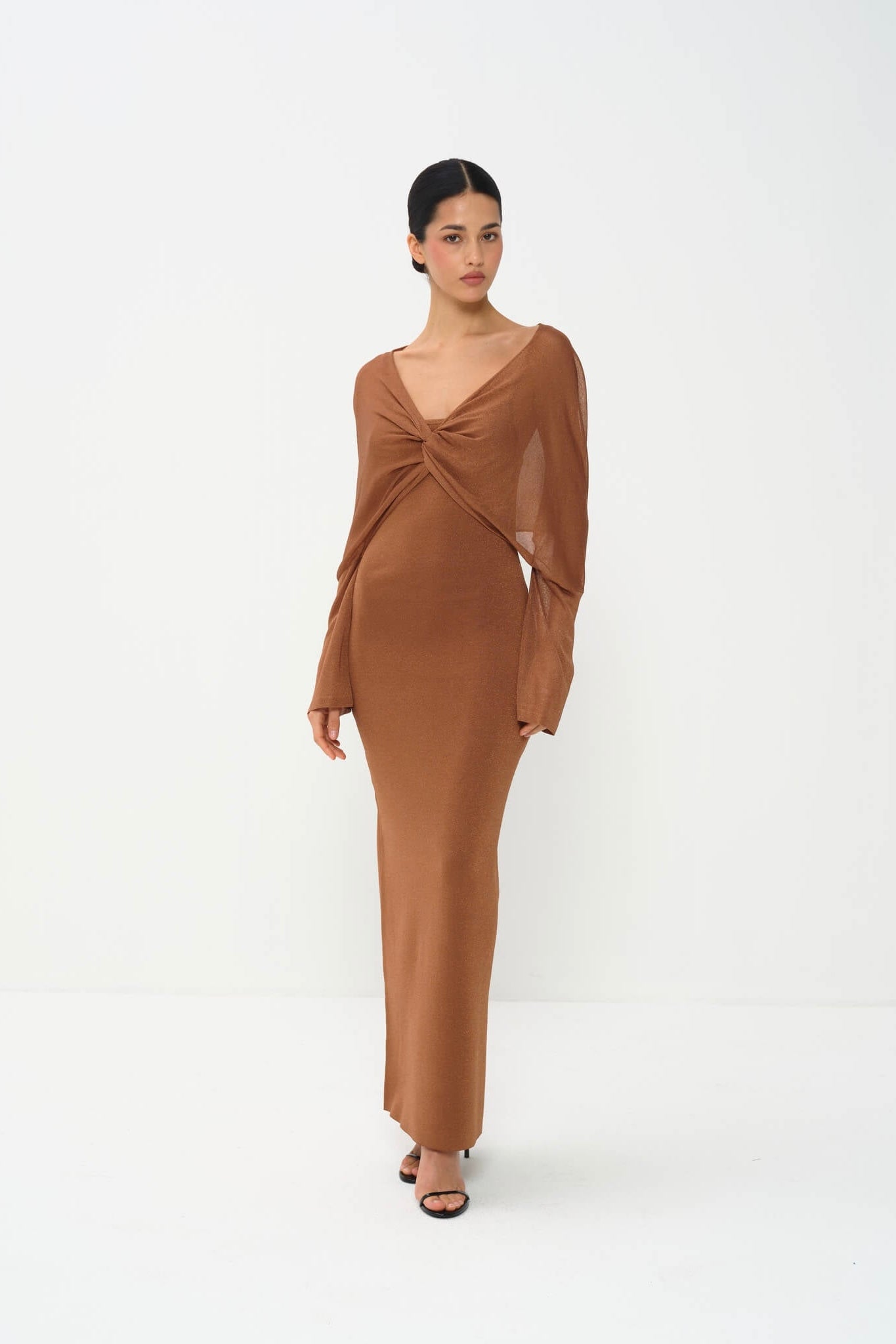
The Selene Draped Maxi Dress is a perfect example of this approach. The viscose knit drapes, it doesn’t grip, and it falls in a way that keeps the outfit light on the body. It still reads intentional.
Start with an Under-layer you Forget you’re Wearing
Base layers decide everything. If the first layer feels heavy, the whole outfit feels heavy.
Cotton tanks seem like the obvious choice, but they don’t always feel great in humidity, and they can hold on to dampness longer than you want. I prefer silk camis, bamboo tanks, or a technical base from Uniqlo’s Airism line when I know it’s going to be a long day. They disappear under clothing, they dry quickly, and they keep the outfit feeling light.
If you want more coverage, a fitted long sleeve base can work beautifully too, as long as the fabric is the right one. It’s not as counterintuitive as it sounds. It keeps things smooth under your layers and it can feel more comfortable outdoors when the sun is strong. The only rule is this: it has to breathe.
The Middle Layer is where the Outfit Either Works, or Starts to Feel Busy
This is the layer people overthink.
Modest dressing doesn’t mean piling on fabric. It means choosing the right shape. A shirt that floats. A cardigan that hangs open. A jacket that skims instead of hugging.
Open-front layers do a lot with very little effort. A white linen shirt over a silk cami and wide trousers is a Dubai uniform for a reason. It reads refined, it works for lunch, it makes sense for errands, and it still looks good later at dinner.
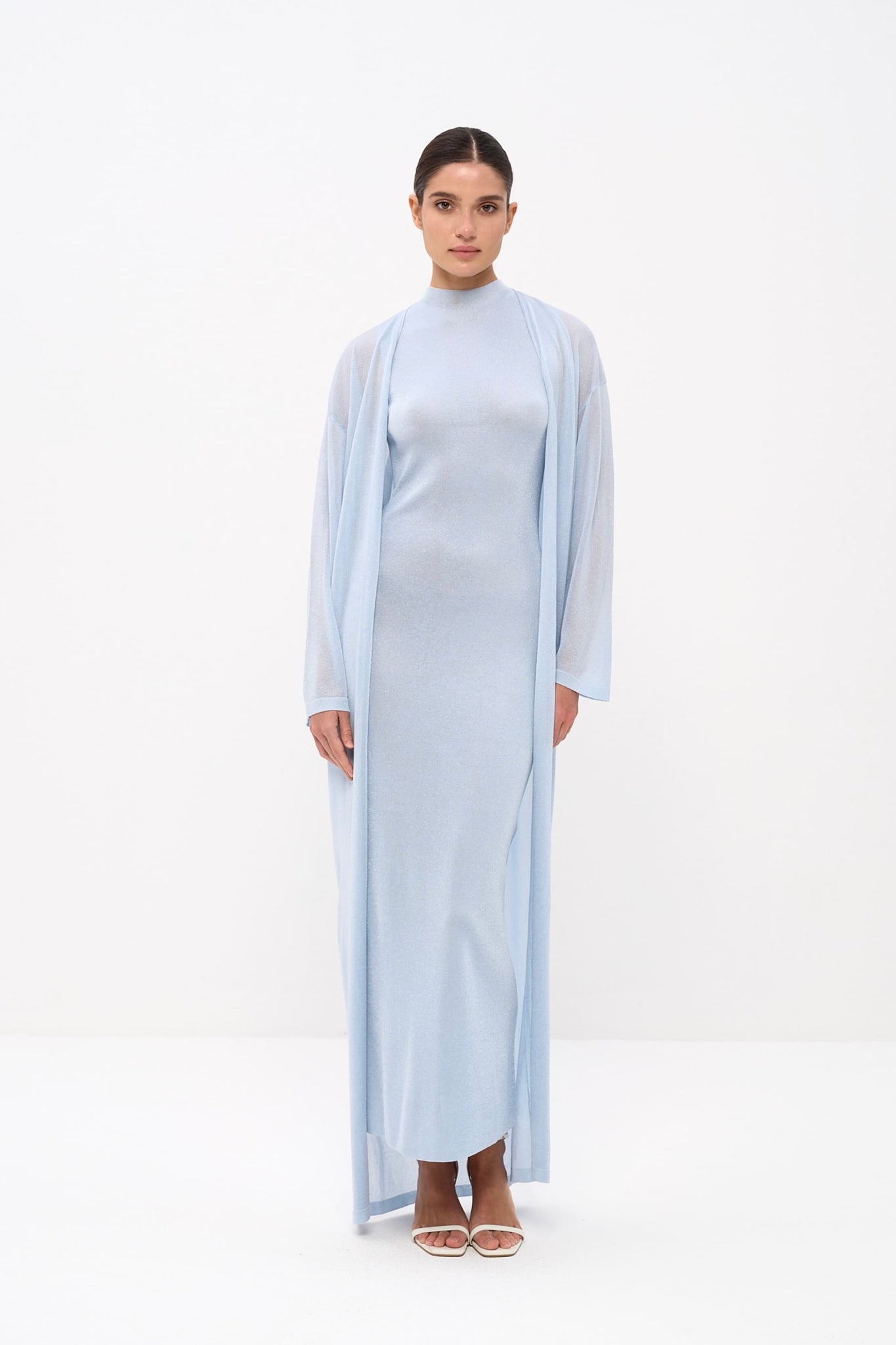
The Sevin Dress Set fits this idea perfectly. The jacket feels light enough to layer, but it still looks purposeful. Viscose knit also holds up better than people expect, especially when you want coverage without weight.
Outer Layers should Feel like Protection
An outer layer in summer has two jobs. It adds coverage, and it helps you move between outdoor heat and indoor air conditioning without doing a full outfit change in a bathroom mirror.
Long, open layers are the easiest answer. Dusters. Light cardigans with an open weave. A kimono-style jacket with wide sleeves that lets air move around you as you walk.
For work meetings or more formal settings, a blazer can still work if it’s cut correctly and made in a lighter fabric. Linen blends, tropical-weight wool, anything that skims the body and leaves room to breathe. Structure is fine. Tightness is what ruins it.
Draping is the Most Elegant Trick You’ll Ever Learn
A Saudi friend taught me a draping method that I now use constantly, especially in summer.
Take a large square scarf, fold it diagonally, and rest it over your shoulders with the point falling down your back. Instant coverage. It looks refined, not fussy. You can adjust it in seconds, you can remove it when you sit down, and it’s perfect if your day includes a quick stop somewhere that asks for more coverage.
The key is looseness. The second you wrap anything too tightly, the outfit feels warmer and the whole point disappears.
Colour Matters more than People Admit
White is an obvious summer choice, and it’s always chic, but in strong sunlight it can turn unexpectedly sheer. It’s worth checking at home before you wear it out.
Soft pastels are a beautiful alternative. Pale pink, powder blue, mint, gentle lavender. They feel fresh, they’re often more opaque than bright white, and they photograph softly. (Which matters, because Dubai lunches have a habit of becoming photos.)
Earth tones also work well in heat. Sand, camel, warm taupe, terracotta. They read refined with very little styling, and they feel grown-up in a way that never looks like you tried too hard.
Navy is my personal favourite when I want instant polish. Yes, it’s darker, but in the right fabric, linen or TENCEL, it can still feel comfortable, and it always looks considered.
Dresses Make Modest Layering Simpler
Dresses solve the “what goes with what” question in one step. One piece, then one layer if you need it, and you’re done.
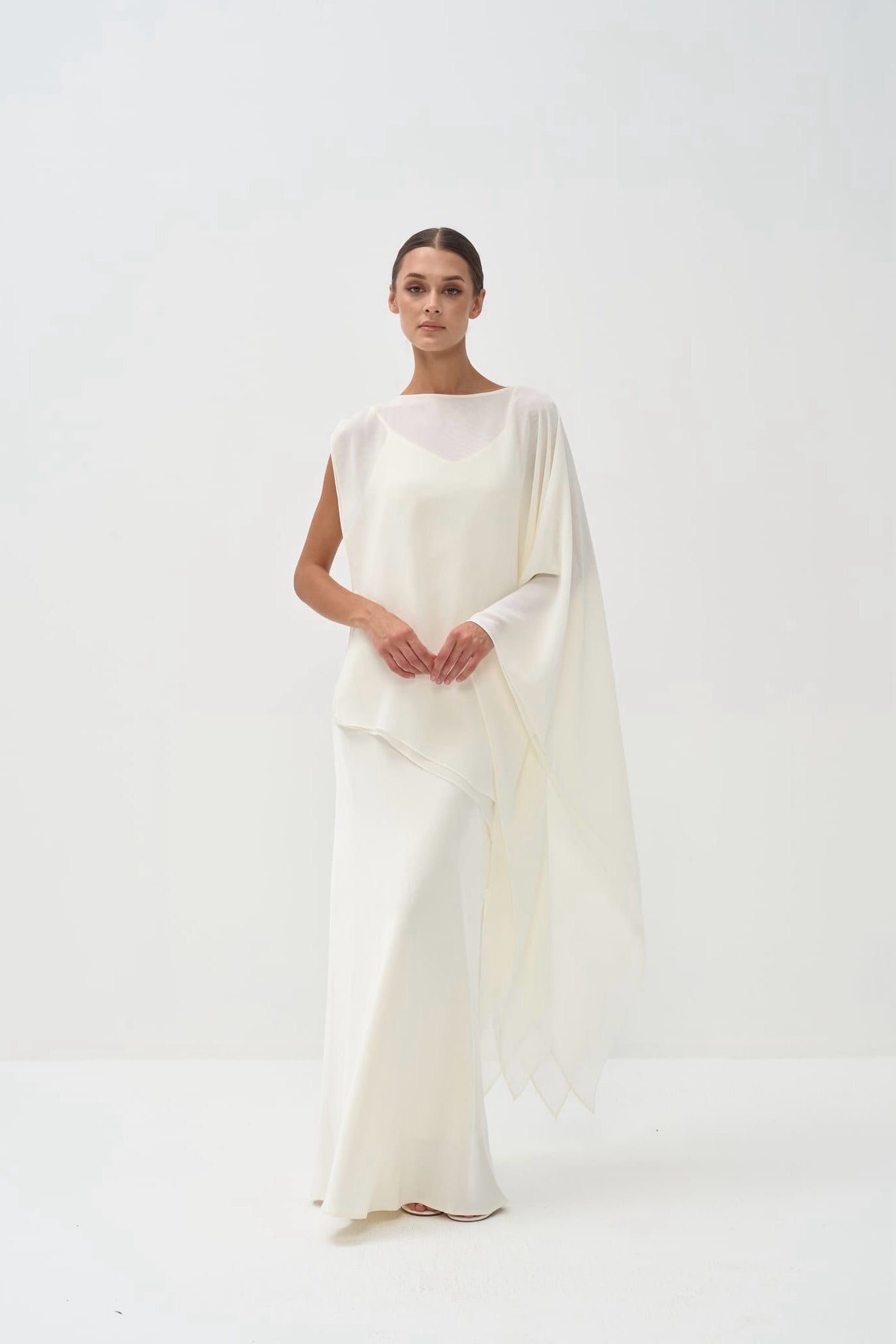
Maxi dresses are especially good in summer because they give coverage and air flow at the same time. The fabric moves when you move, which keeps the look light. The Orla Cape Maxi Dress has the advantage of built-in coverage, so you don’t need to add much unless you’re walking into a very cold restaurant.
If you do want a layer for malls or long indoor stretches, a denim jacket or a light cardigan works. Keep it easy. Let the dress do the work.
Matching Sets are the Easiest way to Look Intentional in Summer
Sets are the quiet shortcut to looking polished in hot weather. The proportions are already right. The fabric is already consistent. The outfit looks finished before you even add accessories.
You can layer over a set without the look turning random. A light cardigan over knit. A linen blazer over satin. The base feels cohesive, so whatever you add reads clean.
And the best part is wearability. You’ll wear the top with something else, the skirt or trousers with something else, and you still feel like you’re dressing with intention rather than repeating the same look.
Accessories should Support the Outfit, not Complicate it
In summer, I keep accessories practical and light.
A hands-free bag makes everything easier, especially if you’re moving between places. Shoes that let your feet breathe matter more than a dramatic heel. Jewellery is better when it’s edited, because metal can get warm in the sun and you don’t want to spend the day adjusting your own styling.
Hair is part of layering too. A low bun, a braid, a clip. Anything that keeps the look neat and keeps the outfit feeling light.
The Dubai Part is the Temperature Switch
The hardest thing about dressing here isn’t the outdoor heat. It’s the change.
You step outside, then you step into a restaurant and it feels like winter. You move through DIFC, then you end up inside a mall for one quick errand and suddenly you’re glad you brought a layer.
I keep a cardigan in the car. I keep a pashmina in my bag. Those simple layers make the day feel easy.
And I dress with my destination in mind. Zuma’s terrace is a different outfit than Zuma indoors. LPM can feel colder than you expect. Plan for the seat you’ll sit in, not just the door you’ll walk through.
Outfits that Work in Real Life
For a beach club brunch, I’ll wear a swimsuit, then a linen maxi like the Melina Crisscross Maxi as a cover-up that reads as a dress once you’re seated, and a light kimono for indoor moments.
For mall errands, I like a technical tank under a linen shirt, with wide-leg trousers, and a light jacket for the indoor air.
For work meetings, I’ll do a silk cami, fluid trousers, a draped blouse, and keep a blazer folded in my bag until I need it.
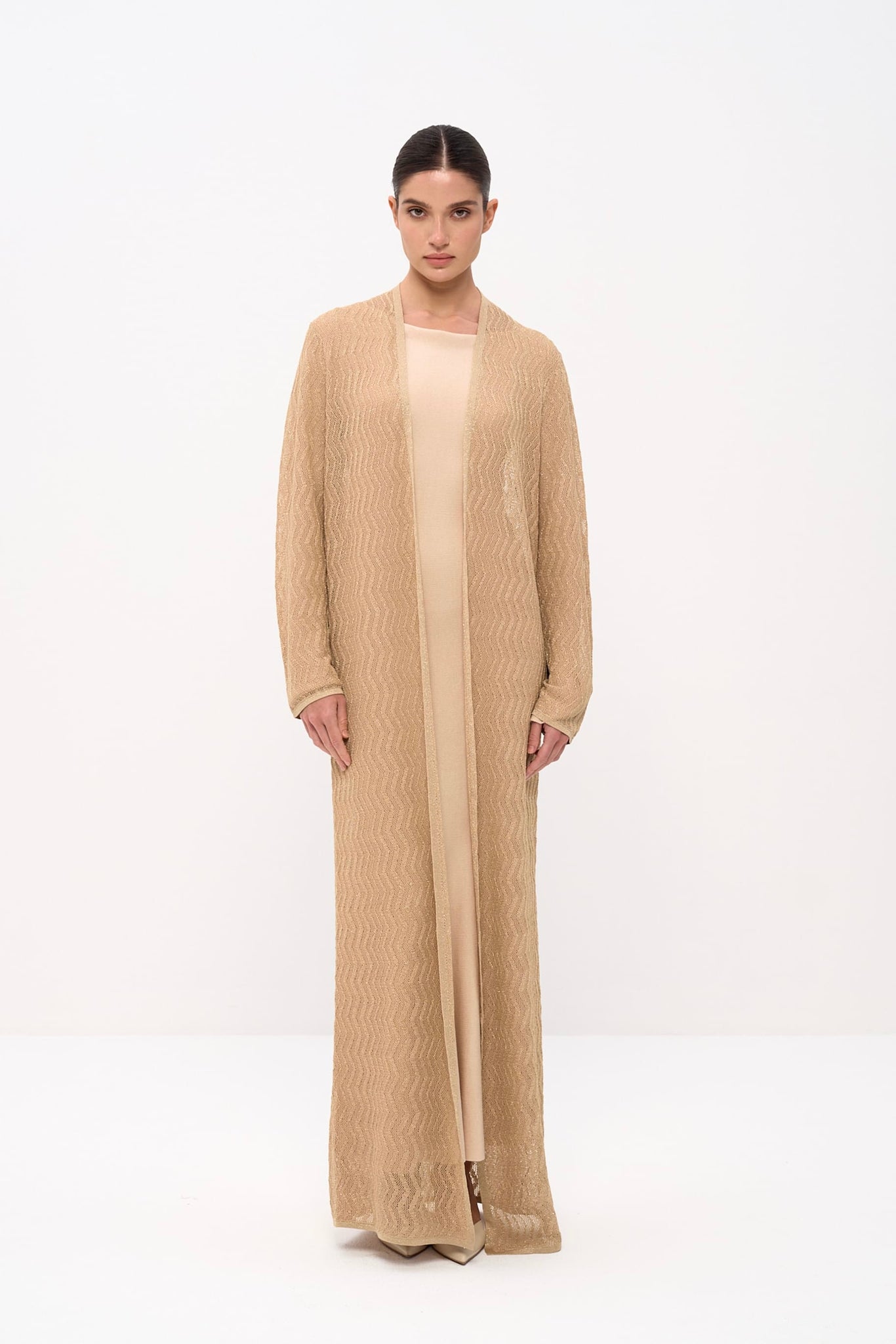
For evening events, I love a slip dress with an elegant layer, something like The Amalia Cardigan. It looks formal enough for a five-star hotel, and it still feels wearable the whole night.
The Mental Shift That Makes it Easy
The biggest change is this: think of layers as options, not obligations.
A cardigan isn’t extra weight, it’s insurance. A scarf isn’t unnecessary, it’s flexible coverage. Each piece should earn its place by solving a problem. Comfort. Coverage. Temperature. Movement.
That woman at Coya didn’t look “perfect” because she tried harder than anyone else. She looked perfect because she picked the right fabrics, the right shapes, and a layer she could use when she needed it.
The outfit did the work. She just wore it.